Particle analyzers determine the size and distribution of particles in a material. Particle size analyzers work in many areas of research and development, product testing, manufacturing and quality control. Particle size analysis is a very important test and is used for quality control in many different industries like Food and beverages,Pharmaceuticals,Aerosols and more.The tests should be adjusted according to the different materials.
We MRC offer a variety of Particle Size Analyzer for different uses. Our sales consultants will help you choose.
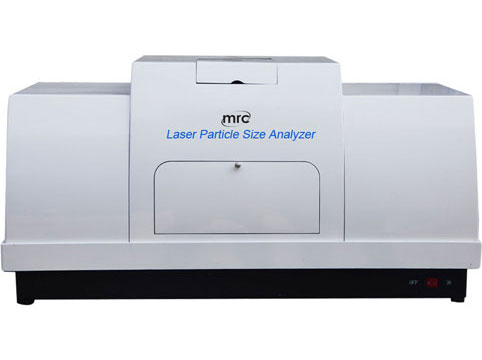
What Is a Particle Size Analyzer?
A particle size analyzer is a specialized instrument used to determine the size distribution of particles in a given sample. Whether you’re measuring powders, liquids, or aerosols, these devices provide critical insights into the behavior and properties of materials.
Why Particle Size Analysis Matters
Particle size isn’t just a number—it directly impacts the performance, quality, and efficiency of products. For instance, in pharmaceuticals, the size of particles affects how drugs are absorbed. In construction, it influences the strength of cement. Quality control depends heavily on precise particle size analysis.
Types of Particle Size Analyzers
Laser Diffraction
Laser diffraction is one of the most popular methods for particle size analysis. It works by scattering laser light through particles and analyzing the diffraction pattern. This method is fast, accurate, and suitable for a wide range of industries, including pharmaceuticals and food.
Dynamic Light Scattering (DLS)
DLS measures the fluctuations in light intensity caused by particles moving in a fluid. It’s ideal for analyzing nanoparticles and is widely used in biotechnology and environmental science.
Sieving
Sieving is a straightforward technique involving screens with different-sized apertures. Though traditional, it remains relevant for coarse particles and bulk materials.
Sedimentation Techniques
These techniques rely on the settling velocity of particles in a fluid. They are particularly useful in industries like ceramics and mining.
Electrical Sensing Zone
This method measures changes in electrical resistance as particles pass through an aperture. It’s commonly used for applications requiring high precision, such as blood cell counting.
Key Features of Modern Particle Size Analyzers
Modern analyzers are equipped with advanced features like:
- High precision and accuracy
- Real-time data analysis
- Intuitive software for easy operation
- Versatility to handle various sample types
Applications of Particle Size Analysis
Pharmaceuticals
Accurate particle size analysis ensures consistent drug formulations, improving efficacy and patient safety.
Food and Beverage
From the smoothness of chocolate to the texture of sauces, particle size analysis is crucial in delivering quality products.
Cosmetics
In cosmetics, particle size affects everything from texture to absorption, directly influencing product performance.
Mining and Minerals
In mining, particle size analysis optimizes ore processing and extraction efficiency.
Environmental Studies
Monitoring air quality, sedimentation, and water pollution relies heavily on precise particle size measurements.
Choosing the Right Particle Size Analyzer
When selecting an analyzer, consider:
- The type of sample
- Required accuracy and precision
- Speed of analysis
- Budget constraints