The preparation and extraction of solids, gases, liquids, and other fluid samples in scientific laboratories and research facilities require the use of lab centrifuges, which should be chosen based on a thorough analysis of the units on the market that meet the requirements and technical specifications of your application, in the fields of clinical biology, proteomics, biochemistry, nanotechnology, and life sciences. A sample separation that is perfect is essential to achieving outstanding findings in a variety of applications. This leads to stellar quantitative results.
Things to consider before buying a centrifuge:
Choosing the right centrifuge for your application can have a significant impact on your laboratory's efficiency and productivity. That's why go through these:
Look for the requirements for refrigeration:
For uses related to DNA analysis, RNA analysis, PCR analysis, and antibody analysis, samples must be kept between -20C and -40C. In order to prevent sample degradation caused by heat from a centrifuge's spinning action, you should purchase cooling systems
Think about the lab's and centrifuge's dimensions and capacity:
Before you buy a Laboratory centrifuge, you should carefully evaluate the space you have in your lab since this affects how easily the instrument can be accessible and located. If you have a decent working area, you may select a floor model that can handle three, four, or even more liters of various samples at the same time, depending on the size of your workroom.
Know your samples:
The consumables for your equipment should be considered. The components like the type of centrifuge rotor, size of sample tubes, and sample tube types should be purchased, depending on the size and quantity of samples used in your research.
RPM/RCF requirements:
RPM stands for Revolutions per Minute and tells us how fast the machine is going to spin at any given time. The term RCF stands for Relative Centrifugal Force (g-force) is measured in the form of force multiplied by gravity.
Centrifuge rotor contents are subjected to this force. In order to determine which one is best suited for your application, it's best to research the amount of force required. Here are the equations for the two:
RCF = 1.12 x r x (RPM/1000)2 and RPM = RCF/r x 1.12 x 1,000
Here r = centrifugal radius in mm, which is equal to the distance from the center of the turning axis to the bottom of the centrifuge.
Know the material of the tubes:
- Glass centrifuge tubes: Most solvents can be centrifuged in glass tubes. However, they are often more costly. Due to their disintegration tendency at high centrifugal fields, they are best used for centrifugation at low speeds.
- Plastic centrifuge tubes: Before getting a plastic centrifuge tube, verify the clarity, chemical resistance capabilities, things needed, and sealing mechanisms for that application.
Types of centrifuges:
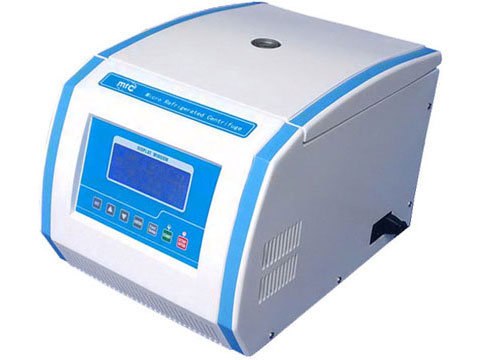
Microcentrifuges:
These are small, portable machines used in medical, scientific, industrial, and educational settings for micro-volume applications. They are also known as microfuges. Their applications include plasmid research, mini preparation kits, blood processing, and DNA and RNA separation.
High-Speed Centrifuges:
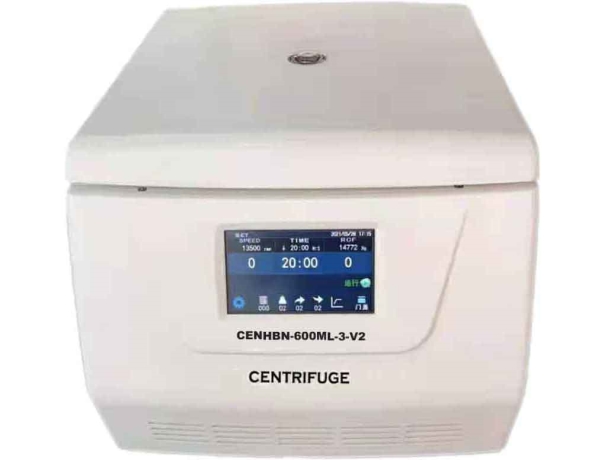
If you are working in a shared laboratory with several users and a wide variety of processing requirements, high-speed centrifuges are the ideal for you. This kind is perfect for research and operations because of its capacity to handle large sample quantities at high angular speeds and reach higher speeds. It may be used to efficiently collect microbes, cellular debris, organelles, and proteins precipitated by ammonium sulfate.
Ultracentrifuges:
In molecular biology, biochemistry, and cell biology, where microscopic particles, such as viruses, proteins, and protein complexes, are separated, ultracentrifuges rotate materials at ultrahigh speeds far faster than standard.
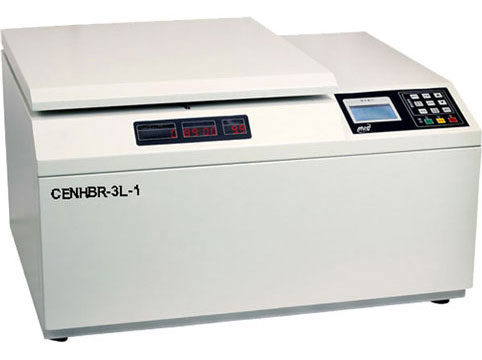
Benchtop centrifuge:
The most popular kind on the market is a benchtop centrifuge,In addition to standard sample preparations, clinical procedures, DNA/RNA analysis, and general-purpose separations, it is often employed for a wide range of objectives
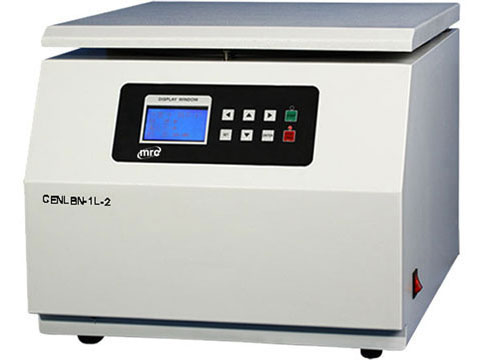
Blood centrifuge
Blood separation has been common in recent years for the purpose of removing plasma that is used for the purpose of healing and reducing pain in various medical fields:
PRP/PRF CENTRIFUGES
Especially suitable for beauty salons, cosmetics, dental clinics and more