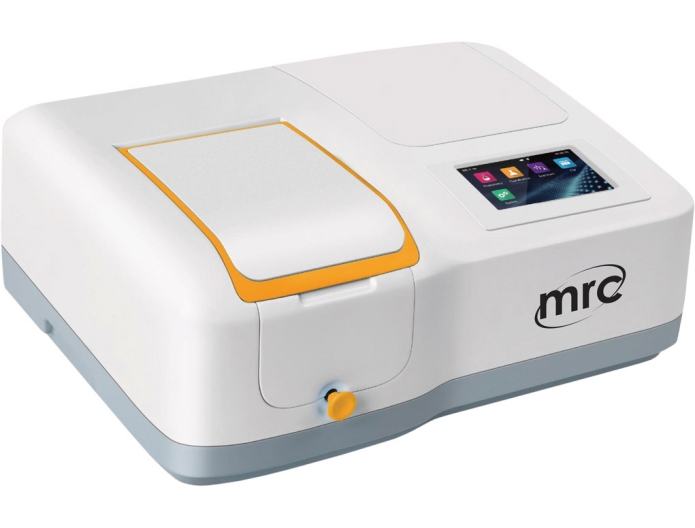
Spectrophotometers are indispensable tools in analytical chemistry and various scientific disciplines, offering precise measurements of light absorption across different wavelengths. They enable scientists to explore the interaction between matter and light, providing valuable insights into the composition and properties of substances. One critical aspect of spectrophotometers is the determination of their wavelength range, which plays a pivotal role in their functionality and applications.
Spectrophotometers operate based on the fundamental concept that materials interact with light in characteristic ways. When light passes through a sample, it may be absorbed, transmitted, or scattered depending on the properties of the substance and the wavelength of the incident light. Spectrophotometers measure the amount of light absorbed or transmitted by the sample across a range of wavelengths, providing valuable data for quantitative and qualitative analysis.
Components of a Spectrophotometer
A typical spectrophotometer comprises several key components, including a light source, monochromator, sample holder, detector, and data processing unit. The light source emits a broad spectrum of light, which is then passed through a monochromator—a device that disperses the light into its constituent wavelengths. The sample holder contains the substance under analysis, and the detector measures the intensity of light transmitted through or absorbed by the sample. Finally, the data processing unit analyzes the detector's output and generates quantitative or qualitative results.
Determining Wavelength Range
The wavelength range of a spectrophotometer is primarily determined by the characteristics of its light source and monochromator. Different types of light sources, such as tungsten lamps, deuterium lamps, and xenon arc lamps, emit light across specific wavelength ranges. For instance, tungsten lamps produce a continuous spectrum from the visible to the near-infrared region, whereas deuterium lamps emit light primarily in the ultraviolet range.
The monochromator plays a crucial role in selecting specific wavelengths for analysis. It consists of optical elements—such as prisms or diffraction gratings—that disperse the incoming light and select individual wavelengths for transmission to the sample. The design and specifications of the monochromator determine the spectral bandwidth and resolution of the spectrophotometer.
Manufacturers of spectrophotometers specify the wavelength range of their instruments based on the characteristics of the light source and monochromator. For example, a UV-Vis spectrophotometer may have a wavelength range spanning from ultraviolet (typically around 190 nm) to visible and near-infrared regions (up to 1100 nm or more), depending on the instrument's design and intended applications.
Applications and Considerations
The wavelength range of a spectrophotometer dictates its suitability for various applications. UV-Vis spectrophotometers are commonly used in molecular biology, pharmaceuticals, environmental analysis, and materials science for analyzing compounds with absorption or emission characteristics in the ultraviolet and visible regions of the electromagnetic spectrum. In contrast, instruments designed for specific applications, such as fluorescence spectroscopy or infrared spectroscopy, have wavelength ranges tailored to the relevant spectral regions.
When selecting a spectrophotometer for a particular application, researchers consider factors such as the desired wavelength range, spectral resolution, sensitivity, and compatibility with sample types. It's essential to choose an instrument that meets the requirements of the intended experiments while ensuring accurate and reliable measurements.