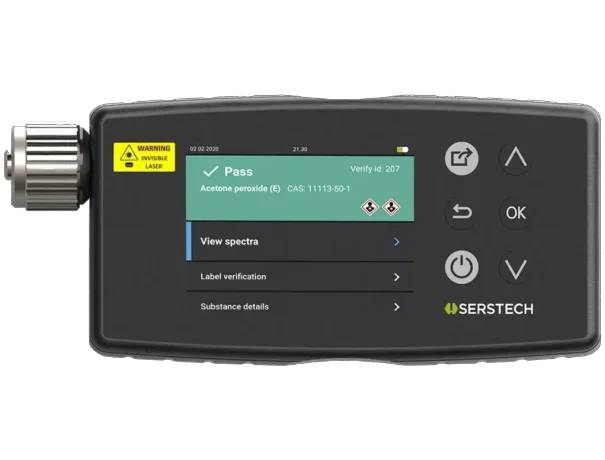
A Raman spectrometer for identifying unknown substances is one of the most practical tools available when a laboratory, production site, border checkpoint, pharmaceutical warehouse, forensic team, or industrial quality department needs fast chemical answers without destroying the sample. Instead of relying only on labels, supplier paperwork, smell, color, or slow wet chemistry, Raman spectroscopy reads the molecular structure of a material and turns it into a spectrum that can be compared with known reference data. That is why Raman is often described as a molecular fingerprinting technique: every compound produces a pattern of peaks that can help identify what the substance is, how pure it may be, or whether it matches an expected material. Modern Raman systems are used in chemistry, biology, materials science, pharmaceutical manufacturing, narcotics identification, hazardous material screening, mineral analysis, food testing, and many other fields where rapid substance verification matters. Raman spectroscopy is based on inelastic light scattering, where a laser interacts with molecular vibrations and produces shifted light that reveals chemical structure; recent scientific reviews continue to describe Raman and infrared spectroscopy as major methods for molecular fingerprint detection.
The reason Raman spectrometers are so valuable is simple: unknown substances are a real operational risk. In a pharmaceutical warehouse, a mislabeled raw material can damage an entire production batch. In a customs inspection, a sealed container may hold a benign powder, a narcotic, an explosive precursor, or a hazardous chemical. In a laboratory, an unlabeled bottle can interrupt work until someone proves what it contains. Raman does not solve every identification problem, but it gives users a fast first answer, often in seconds or minutes, and often without opening the package. That combination of speed, safety, and chemical specificity explains why Raman spectroscopy continues to gain attention in pharmaceutical quality control, field screening, forensic science, and industrial material verification. Market estimates vary by source and scope, but recent reports consistently show growth: Precedence Research estimated the global Raman spectroscopy market at USD 1.47 billion in 2025, with projected growth to USD 3.08 billion by 2035, while another 2026 industry report linked growth in NIR and Raman spectroscopy to increasing pharmaceutical demand.
What a Raman Spectrometer Actually Does
A Raman spectrometer uses a laser to shine light onto a material and then measures a tiny portion of the scattered light that changes energy after interacting with molecular vibrations. Most of the light scatters elastically, meaning it comes back with the same energy; this is called Rayleigh scattering. A very small amount scatters inelastically, meaning the energy changes because the light has interacted with molecular bonds. That changed light is the Raman signal, and it contains information about the sample’s chemical structure. In practical terms, the instrument converts light interaction into a graph, usually called a Raman spectrum, where peaks appear at different Raman shifts. These peaks act like clues, and the full pattern can point toward a specific chemical identity. Raman is especially useful because many molecules have distinct vibrational patterns, so the technique can identify materials based on chemistry rather than appearance. Edmund Optics describes Raman scattering as a process where the direction and energy of incoming light change as it scatters from a sample, while Edinburgh Instruments defines Raman spectroscopy as an analytical technique that measures vibrational energy modes using scattered light.
Think of it like listening to a glass by tapping it gently. A wine glass, a ceramic cup, and a metal bowl may all look like “containers,” but each rings differently because the material structure is different. Raman spectroscopy does something similar, but at a molecular level. The laser “taps” the molecules with light, and the spectrometer listens to the vibrational response. This is why two white powders that look identical to the human eye can produce very different Raman spectra. Sodium chloride, lactose, acetaminophen, caffeine, titanium dioxide, polyethylene, and calcium carbonate may all appear simple or visually similar in certain forms, but chemically they are not the same. The Raman spectrometer does not care whether a powder looks harmless or suspicious; it reads the vibrational pattern. That objectivity is one of its biggest strengths in unknown substance identification, especially when the user cannot safely rely on visual inspection.
The Molecular Fingerprint Idea
The phrase molecular fingerprint is not just marketing language. It is a practical way to explain why Raman spectroscopy works for identification. When a Raman spectrum is collected, the position, intensity, and shape of peaks relate to molecular bonds and structures inside the sample. A carbon-carbon bond, aromatic ring, nitrate group, sulfate group, polymer backbone, or active pharmaceutical ingredient can produce characteristic Raman features. One peak alone is rarely enough for a confident identification, but the complete spectral pattern can become highly specific. This is why Raman is useful for comparing an unknown material to a reference library. If the unknown spectrum closely matches the known spectrum of a substance, the software can suggest an identification. If the match is weak, the user knows that the material may be different, contaminated, mixed, fluorescent, poorly sampled, or outside the library.
This fingerprint concept is especially powerful in industries where materials arrive in large numbers and decisions must be made quickly. A warehouse receiving dozens of raw materials each day needs to know whether each container contains what the label claims. A field officer facing a suspicious powder needs information without opening a bag and risking exposure. A recycling or polymer facility may need to distinguish plastics that look similar but behave very differently in processing. A research lab may need to verify an unknown crystal, pigment, or residue. Raman gives users an analytical shortcut: instead of starting with a full chemical investigation, they can screen the material and decide what to do next. Bruker explains that the Raman spectrum is unique to the chemical compounds present in a sample and can be used to identify, quantify, and characterize compounds, which is exactly why the technique fits unknown substance workflows.
Why Raman Is Useful for Unknown Substance Identification
Raman spectroscopy is useful for unknown substance identification because it combines chemical specificity with a relatively simple measurement workflow. Many traditional methods require sample preparation, solvents, extraction, digestion, or direct contact with the material. Raman can often be performed directly on powders, liquids, tablets, gels, polymers, minerals, coatings, and solid surfaces. In some cases, the material can be tested through transparent or semi-transparent packaging, which reduces contamination risk and helps preserve evidence or product integrity. That matters in pharmaceutical quality control, forensic evidence handling, customs inspection, and hazardous material response. Shimadzu notes that Raman can measure samples inside plastic bags or glass containers that allow light transmission, although some container materials and thicknesses can prevent measurement.
For unknowns, the main advantage is decision speed. A Raman result can tell the user whether the substance matches an expected material, whether it is likely a specific chemical, or whether additional confirmatory analysis is required. It does not replace every laboratory method. Gas chromatography-mass spectrometry, FTIR, NMR, XRF, HPLC, and wet chemical tests all have roles. The point is that Raman can move the first decision much earlier in the process. Instead of sending every unknown sample straight to a central lab, users can screen, triage, and prioritize. This is especially useful when the cost of delay is high. In pharmaceutical manufacturing, a delayed raw material release can stop production. In security, a delayed field identification can increase risk. In research, a delayed material check can waste time and resources. A good Raman spectrometer does not just generate spectra; it gives the user a faster route from uncertainty to informed action.
How Raman Spectroscopy Identifies an Unknown Material
The identification process usually follows a clear sequence: collect the spectrum, clean or process the data, compare it against a reference library, review the match quality, and interpret the result based on the sample and application. In a simple case, the user places the unknown substance under the laser, starts the measurement, and receives a match result from the software. In a more advanced laboratory setting, the analyst may adjust laser power, exposure time, objective lens, wavelength, baseline correction, cosmic ray removal, or mapping settings. The principle is the same, but the level of control changes depending on whether the instrument is handheld, portable, benchtop, microscope-based, or SORS-based. Library matching is central to most unknown identification workflows because it compares the unknown spectrum to known reference spectra. Wasatch Photonics describes library matching as the process of identifying an unknown compound by comparing its Raman spectrum to a set of known reference spectra.
A key point many buyers overlook is that the Raman spectrometer and the spectral library work as a system. The hardware collects the spectrum, but the software and database help translate that spectrum into a usable identification. A powerful instrument with a weak library may generate excellent data but still fail to identify common materials. A broad library with poor-quality spectra may return unreliable matches. A handheld device used for narcotics, explosives, or hazardous chemicals needs a different library than a pharmaceutical raw material instrument or a research Raman microscope. Agilent, for example, states that its Resolve handheld Raman libraries include more than 13,000 Raman spectra across explosives, hazardous materials, toxic materials, chemical warfare agents, narcotics, new psychoactive substances, household products, and less common chemicals, with package options for different detection needs.
Laser Interaction With the Sample
The first step in Raman identification is laser interaction. The laser wavelength is selected based on the application, the type of sample, expected fluorescence, desired signal strength, and instrument design. Common Raman excitation wavelengths include 532 nm, 633 nm, 785 nm, 830 nm, and 1064 nm, though not every instrument offers every wavelength. Shorter wavelengths can produce stronger Raman scattering, but they may also trigger fluorescence in some samples. Longer wavelengths, especially 1064 nm in FT-Raman systems, can reduce fluorescence for difficult organic materials, but they may require different detectors and can have other tradeoffs. In unknown substance identification, this choice matters because the user often does not know whether the sample will fluoresce, burn, absorb strongly, or produce a clean Raman signal. A good instrument handles these challenges with adjustable laser power, smart exposure control, safety features, and software that helps reject poor measurements.
Laser interaction also determines whether the measurement is surface-level or more representative of the bulk material. Standard backscattering Raman usually collects information from the region illuminated by the laser, which can be excellent for clean solids, crystals, tablets, and powders. But if the sample is inside a container, beneath a coating, hidden behind packaging, or mixed unevenly, the measurement may not represent the whole material. That is why sampling technique matters. A user may need to test multiple points, rotate a container, scan a larger area, or use a different Raman configuration. In unknown identification, the instrument result is only as good as the spectrum collected. If the laser hits a label, dust layer, plastic bag, pigment coating, or contaminated surface instead of the material of interest, the match may describe the wrong thing. This is not a weakness unique to Raman; it is a general rule of analytical chemistry: the measurement must represent the sample.
Spectral Peaks and Chemical Bonds
After the laser interacts with the sample, the spectrometer records the Raman spectrum. The x-axis usually shows Raman shift in wavenumbers, often cm⁻¹, and the y-axis shows signal intensity. Peaks appear where molecular vibrations produce Raman scattering. For identification, the software and analyst look at peak positions, relative intensities, peak width, baseline shape, and the overall pattern. A pure compound often produces a clean, recognizable spectrum. A mixture may show overlapping peaks from multiple components. A fluorescent sample may show a strong sloping background that masks Raman peaks. A degraded material may partly match the expected substance but also show differences. This is why a Raman result should be interpreted as analytical evidence, not magic.
The most useful identification comes when the unknown spectrum has enough clear peaks to distinguish it from similar materials. For example, two pharmaceutical excipients may share some features, but their full spectra can still differ. Two polymers may both be clear plastics, but Raman can help distinguish PET, PE, PP, PS, PVC, and other materials depending on the sample and library. Minerals may have characteristic lattice vibrations that support identification. Pigments and dyes can also be identified, although fluorescence and laser-induced sample changes can complicate the work. In forensic and art applications, Raman’s ability to work on small particles and colored materials is valuable, but expert interpretation may be needed. For routine industrial screening, automated matching is often enough. For complex unknowns, a trained analyst should review the spectrum, compare alternatives, and decide whether confirmatory testing is needed.
Library Matching and Confidence Scores
Most modern Raman systems used for unknown identification include software that compares the collected spectrum with a library. The software calculates similarity using algorithms such as correlation, dot product, least squares, or proprietary methods. The result is often shown as a match name with a score, hit quality index, confidence value, or pass/fail result. This is useful, but it must be handled correctly. A high score can support identification, but it does not always prove identity beyond all doubt. A low score does not always mean the material is absent; the sample may be mixed, contaminated, fluorescent, poorly focused, measured through packaging, or not included in the library. Spectroscopy Online describes handheld Raman workflows where software compares a Raman spectrum with a library and produces a numerical hit quality index used to determine the result.
The best workflows define what a match means before the instrument is used. In pharmaceutical raw material identification, the system may be validated with specific acceptance criteria, approved libraries, controlled methods, and audit trails. In law enforcement or hazmat screening, a Raman result may guide immediate safety decisions but still require laboratory confirmation for legal or regulatory purposes. In industrial quality control, a match may be used to accept or reject incoming material when the method has been validated for that application. This is where many organizations make a mistake: they buy the instrument but do not build the workflow. A Raman spectrometer is a tool, not a policy. The user needs clear procedures for sample handling, match thresholds, library updates, failed matches, inconclusive results, contaminated samples, and escalation to confirmatory methods.
Where Raman Spectrometers Are Used
Raman spectrometers are used anywhere unknown or uncertain materials need to be identified quickly. The word “unknown” can mean different things depending on the field. In pharma, the unknown may be a labeled raw material that needs verification before production. In forensics, it may be a seized powder, tablet, liquid, or residue. In hazmat, it may be a suspicious chemical in a sealed container. In industrial production, it may be a plastic, pigment, additive, coating, contaminant, or foreign particle. In research, it may be a new material, crystal phase, degradation product, or micro-particle. The common thread is the same: the user needs chemical information without a long delay.
The practical value is strongest when Raman is integrated into a decision workflow. For example, a receiving department can use Raman to reduce quarantine time for raw materials. A safety team can use Raman to avoid opening unknown containers unnecessarily. A forensic team can screen evidence while preserving chain of custody. A manufacturing site can check whether a material mix-up occurred before it reaches the production line. A lab can verify whether a bottle contains the expected reagent before using it in a sensitive experiment. Raman is not only a measurement technique; it is a risk-control tool. It helps organizations ask better questions earlier: Is this what the label says? Is this material safe to handle? Does this batch match our reference? Does this unknown require a full laboratory investigation?
Pharmaceutical Raw Material Identification
Pharmaceutical raw material identification is one of the clearest use cases for Raman spectroscopy. Drug manufacturing depends on correct identity of active pharmaceutical ingredients, excipients, solvents, intermediates, and packaging-related materials. If the wrong powder enters production, the cost can include batch loss, regulatory issues, patient safety concerns, and serious reputational damage. Raman helps because it can often verify materials rapidly with minimal or no sample preparation. Portable or handheld Raman systems can be used at the receiving area, while benchtop or microscope-based Raman systems may be used in quality control laboratories for more detailed analysis. Thermo Fisher’s pharmaceutical Raman guidance lists applications such as incoming raw material identity verification and dispensing of materials during API manufacturing workflows.
The biggest operational benefit in pharma is reducing unnecessary movement and opening of containers. Traditional sampling may require taking a container to a sampling booth, opening it, collecting a sample, labeling it, testing it, and then managing contamination control. Raman can simplify part of this process, especially when the method is validated for measuring through suitable packaging. Spatially Offset Raman Spectroscopy, known as SORS, goes further by collecting information from beneath the surface and can identify materials through certain nonmetallic containers. This is particularly useful when materials are stored in sacks, drums, bottles, or plastic containers. Agilent describes SORS as a method used to identify packaged raw materials directly in quarantine, supporting non-invasive incoming material verification.
Hazardous Materials, Narcotics, and Security Screening
Raman spectroscopy is widely used in safety and security because it can identify suspicious substances without direct contact in many cases. A first responder facing an unknown powder does not want to open it, smell it, taste it, or transport it blindly. A border control officer may need to screen a package quickly. A law enforcement team may need a field indication of whether a powder or tablet matches a controlled substance, precursor, cutting agent, or benign material. Raman is attractive here because it is fast, portable, and non-destructive. Research on handheld Raman for drug products has highlighted its advantage for analyzing samples through packaging while preserving evidence integrity and continuity.
This field also shows why Raman must be used with judgment. Street drug samples, illicit tablets, counterfeit medicines, and suspicious powders are often mixtures rather than pure compounds. A handheld Raman device may identify the dominant Raman-active component while missing minor components, especially when the target is present at low concentration or masked by fluorescence. Dangerous substances can also be present in mixtures where the visible spectrum is complicated. That does not make Raman useless; it means Raman should be part of a tiered workflow. For immediate safety screening, it can provide rapid intelligence. For legal confirmation, toxicology, or trace analysis, additional methods may still be required. The strongest programs combine Raman with training, validated libraries, clear interpretation rules, and confirmatory laboratory methods when necessary.
Food, Polymers, Minerals, and Industrial Quality Control
Outside pharma and security, Raman spectroscopy is valuable for food testing, polymer identification, mineral verification, pigment analysis, coating evaluation, contamination investigation, and industrial quality control. In food and agriculture, Raman can help identify ingredients, detect adulteration, study composition, or support quality checks, depending on the sample and method. In polymers, it can distinguish materials that look similar but behave differently during recycling, molding, or packaging production. In mineralogy, Raman helps identify crystalline materials and can support geological, gemological, and research applications. In industrial production, it can help investigate foreign particles, residue, raw material mix-ups, and supplier inconsistencies. The main advantage remains the same: Raman delivers chemical specificity while often preserving the sample.
For unknown industrial substances, Raman can shorten investigations dramatically. Imagine a production line stops because a white residue appears on a component. Without a fast method, the team may argue whether it is lubricant, cleaning agent, salt, polymer dust, degraded material, or contamination from packaging. Raman can quickly compare the residue to reference materials and narrow the possibilities. That saves time, reduces speculation, and helps the team choose the right corrective action. In quality control, this can prevent unnecessary shutdowns or reveal real process problems before they grow. Raman’s value is not only in perfect identification; it is in replacing guesswork with chemical evidence.
Types of Raman Spectrometers for Unknown Substances
Choosing a Raman spectrometer depends heavily on the application. A research laboratory identifying micro-particles needs different capabilities than a hazmat team testing sealed containers in the field. A pharmaceutical warehouse may prioritize validated methods, barcode scanning, audit trails, and raw material libraries. A forensic group may prioritize portability, ruggedness, controlled substance libraries, and safe through-container testing. A university lab may need flexible laser options, microscope coupling, mapping, and open data analysis. The best instrument is not the most expensive one; it is the one matched to the sample, environment, user skill level, and decision requirements.
The main categories are benchtop Raman spectrometers, portable Raman spectrometers, handheld Raman spectrometers, Raman microscopes, and SORS Raman systems. Some systems are designed for routine identification with simplified workflows. Others are built for research flexibility and advanced spectral analysis. Some are optimized for sealed container inspection. Others are designed for small particles, thin films, or high-resolution mapping. This distinction matters because “Raman spectrometer” is not one product type. It is a family of instruments using the same physical principle but packaged for different jobs.
Benchtop Raman Spectrometers
A benchtop Raman spectrometer is usually the best choice when the priority is data quality, flexibility, controlled laboratory conditions, and advanced analysis. Benchtop systems often provide better spectral resolution, more stable optics, stronger software tools, and more options for sample accessories. They may be used for raw material identification, research, formulation development, polymer analysis, chemical characterization, and quality control. Some benchtop systems support multiple laser wavelengths, allowing the user to reduce fluorescence or optimize signal strength for different sample types. A Raman microscope takes this further by allowing the user to focus on microscopic particles, map surfaces, and analyze specific regions within a heterogeneous sample.
The downside is that benchtop systems are less convenient for fieldwork or warehouse screening. Samples may need to be brought to the instrument, and users may need more training. But for complex unknowns, that tradeoff can be worthwhile. If the unknown is a tiny contaminant embedded in a tablet, a fiber on packaging, a pigment particle in a coating, or a microplastic fragment, a Raman microscope may be far more useful than a handheld device. If the task is routine pass/fail verification, a handheld system may be enough. If the task is scientific investigation, benchtop Raman usually provides the deeper analytical control needed to interpret difficult spectra.
Portable and Handheld Raman Spectrometers
Portable and handheld Raman spectrometers are built for speed and convenience. They allow users to bring the instrument to the material rather than bringing the material to the lab. This is especially important for warehouses, customs inspection, field safety, forensic screening, incoming goods checks, and industrial maintenance. Handheld Raman systems often include built-in libraries, automatic identification software, simple user interfaces, battery operation, rugged housings, and safety features. Many are designed for non-specialists, although proper training is still essential. The user points the device, starts the scan, and receives a match result or warning.
The practical benefit is enormous when the question is simple: “What is this material?” or “Does this match the expected substance?” But handheld Raman has limits. It may not resolve complex mixtures well. It may struggle with dark, highly absorbing, fluorescent, or thermally sensitive samples. It may not identify a material that is absent from the library. It may return a match to the strongest component rather than the most dangerous component. A study on handheld Raman for drugs of abuse describes it as an emerging technique for rapid on-site detection, but forensic use still requires awareness of device performance, sample complexity, and method limitations.
SORS Raman for Sealed Containers
Spatially Offset Raman Spectroscopy, or SORS, is a specialized Raman approach designed to collect chemical information from beneath the surface of a material or through certain packaging. In conventional Raman, the laser illumination and collection area are often close together, so the signal can be dominated by the surface or container. In SORS, the system collects Raman signals at spatially offset positions, allowing deeper information from the contents to be separated from the container contribution. This is why SORS is valuable for identifying unknown substances inside opaque or semi-opaque nonmetallic containers, sacks, plastic bottles, paper packaging, and other challenging barriers. Spectroscopy Online describes portable SORS as enabling rapid identification of materials concealed by a wide variety of nonmetallic sealed containers, including colored and opaque plastics, paper, cardstock, sacks, fabric, and glass.
SORS is not needed for every application, but when sealed-container safety matters, it can be a major advantage. In hazmat response, opening an unknown container can create exposure risk. In pharma, opening every raw material container can increase contamination risk and slow release. In customs or security, preserving the package may help evidence handling. SORS gives users a way to inspect deeper than standard surface Raman. The limitation is that not every container can be measured, not every material gives a strong signal, and metal containers remain a challenge because the laser cannot pass through them. Still, for the right use case, SORS can turn Raman from a surface screening tool into a safer through-container identification system.
Key Benefits and Limitations
The strongest benefits of Raman spectroscopy for unknown substance identification are speed, specificity, minimal sample preparation, non-destructive testing, and portability. A Raman spectrometer can often produce a result quickly enough to influence real-time decisions. It can distinguish many chemically different materials that look similar. It can test solids, powders, liquids, gels, tablets, polymers, and coatings. It can sometimes test through packaging. It can be used by trained non-specialists in routine workflows or by experts in advanced laboratory investigations. For organizations dealing with unknown substances, these benefits translate into less waiting, less unnecessary handling, better safety, and faster triage.
But Raman is not a universal answer. Some substances fluoresce strongly and hide the Raman signal. Some mixtures are difficult because overlapping spectra can confuse library matching. Some dark materials absorb laser energy and may heat, burn, or degrade. Some samples produce weak Raman scattering. Some containers block or distort the signal. Some identification claims require regulatory or legal confirmation by additional methods. This is why a professional buyer should not ask only, “Can Raman identify unknown substances?” The better question is, “Which unknown substances, in which form, through which container, at which concentration, under which operating conditions, with which library, and for what decision?” That question leads to a much better instrument choice.
Non-Destructive Testing and Fast Results
Non-destructive testing is one of Raman’s biggest selling points. In many cases, the sample remains physically unchanged after analysis. This is useful when the material is expensive, limited, hazardous, evidential, or part of a production batch. In forensic workflows, preserving evidence integrity is important. In pharma, avoiding unnecessary opening and sampling can reduce contamination concerns. In research, preserving a small or rare sample may be essential. Raman’s fast measurement also makes it practical for repeated checks. A user can scan multiple containers, tablets, particles, or surface areas in a short period, depending on the instrument and method.
Speed also changes behavior. When testing is slow, people delay it, batch it, outsource it, or avoid it unless absolutely necessary. When testing is fast, it becomes part of routine decision-making. That is why handheld Raman can be so useful in warehouse and field settings. It gives operators a practical way to check materials before problems escalate. A fast Raman result can stop a mislabeled raw material from entering production, warn a responder not to open a container, or help a lab technician decide whether an unknown bottle should be isolated. Speed is not just convenience; it is risk reduction.
Fluorescence, Mixtures, and Difficult Samples
Fluorescence is one of the most common Raman problems. When a sample fluoresces under the laser, the fluorescence background can be much stronger than the Raman signal and may cover the peaks needed for identification. This is especially common with some organic materials, biological samples, dyes, minerals, impurities, degraded substances, and colored materials. A mineral identification guide notes that fluorescence emission after laser excitation can be many times more intense than Raman scattering, effectively overwhelming some or all Raman peaks in the spectrum.
Mixtures are another challenge. An unknown powder may contain a main ingredient, filler, binder, pigment, contaminant, and trace additive. The Raman spectrum may represent all of them at once, but not always equally. Some compounds scatter strongly and dominate the spectrum, while others may be weak or hidden. This is why mixture analysis often needs chemometrics, advanced algorithms, or confirmatory techniques. Research reviews on Raman with chemometrics and AI point to the promise of advanced methods for mixture analysis, but they also highlight the need for proper validation, adequate sample sizes, and reliable modeling practices.
How to Choose the Right Raman Spectrometer
Choosing a Raman spectrometer for identifying unknown substances should start with the real use case, not the catalog headline. The first question is where the instrument will be used. A controlled laboratory can support a benchtop or microscope Raman system. A receiving warehouse may need a portable or handheld device with validated methods. A field safety team may need a rugged handheld system with hazardous material libraries and sealed-container accessories. A pharma site may need compliance features such as audit trails, user permissions, method validation support, barcode scanning, data integrity controls, and raw material libraries. A research group may need open spectral data, flexible laser wavelengths, mapping, and high-resolution optics.
The second question is what kinds of unknowns must be identified. Organic powders, inorganic salts, polymers, minerals, narcotics, explosives, APIs, excipients, pigments, coatings, liquids, and biological samples do not behave the same way. Some need a 785 nm laser. Some benefit from 1064 nm to reduce fluorescence. Some require microscope analysis. Some require SORS. Some require a specialized library. Some are simply poor Raman targets and may be better tested by FTIR, NIR, GC-MS, LC-MS, XRF, or another method. A serious purchase process should include testing real samples, including difficult samples, not only clean demonstration materials.
Laser Wavelength, Spectral Library, Software, and Application Fit
The most important buying factors are laser wavelength, spectral range, resolution, library quality, software workflow, sample interface, safety design, data management, and application validation. Laser wavelength affects fluorescence, signal strength, detector choice, and sample heating risk. Spectral range determines what fingerprint regions are captured. Resolution affects the ability to distinguish close peaks. Library quality affects identification reliability. Software affects whether operators can use the instrument correctly and consistently. Accessories determine whether the system can test vials, bags, bottles, tablets, powders, liquids, surfaces, or microscopic particles. Data management matters when results must be documented, audited, or reviewed later.
A good comparison should look like this:
| Selection Factor | Why It Matters for Unknown Identification | Practical Buyer Question |
| Laser wavelength | Influences fluorescence, Raman signal strength, and sample compatibility | Which wavelength works best on our real samples? |
| Spectral library | Determines what substances the software can identify | Does the library include our target materials and likely unknowns? |
| Through-container ability | Reduces exposure, contamination, and evidence handling risk | Can it measure through our actual bags, bottles, sacks, or vials? |
| Software and match scoring | Converts spectra into usable decisions | Are match thresholds clear, validated, and easy to review? |
| Portability | Affects where testing can happen | Do we need field use, warehouse use, or lab-only use? |
| Compliance features | Important for regulated environments | Does the system support audit trails, user control, and validated methods? |
| Mixture handling | Critical for real-world unknowns | Can it identify mixtures or only pure compounds? |
| Service and training | Determines long-term success | Is training, method setup, and technical support available? |
The smartest approach is to ask vendors for an application demonstration using your own samples. Include clean samples, packaging materials, mixtures, low-concentration materials, colored samples, and known problem cases. If the instrument performs well only on easy samples, it may disappoint in real use. If it handles the difficult cases, has the right library, and produces consistent results by different operators, it is much more likely to succeed. Raman is a powerful tool, but only when the instrument, library, method, and user workflow are aligned.