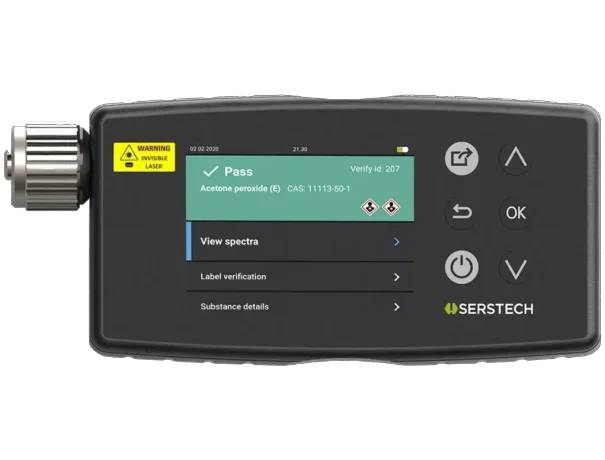
A portable Raman spectrometer is one of those instruments that sounds simple until you actually have to choose one. On paper, the promise is attractive: point the laser at a material, collect a spectrum, compare it to a reference, and identify the substance without destroying the sample. In real life, the right choice depends on the sample, packaging, fluorescence, safety requirements, software, validation needs, and the skill level of the operator. USP describes Raman as a “vibrational spectroscopic technique” that is complementary to IR and NIR, with spectra based on changes in molecular polarizability rather than dipole changes. That difference is not just academic; it explains why Raman can be powerful for solids, powders, polymers, tablets, minerals, and many materials where fast identification matters.
The key point is this: do not buy a portable Raman spectrometer only because it is portable. Portability is a workflow advantage, not a scientific guarantee. A warehouse team verifying incoming raw materials needs a different device from a research lab studying unknown particles, a recycling plant identifying polymers, or an industrial QA team checking materials on the production floor. Some users need a simple pass/fail analyzer with a strong library and audit trail. Others need exportable spectra, method development tools, adjustable laser power, interchangeable probes, and deeper control over acquisition parameters. Choosing well means matching the instrument to the real measurement problem, not the prettiest brochure.
What a Portable Raman Spectrometer Is
A portable Raman spectrometer is a compact version of a Raman spectroscopy system designed for use outside a traditional spectroscopy bench. It usually combines a laser source, optical filters, spectrograph, detector, sampling interface, embedded software, and reference library in one handheld or field-portable package. The operator places the device against a sample, vial, bag, tablet, polymer, coating, or container, then the instrument collects scattered light and converts it into a Raman spectrum. That spectrum is usually displayed as intensity versus Raman shift, measured in wavenumbers, because Raman shift represents the energy difference between the incident photon and the scattered photon. USP explains that Raman spectra are interpreted in a similar way to mid-infrared spectra, but the underlying selection rules are different because Raman intensities arise from polarizability changes.
The practical appeal is that Raman is often non-destructive, fast, and suitable for many solids and liquids with little or no sample preparation. That makes it especially useful for identifying raw materials, checking finished products, inspecting unknown substances, screening polymers, investigating contamination, and supporting process control. Current manufacturer guidance also emphasizes that Raman can analyze liquids, powders, tablets, gels, polymers, fibers, and solids, while fiber-optic probes allow remote measurements in laboratory and process environments. A good way to think about the device is as a chemical fingerprint reader. It does not “see” the object like a camera. It reads molecular vibrational information, then compares that pattern with known references or a validated method.
Why Raman Identifies Materials
Raman works because molecules interact with laser light in a way that depends on their structure. Most of the light scatters elastically, meaning it comes back with the same energy. A very small part scatters inelastically, meaning the energy changes because molecular vibrations are involved. Those energy shifts create peaks that can be characteristic of chemical bonds, molecular structure, polymorphs, crystal forms, and material composition. This is why a Raman spectrum can distinguish between many visually similar substances, such as two white powders, two plastic films, or two pharmaceutical excipients. The method becomes especially valuable when visual inspection, density, color, or barcode information is not enough.
For a laboratory, this fingerprint behavior is useful because it adds a fast identity check before more time-consuming analytical methods. For industry, it is useful because decisions can be made closer to the material: in receiving areas, production zones, warehouses, inspection points, or field locations. The FDA’s PAT framework encourages modern process analysis tools that support process understanding, innovation, and efficient quality assurance in pharmaceutical development and manufacturing. Raman is one of the technologies commonly used in PAT because it can collect useful chemical information in real time or near real time. That does not mean every portable Raman unit is automatically suitable for PAT. It means Raman can be part of a smarter quality system when the device, method, validation, and data handling are properly designed.
What Portability Changes
Moving Raman from a bench to a portable format changes the workflow more than the core science. A benchtop Raman system may offer higher configurability, microscopy, advanced optical control, better thermal stability, and deeper research capability. A portable Raman system gives you speed, mobility, simplified operation, and the ability to test materials where they are. That is a major advantage when sampling is expensive, risky, slow, or likely to contaminate the material. For example, testing a raw material through a container can reduce the need to open packaging, move samples, expose operators, or create waste.
But portability introduces tradeoffs. Smaller devices may have fewer wavelength options, less flexible optics, limited sample positioning, fixed libraries, reduced method development control, or shorter battery life. They also need robust user management because a device used by multiple operators in a warehouse or factory must produce consistent results, not just nice spectra in the hands of an expert. Some modern portable systems specifically address these workflow challenges. Agilent’s Vaya system, for example, is marketed for raw material identification through transparent and non-transparent containers, including opaque containers using spatially offset Raman spectroscopy, and it includes compliance-related features such as audit trails, user access controls, LIMS-compatible data, and support for 21 CFR Part 11 workflows.
Where Portable Raman Adds Value
Portable Raman is strongest when the user needs rapid material identification without sending every sample to a central lab. In a lab environment, it can support incoming material checks, research screening, failure investigation, contaminant identification, and comparison of unknowns against reference spectra. In an industrial environment, it can support production verification, warehouse release, maintenance checks, field inspection, recycling, chemical safety, and counterfeit screening. The value is not only analytical. It is operational. If an instrument prevents delays, reduces sampling steps, speeds release, or helps non-specialists make controlled decisions, the return can be significant.
The strongest use cases usually share three conditions. First, the material produces a usable Raman signal. Second, the business process benefits from fast, local testing. Third, the result can be interpreted reliably through a library match, validated method, or expert review. If one of these conditions is missing, the investment becomes less clear. A portable Raman spectrometer is not a universal chemical detector. It may struggle with heavy fluorescence, very dark samples, low-concentration impurities, complex mixtures, or materials hidden behind unsuitable packaging. This is why the selection process should start with real samples, not only specification sheets.
Laboratory QA/QC and R&D
In the laboratory, a portable Raman spectrometer can be a practical bridge between full analytical characterization and quick screening. QA/QC teams may use it to confirm incoming raw materials, compare batches, investigate suspected mix-ups, identify visible particles, or verify packaging-related questions. R&D teams may use it earlier in development to screen formulations, study polymorphs, check materials before deeper analysis, or decide which samples deserve full laboratory testing. Because Raman is non-destructive in many cases, it is attractive when the sample is limited, valuable, or needs to be preserved for additional analysis.
For regulated pharmaceutical environments, the device must be judged not only by signal quality but also by documentation quality. If results become GMP records, then audit trails, user roles, electronic signatures, validated methods, controlled libraries, and data export matter. The eCFR states that 21 CFR Part 11 applies to electronic records created, modified, maintained, archived, retrieved, or transmitted under FDA record requirements. That means the “best” Raman device for pharma is not necessarily the one with the highest laser power or most impressive marketing image. It is the one that can produce reliable measurements and support the required data integrity controls in the user’s actual quality system.
Industrial and Field Inspection
In industry, the portable Raman spectrometer is often valuable because it brings the measurement to the material. A production engineer may need to verify a polymer grade before processing. A chemical plant may need a field tool for quick identification. A recycling operation may need to separate material types. A safety team may need to reduce unnecessary handling of unknown substances. A quality team may need to confirm that a material in a bag, drum, or container matches the purchase order and certificate of analysis. These are not glamorous tasks, but they are exactly where portable Raman can save time and reduce errors.
The challenge in industrial use is that samples are often less clean than laboratory samples. Surfaces may be dusty, colored, coated, wet, aged, mixed, or inside packaging. Lighting, temperature, operator technique, and sample presentation may also vary. A device that works beautifully on a clean white powder in a demo room may struggle with a dark additive, a fluorescent dye, or a multilayer package. This is why industrial buyers should demand testing on real representative samples, including worst-case materials. If the device will be used by non-specialists, the interface must also be simple enough to prevent method mistakes. A clear pass/fail workflow is often more valuable than a complicated research interface.
The Main Selection Criteria
The most important selection criteria are laser wavelength, spectral range, resolution, sensitivity, sampling interface, software, reference libraries, compliance features, ruggedness, battery life, service support, and total cost of ownership. Buyers often focus too much on one number, such as laser power or resolution, while ignoring the full measurement chain. A powerful laser does not help if fluorescence overwhelms the Raman signal. High resolution does not help if the library is weak. A large library does not help if the sample is hidden behind packaging the instrument cannot handle. A rugged case does not help if the data cannot be exported into the quality system.
The right question is not “Which portable Raman spectrometer is the best?” The right question is “Which device produces reliable decisions on my samples, in my workflow, with my operators, under my documentation requirements?” That is a very different buying process. It means collecting sample sets, defining success criteria, testing difficult materials, checking false positives and false negatives, and evaluating how the results will be stored. ASTM’s Raman shift standard guide is a reminder that calibration and measurement confidence matter: it covers Raman shift values for chemicals used for wavenumber calibration, while also clarifying that the guide provides values rather than full calibration procedures.
Laser Wavelength
Laser wavelength is usually the first technical decision because it strongly affects fluorescence, signal strength, sample compatibility, detector choice, and safety considerations. Common portable Raman wavelengths include 532 nm, 785 nm, 830 nm, and 1064 nm, with 785 nm and 1064 nm especially common in many handheld systems. Shorter wavelengths often produce stronger Raman scattering, but they can also trigger more fluorescence in colored, biological, organic, or impure samples. Longer wavelengths often reduce fluorescence but may produce weaker Raman scattering and may require different detector technology. Current Raman vendor guidance commonly positions 532 nm as strong in signal intensity, 785 nm as a balance between signal and fluorescence suppression, and 1064 nm as useful for highly fluorescent samples such as pharmaceuticals, biological materials, and colored compounds.
| Wavelength | Typical Strength | Main Limitation | Best Fit |
| 532 nm | Strong Raman signal | Higher fluorescence risk | Clean inorganic materials, some research applications, selected high-signal samples |
| 785 nm | Good balance for many materials | Can still fluoresce with some colored or biological samples | General laboratory use, many raw materials, polymers, pharmaceuticals |
| 1064 nm | Reduced fluorescence | Lower Raman scattering and often higher cost | Fluorescent, dark, colored, biological, and difficult organic materials |
| 830 nm | Useful compromise in some systems | Less universal than 785 nm or 1064 nm | Specialized handheld systems and through-container workflows |
532 nm
A 532 nm Raman spectrometer can be excellent when the sample gives a strong, clean Raman response and fluorescence is not a major problem. Because Raman scattering intensity is generally stronger at shorter excitation wavelengths, 532 nm systems can produce strong peaks and attractive spectra for suitable samples. This can make them useful in some materials research, minerals, carbon materials, and selected inorganic or clean samples. The drawback is that many real-world industrial and biological materials are not clean from a Raman point of view. They may contain dyes, additives, impurities, pigments, organics, or degradation products that fluoresce under green excitation.
For routine industrial identification, 532 nm should not be selected only because the signal looks stronger in ideal demonstrations. It should be tested against the actual sample set. If the target materials are clean and fluorescence-free, it can perform very well. If the samples include colored plastics, botanicals, coatings, biological materials, pharmaceuticals, or unknown field samples, the buyer should be cautious. A 532 nm unit may still be correct for a specific method, but it is less forgiving as a general-purpose portable analyzer. The safest approach is to compare 532 nm directly with 785 nm and 1064 nm on the same difficult samples before making the decision.
785 nm
A 785 nm portable Raman spectrometer is often the practical default for general material identification. It offers a strong compromise between Raman intensity, fluorescence control, instrument cost, detector performance, and library availability. Many handheld Raman systems have historically used this wavelength because it works well for a wide range of powders, liquids, polymers, tablets, and industrial materials. Vendor application guidance commonly describes 785 nm as a balanced option for many organic compounds and pharmaceutical applications. That does not mean 785 nm is always best. It means it is often a strong starting point when the sample class is broad and not known to be highly fluorescent.
The weakness of 785 nm appears when samples fluoresce strongly. Some dark materials, dyed materials, biological samples, botanicals, active pharmaceutical ingredients, excipients, and aged or impure products can produce a background that hides the Raman peaks. In those cases, the operator may increase acquisition time or laser power, but that can create other problems such as heating, photodegradation, or poor repeatability. If your materials are mostly standard industrial chemicals, polymers, white powders, or clean raw materials, 785 nm may be enough. If your material list includes many colored, natural, dark, or fluorescent samples, do not assume. Test before buying.
1064 nm
A 1064 nm portable Raman spectrometer is usually selected when fluorescence is the main enemy. Longer wavelength excitation often reduces fluorescence and can open up sample classes that are difficult with 785 nm. This is why 1064 nm is commonly discussed for pharmaceuticals, biological materials, colored compounds, botanicals, and other challenging organic matrices. Current vendor guidance also positions 1064 nm as a common choice for highly fluorescent samples. For a lab or industry team that repeatedly fails to get usable spectra with 785 nm, 1064 nm can be the difference between a practical workflow and a failed project.
The tradeoff is that 1064 nm systems may cost more, may have different detector constraints, and may produce weaker Raman scattering compared with shorter wavelengths. That makes sensitivity, detector quality, acquisition time, and software processing especially important. Buyers should also confirm the exact spectral range, library compatibility, and identification performance for their materials. In many cases, a 1064 nm device is not “better” in a universal sense. It is better for a specific problem: reducing fluorescence enough to identify difficult samples. If your core materials are fluorescent, colored, or biological, 1064 nm deserves serious attention.
Spectral Range, Resolution, and Sensitivity
After wavelength, check spectral range, resolution, and sensitivity. Spectral range tells you which Raman shifts the instrument can measure. Many identification tasks depend on fingerprint-region peaks, while some applications also benefit from higher wavenumber regions. Resolution affects the ability to separate close peaks, which matters for polymorphs, similar compounds, mixtures, and materials with subtle spectral differences. Sensitivity affects how quickly and reliably the instrument collects usable spectra, especially on weak scatterers, low concentrations, or samples measured through packaging. These numbers should not be judged in isolation because the final result depends on the full optical design, detector, filters, laser stability, sample interface, and software.
For routine identification, the practical test is simple: can the device repeatedly distinguish your materials under real operating conditions? If two compounds have very similar spectra, better resolution may matter. If the sample has weak scattering, better sensitivity and longer acquisition options may matter. If the sample is heterogeneous, a larger sampling spot or multiple acquisitions may matter more than pure resolution. A good supplier should be willing to test your difficult samples and show raw spectra, not only match results. You want to see whether the spectrum is truly clean or whether the software is forcing a match from weak evidence.
Sampling Accessories and Through-Container Analysis
Sampling accessories can make or break a portable Raman workflow. Basic contact tips may work for exposed solids, tablets, powders, and liquids in clear vials. Bottle adapters, vial holders, stand-off adapters, fiber probes, immersion probes, and sealed-container accessories expand what the device can do. If the work involves raw material identification in sacks, drums, bottles, liners, or opaque packaging, ordinary front-surface Raman may not be enough. Through-container analysis requires the optical design and software to separate useful sample signal from packaging signal. Agilent describes SORS as a way to analyze contents behind non-transparent layers or containers, and its handheld Vaya system is marketed for identification through transparent and non-transparent containers.
This matters because packaging is not a minor detail. In a pharmaceutical warehouse, opening containers can create contamination risk, operator exposure, extra documentation, sample disposal, and delays. In chemical or industrial settings, sealed-container testing can improve safety and speed. But the buyer must verify container compatibility. Clear glass, amber bottles, plastic liners, white sacks, paper bags, multilayer packaging, and colored containers behave differently. A device that works through one package type may fail through another. The correct purchasing test is not “Can it measure through packaging?” It is “Can it measure through our packaging, with our materials, at our required confidence level?”
Software, Libraries, and Chemometrics
The software is not a secondary feature. In many portable Raman workflows, it is the difference between an expert instrument and an operator-proof quality tool. A good system should allow controlled methods, library management, user permissions, clear pass/fail criteria, spectral review, reporting, data export, and traceable updates. For non-regulated environments, the priority may be speed and simplicity. For regulated environments, the priority expands to audit trails, electronic records, validation support, controlled access, and integration with LIMS or other quality systems. The eCFR scope for Part 11 makes this especially important when electronic Raman records are used to satisfy FDA-regulated record requirements.
Libraries deserve special attention. A general library may help with broad unknown identification, but quality control often requires a custom, validated library built from the user’s own approved materials. Mineral, polymer, pharmaceutical, forensic, and chemical libraries are not interchangeable. ICDD, for example, describes Raman entries curated for mineral identification, with displayed Raman spectra, measured formulas, ideal formulas, multiple user-selectable wavelengths, and links to XRD patterns. That is valuable for mineral-focused work, but it does not replace a validated pharmaceutical raw material library or a polymer QC method. The library must fit the use case, and the algorithm must be tested for false matches, mixture limitations, and near-neighbor materials.
Compliance, Data Integrity, and Safety
Compliance starts with the application. A university lab doing exploratory work has different requirements from a GMP pharmaceutical site, a food manufacturer, a hazardous-materials response team, or a production plant. In regulated environments, ask whether the instrument supports user roles, password control, audit trails, electronic signatures, secure records, method locking, report generation, data backup, and software validation documentation. Some portable Raman systems are explicitly marketed with support for USP chapters, 21 CFR Part 11, EU Annex 11, and LIMS-compatible workflows. Agilent’s Vaya page, for example, lists compliance references including USP <858>, USP <1858>, USP <1058>, USP <1225>, EP <2.2.48>, and 21 CFR Part 11.
Safety is equally important because Raman instruments use lasers. Laser class, interlocks, training, warning labels, eye safety controls, and site procedures must be reviewed before deployment. IEC 60825-1 applies to laser products emitting laser radiation in the wavelength range from 180 nm to 1 mm, which covers common Raman laser wavelengths. Do not assume a handheld format means low risk. Some portable Raman instruments use Class 3B lasers, and the operator may be working near reflective packaging, glass, metal parts, or uncontrolled field conditions. The correct question is not only whether the instrument can identify the material. It is whether your team can use it safely, repeatedly, and defensibly.
Portable vs Benchtop Raman Comparison
A portable Raman spectrometer is usually the better choice when speed, mobility, and simple identification are the priority. A benchtop Raman system is usually better when the work demands maximum flexibility, microscopy, advanced method development, high-end research performance, or complex sample handling. The mistake is treating one as a replacement for the other. In many organizations, they are complementary. The portable unit screens and verifies quickly. The benchtop system investigates difficult cases, develops methods, confirms unknowns, or performs deeper analysis.
| Category | Portable Raman Spectrometer | Benchtop Raman Spectrometer |
| Best use | Fast identification near the sample | Research, development, advanced analysis |
| Operator skill | Often designed for non-specialists | Usually requires trained users |
| Sample location | Warehouse, field, production, lab bench | Laboratory |
| Flexibility | Lower to moderate | High |
| Throughput | High for routine ID | Moderate, depending on workflow |
| Data control | Strong in regulated handheld systems | Strong when connected to lab software |
| Limitations | Less configurable, packaging/sample challenges | Less mobile, slower for field decisions |
| Buying focus | Workflow fit and decision reliability | Analytical flexibility and performance depth |
How to Evaluate Before Buying
The best evaluation process starts with a written use-case document. Define the sample types, container types, operators, environment, required decision, required documentation, and failure consequences. Then create a representative test set. Include easy samples, difficult samples, similar materials, old batches, colored materials, packaging variations, mixtures, contaminated samples, and any material that previously caused analytical trouble. A supplier demo using only clean samples is not enough. You need evidence that the instrument performs on your real materials.
During evaluation, ask for raw spectra as well as match results. A match score alone can hide weak spectral quality. Test repeatability across operators, days, packaging positions, sample orientations, and environmental conditions. Check how the device handles false positives and near-neighbor materials. Review calibration routines, system suitability checks, reference standards, and maintenance procedures. ASTM E1840 is relevant here because it provides reliable Raman shift values for chemicals used in wavenumber calibration, which reinforces the importance of spectral axis confidence. For regulated use, involve QA, IT, validation, and data integrity teams early. Do not discover after purchase that the spectra cannot be exported, the audit trail is insufficient, or the software does not fit your validation approach.
Common Mistakes to Avoid
The first mistake is buying based on wavelength alone. Wavelength matters, but the device is a system. A poor 1064 nm instrument will not outperform a strong 785 nm system simply because the number is higher. The second mistake is ignoring fluorescence until after purchase. If your samples fluoresce, every other specification becomes less relevant. The third mistake is relying only on a general library. A library that identifies common chemicals may still fail in a QC workflow where near-neighbor discrimination matters. The fourth mistake is ignoring packaging. If your workflow requires through-container testing, prove it before buying.
The fifth mistake is forgetting the operator. A device used by spectroscopy experts can have a flexible interface. A device used by warehouse staff needs controlled methods and simple decisions. The sixth mistake is underestimating compliance. In a regulated environment, software, audit trail, user access, and validation support are not “extras.” They are part of the instrument’s real suitability. The seventh mistake is not budgeting for service, training, library development, calibration checks, accessories, batteries, and documentation. The purchase price is only one part of the cost. The real cost is the cost of reliable decisions over the life of the instrument.