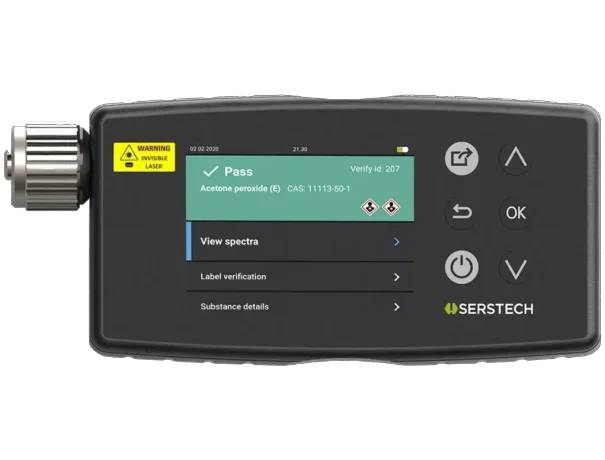
Raman spectrometers are powerful analytical instruments used to identify, verify, and characterize materials by measuring their molecular vibrational response. They are widely used in laboratories, pharmaceutical production, materials science, chemical analysis, forensic screening, polymer identification, mineral analysis, food testing, quality control, and industrial research. The main advantage of Raman spectroscopy is that it can often provide fast chemical information with little or no sample preparation, while keeping the sample intact.
Although Raman instruments vary by manufacturer, design, laser wavelength, software, accessories, and application, the general operating principles are similar. A Raman spectrometer directs laser light onto a sample, collects a small portion of scattered light, separates the Raman signal from the laser background, and converts the signal into a spectrum. The resulting Raman spectrum contains peaks that correspond to molecular vibrations. These peaks can then be interpreted manually or compared with reference libraries to help identify the material.
This article explains the general steps for using Raman spectrometers safely and effectively. It is written as a practical guide for laboratory users, quality control teams, field operators, researchers, and technical buyers who want to understand how Raman measurements are typically performed.
Understanding the Purpose of the Measurement
Before using a Raman spectrometer, the operator should clearly define the purpose of the analysis. Raman spectroscopy can be used for many different tasks, but each task may require a different measurement method, accessory, software workflow, or interpretation approach.
Common reasons for using a Raman spectrometer include:
- Identifying an unknown substance
- Verifying that a raw material matches its label
- Comparing a sample with a known reference
- Checking whether a material has changed, degraded, or been contaminated
- Identifying particles, fibers, crystals, powders, tablets, gels, liquids, polymers, minerals, or coatings
- Testing materials through transparent or semi-transparent packaging
- Supporting quality control decisions in production
- Investigating process problems or foreign particles
- Screening suspicious or hazardous substances in the field
A clear analytical question helps prevent poor measurement design. For example, the question "What is this unknown powder?" is different from "Does this powder match our approved lactose reference?" The first question may require a broad spectral library and expert review. The second may require a validated pass/fail method with defined acceptance criteria.
Basic Components of a Raman Spectrometer
A Raman spectrometer usually includes several key components. Understanding their function helps the user operate the instrument correctly.
The laser provides the excitation light. Common Raman laser wavelengths include 532 nm, 633 nm, 785 nm, 830 nm, and 1064 nm. The best wavelength depends on the sample type, fluorescence level, signal strength, and application.
The sample interface is the part of the instrument that brings the laser to the sample. It may be a microscope objective, fiber optic probe, handheld nose cone, vial holder, cuvette holder, tablet holder, mapping stage, or sealed-container accessory.
The collection optics collect the scattered light from the sample. Most of the scattered light is Rayleigh scattering, which has the same energy as the laser. The Raman signal is much weaker and must be isolated.
The filters remove the strong laser light so that the weaker Raman-scattered light can be measured.
The spectrograph separates the collected light into its different wavelengths.
The detector records the signal and sends it to the software.
The software converts the signal into a Raman spectrum, performs processing, compares the spectrum to reference libraries, and may generate identification results or reports.
Safety First: Laser and Sample Handling
Raman spectrometers use lasers, so safety must be taken seriously. Even when the instrument is designed for routine use, operators should understand the laser class, operating mode, interlocks, and safe working distance.
General safety rules include:
- Never look directly into the laser beam.
- Never point a handheld Raman instrument toward eyes, skin, reflective surfaces, or people.
- Use the correct laser safety eyewear when required by the instrument and laboratory procedure.
- Keep reflective jewelry, tools, and metal surfaces away from the laser path.
- Make sure the sample compartment, probe holder, microscope enclosure, or safety interlock is properly closed before measurement.
- Follow all laser safety instructions supplied by the manufacturer.
- Use extra caution with unknown, reactive, explosive, biological, toxic, radioactive, or hazardous materials.
Sample safety is just as important as laser safety. A Raman spectrometer can reduce the need to open containers or prepare samples, but it does not remove chemical risk. Unknown substances should be treated as potentially hazardous until proven otherwise. Operators should use appropriate gloves, eye protection, lab coats, fume hoods, containment methods, and local safety procedures.
Some samples can absorb laser energy and heat up, burn, melt, char, or degrade. Dark materials, colored materials, carbon-rich samples, biological materials, polymers, pigments, and some powders may be sensitive to laser power. When working with unfamiliar samples, start with lower laser power and shorter exposure times.
Preparing the Instrument
Before measuring a sample, the Raman spectrometer should be properly prepared. This step improves data quality and reduces the risk of false results.
First, make sure the instrument is clean and in good physical condition. Check the probe window, objective lens, sample holder, vial adapter, microscope stage, and any optical surfaces that may contact or face the sample. Dust, fingerprints, residues, or scratches can reduce signal quality or introduce unwanted spectral features.
Second, confirm that the correct accessory is installed. A powder measurement, tablet measurement, liquid vial measurement, microscope particle analysis, and through-packaging measurement may all require different sample interfaces.
Third, allow the instrument to warm up if required. Some Raman systems, especially benchtop or high-performance models, may need a warm-up period for laser stability, detector performance, or wavelength accuracy.
Fourth, open the software and select the correct measurement method. Many systems provide preconfigured methods for powders, liquids, polymers, tablets, raw materials, microscopy, or field identification. In regulated environments, only approved and validated methods should be used.
Fifth, check that the correct user account, project folder, sample name, batch number, or method file is selected. This is especially important in pharmaceutical, industrial, forensic, and quality control workflows where traceability matters.
Calibration and Performance Checks
Calibration and performance verification are essential for reliable Raman results. The exact procedure depends on the instrument, but most Raman systems use reference materials to confirm that the instrument is performing correctly.
Common checks may include:
- Wavelength calibration
- Laser power verification
- Intensity calibration
- Spectral resolution check
- System suitability test
- Reference material measurement
- Background measurement
- Dark current correction
- Library validation check
A common reference material in Raman spectroscopy is silicon, which has a strong Raman band near 520 cm⁻¹. Some instruments use internal standards or manufacturer-specific calibration materials.
The purpose of calibration is not only to make the spectrum look correct. It ensures that peak positions are accurate, signal intensity is stable, and the instrument can produce reliable results over time. If calibration fails, the user should not continue routine analysis until the cause is understood and corrected.
In regulated environments, calibration records should be saved and traceable. Operators should follow the approved standard operating procedure, including frequency of checks, acceptance criteria, corrective actions, and documentation requirements.
Preparing the Sample
One of the strengths of Raman spectroscopy is minimal sample preparation. However, "minimal" does not mean "careless." Good sample handling improves spectral quality and makes the result more representative.
For powders, the sample should usually be placed in a clean container, on a clean surface, or inside a suitable sample holder. The powder should be reasonably uniform. If the powder is heterogeneous, multiple measurement points may be required.
For liquids, the sample can often be measured in a glass vial, quartz cuvette, capillary tube, or suitable container. The container material must not dominate the spectrum. Fluorescent glass or plastic containers may interfere with the measurement.
For tablets, the instrument may measure the surface directly. If the coating is different from the core, the result may represent the coating rather than the internal material. In some cases, cross-section analysis or multiple points may be needed.
For polymers, the sample surface should be clean. Surface additives, dust, coatings, inks, labels, or contamination can affect the spectrum.
For minerals, crystals, pigments, and small particles, a Raman microscope may be more appropriate than a general probe. The user should focus carefully on the exact area of interest.
For packaged materials, confirm that the packaging is suitable for Raman transmission. Clear plastic bags, glass vials, and some transparent packaging may work. Colored, thick, opaque, fluorescent, multilayer, or metal packaging may prevent accurate measurement.
Positioning the Sample Correctly
Proper sample positioning is critical. A Raman spectrum only represents the region illuminated by the laser and collected by the optics. If the laser is not focused on the correct material, the result may be misleading.
For handheld instruments, the nose cone or sampling tip should be placed firmly and consistently against the container or sample surface, according to the manufacturer’s instructions. The angle and distance should remain stable during measurement.
For benchtop instruments, the sample should be placed securely in the correct holder. The laser spot should be aligned with the sample area.
For Raman microscopes, focusing is especially important. The operator should use the microscope view to focus on the correct particle, layer, surface, or region. Poor focus can reduce signal intensity and increase background noise.
When measuring heterogeneous samples, a single point may not be enough. The operator may need to measure several locations and compare the spectra. This is important for mixtures, contaminated surfaces, layered materials, tablets, coatings, and unknown residues.
Selecting Measurement Parameters
Raman measurement parameters control how the spectrum is collected. The most important settings usually include laser power, exposure time, number of accumulations, spectral range, focus, and sometimes objective magnification or mapping area.
Laser power affects signal strength, but higher power is not always better. Too much laser power can heat, burn, melt, or chemically change the sample. For sensitive or unknown samples, start with low power and increase only if needed.
Exposure time controls how long the detector collects signal. Longer exposure can improve signal quality, but it may also increase background, saturation, or sample heating.
Accumulations are repeated measurements that are averaged together. Increasing the number of accumulations can improve signal-to-noise ratio, but it also increases total measurement time.
Spectral range determines which Raman shifts are recorded. Many identification workflows focus on the fingerprint region, often below about 1800 cm⁻¹, but some applications require extended range.
Baseline correction can help remove broad background signals, especially from fluorescence. However, excessive processing can distort real spectral features.
Cosmic ray removal is useful because detectors can record sharp spikes caused by cosmic rays. Software can often remove these artifacts automatically.
A good method balances signal quality, sample safety, speed, and repeatability.
Collecting the Raman Spectrum
Once the instrument, method, and sample are ready, the operator can begin measurement.
A typical workflow is:
- Confirm the sample identification details.
- Select the correct method or library.
- Place and align the sample.
- Close any required safety enclosure or interlock.
- Start the scan.
- Monitor the measurement for warnings, saturation, fluorescence, poor focus, or low signal.
- Review the spectrum after acquisition.
- Save the result with the correct sample name and metadata.
- Generate a report if required.
The spectrum should be inspected before relying on software identification. Even automated systems can produce incorrect matches if the spectrum is weak, noisy, saturated, fluorescent, contaminated, or dominated by packaging.
A good Raman spectrum usually has clear peaks, acceptable signal-to-noise ratio, and a reasonable baseline. A poor spectrum may show extreme noise, a strong sloping background, saturated peaks, unexpected container peaks, or no meaningful Raman features.
Using Spectral Libraries
Many Raman spectrometers include spectral libraries. These libraries contain reference spectra of known materials. The software compares the unknown spectrum with the library and returns possible matches.
Library matching is very useful, but it must be understood correctly. A match result is not automatically absolute proof. It depends on the quality of the measured spectrum, the quality of the library, the algorithm used, the similarity threshold, the sample condition, and whether the correct material is actually present in the library.
For routine identification, libraries may include:
- Pharmaceutical raw materials
- Excipients
- Active pharmaceutical ingredients
- Polymers
- Solvents
- Minerals
- Narcotics and controlled substances
- Explosives and hazardous materials
- Chemicals and laboratory reagents
- Food ingredients
- Industrial materials
A strong match may support identification, especially when the method is validated and the sample is simple. A weak match, multiple possible matches, or no match requires further review.
The operator should pay attention to:
- Match score
- Difference between the top match and second match
- Visible agreement between major peaks
- Missing or extra peaks
- Baseline quality
- Possible packaging interference
- Sample fluorescence
- Mixture effects
- Whether the result makes chemical and practical sense
For high-risk decisions, legal evidence, pharmaceutical release, safety incidents, or unknown hazardous materials, Raman results may need confirmation by additional techniques.
Interpreting the Results
Interpreting a Raman spectrum requires both software support and chemical judgment. The result should be evaluated according to the purpose of the measurement.
For raw material verification, the main question is whether the sample matches the approved reference material within defined criteria. The result may be reported as pass or fail.
For unknown identification, the question is broader. The software may suggest a likely identity, but the operator should consider whether the match is reliable and whether further testing is required.
For contamination analysis, the goal may be to identify a foreign particle, residue, film, or deposit. In such cases, comparison with process materials, packaging materials, cleaning agents, lubricants, and environmental sources can be very useful.
For research, interpretation may involve peak assignment, structural analysis, crystallinity, phase identification, stress analysis, mapping, or comparison with literature spectra.
For mixtures, interpretation is more complex. A Raman spectrum may contain peaks from several components. Some components may dominate the spectrum while others remain hidden. Advanced software, chemometrics, mapping, or complementary methods may be needed.
The key rule is simple: Raman results should be interpreted as analytical evidence. Strong evidence can support a decision, but the reliability depends on method quality, sample quality, library coverage, and the risk level of the application.
Common Problems and Troubleshooting
Raman measurements do not always produce clean spectra. Understanding common problems helps the user correct issues quickly.
Weak Signal
A weak signal may result from poor focus, low laser power, short exposure time, unsuitable sample positioning, weak Raman scattering, or dirty optics.
Possible actions include improving focus, increasing exposure time, increasing accumulations, checking the sample position, cleaning the optical window, or using a different accessory.
Strong Fluorescence
Fluorescence appears as a broad background that can hide Raman peaks. It is common with many organic, biological, colored, degraded, or impure materials.
Possible actions include using lower laser power, changing the laser wavelength, using longer wavelength excitation such as 785 nm or 1064 nm, applying baseline correction, measuring a different spot, or using another analytical method.
Sample Burning or Melting
Burning, melting, or discoloration usually means the sample is absorbing too much laser energy.
Possible actions include reducing laser power, shortening exposure time, defocusing slightly if appropriate, using a different wavelength, measuring a different area, or using a non-contact setup.
Poor Library Match
A poor match may occur if the sample is not in the library, the spectrum is noisy, the sample is a mixture, the packaging interferes, or the wrong method was used.
Possible actions include improving the spectrum, measuring multiple points, removing packaging if safe and permitted, using a more suitable library, or confirming with another technique.
Packaging Interference
Packaging may produce its own Raman spectrum or block the signal from the sample.
Possible actions include measuring a blank package, choosing a different measurement point, using a through-container method, using SORS if available, or opening the package only if safe and allowed.
Inconsistent Results
Different results from different locations may indicate sample heterogeneity, contamination, layering, poor focus, or operator inconsistency.
Possible actions include measuring multiple points, using mapping, improving sample preparation, standardizing positioning, and reviewing the method.
Good Operating Practices
Reliable Raman analysis depends on consistent operating habits. Even advanced instruments can produce poor results when used inconsistently.
Good practices include:
- Use approved methods whenever available.
- Keep the optical surfaces clean.
- Verify calibration regularly.
- Record sample information accurately.
- Measure reference materials when needed.
- Use appropriate laser power for the sample.
- Inspect spectra before accepting results.
- Measure multiple locations for heterogeneous samples.
- Keep libraries updated and controlled.
- Document failed, inconclusive, and repeated measurements.
- Train operators in both instrument use and result interpretation.
- Use confirmatory techniques when the decision risk is high.
A Raman spectrometer is not only a measuring device. It is part of a workflow. The workflow should define who can operate the instrument, which methods are approved, how results are interpreted, what match scores are acceptable, when samples must be remeasured, and when additional testing is required.
Cleaning and Maintenance
Routine maintenance protects the performance of the instrument. The maintenance requirements depend on the model, but several general principles apply.
The sample contact area should be kept clean. Powders, liquids, oils, residues, and dust can contaminate future measurements. Probe windows, vial holders, tablet holders, microscope stages, and sampling accessories should be cleaned according to the manufacturer’s instructions.
Optical surfaces should be handled carefully. Scratches, fingerprints, and aggressive cleaning can damage performance. Use only approved cleaning materials.
The instrument should be stored in a clean, dry, stable environment. Excessive vibration, dust, humidity, heat, and chemical vapors can affect long-term reliability.
Software, libraries, and firmware should be managed carefully. Updates may improve performance, but in regulated environments updates must be controlled, documented, and validated when required.
Service intervals should be followed. Preventive maintenance may include laser checks, detector checks, wavelength calibration, optical alignment, and system performance verification.
Documentation and Reporting
Documentation is essential in professional Raman workflows. A measurement that is not properly documented may have limited value, especially in quality control, pharmaceutical, forensic, or safety applications.
A good Raman report may include:
- Sample name or ID
- Date and time of analysis
- Operator name
- Instrument model and serial number
- Method name
- Laser wavelength
- Measurement parameters
- Spectrum or processed result
- Library used
- Match result and score
- Pass/fail result if applicable
- Notes about sample condition
- Any deviations, warnings, or repeat measurements
- Signature or approval if required
In research settings, raw data should be saved whenever possible. Processed spectra are useful, but raw data allows future review, reprocessing, and comparison.
In regulated environments, audit trails, user permissions, electronic signatures, data integrity controls, and controlled methods may be required.
When Raman Should Be Used With Other Methods
Raman spectroscopy is powerful, but it is not the best answer for every analytical question. It is often strongest when used as part of a broader analytical strategy.
Complementary techniques may include:
- FTIR for molecular identification and functional group analysis
- NIR for rapid bulk material analysis
- GC-MS for volatile and trace organic compounds
- LC-MS for complex mixtures and pharmaceutical analysis
- HPLC for separation and quantification
- XRF for elemental analysis
- NMR for structural confirmation
- Microscopy for visual and particle analysis
- Wet chemistry for specific chemical reactions or regulatory methods
Raman is especially useful for fast screening, non-destructive testing, molecular fingerprinting, and material verification. Confirmatory methods are important when the result must support legal action, regulatory release, toxicology, trace detection, or high-risk safety decisions.
Practical Step-by-Step Summary
A general Raman measurement can be summarized as follows:
- Define the analytical question.
- Select the correct instrument, accessory, method, and library.
- Review safety requirements for the laser and sample.
- Check instrument status and cleanliness.
- Perform calibration or system suitability checks if required.
- Prepare the sample with minimal but appropriate handling.
- Position and focus the sample correctly.
- Choose suitable measurement parameters.
- Collect the spectrum.
- Review spectrum quality.
- Compare the spectrum with a reference library if identification is needed.
- Interpret the result based on the sample, application, and risk level.
- Repeat or confirm the measurement if needed.
- Save the data and generate a report.
- Clean the accessory and prepare the instrument for the next user.