Choosing the right laboratory equipment in 2026 is more than just comparing specs. It's about creating an environment where precision, safety, and efficiency meet. Whether you're setting up a new lab or upgrading outdated systems, this guide walks you through everything you need to make informed, future-ready decisions.
Understanding Your Lab’s Needs
Define Your Application
Is your lab focused on academic research, pharmaceutical testing, food quality control, or industrial production? Each application demands different performance thresholds.
Identify Users and Skill Level
Are trained scientists the end users, or are there students and technicians involved? Equipment should be user-friendly if operated by less experienced staff.
Frequency of Use
If a centrifuge runs 12 hours a day, durability matters more than if it’s used once a week. Match the equipment specs with usage volume.
Categories of Laboratory Equipment
Analytical Instruments
Think balances, pH meters, spectrophotometers. Choose based on sensitivity and accuracy.
Sample Preparation Tools
Grinders, mixers, and centrifuges are critical in preparing materials before analysis.
Environmental Control Equipment
Incubators, ovens, and chillers ensure proper temperature and humidity—especially in biological or chemical applications.
Safety & Containment Equipment
Fume hoods, biosafety cabinets, glove boxes. Safety is non-negotiable, especially when handling volatile substances.
Performance vs Budget – Finding the Balance
Cost-Effectiveness
Don't overspend on features you won’t use. Focus on reliability and serviceability.
When to Invest in Premium Models
For high-precision, high-volume labs, cutting corners often leads to downtime. Go premium where failure is not an option.
Essential Buying Factors
Accuracy & Precision
Never compromise here. Even minor deviations can ruin experiments.
Build Quality
Look for corrosion-resistant, durable materials—especially in chemical labs.
Certifications & Compliance
Ensure ISO 9001, CE Mark, or specific industry regulations like GLP/GMP compliance.
Manufacturer Reputation
A strong brand name often comes with reliable customer support and innovation.
Digital Integration in 2026
Smart Lab Features
Modern lab devices sync with software, provide remote access, and self-diagnose.
Data Logging
Integrated USB, Wi-Fi, or cloud storage are a must for audit trails and quality control.
Energy Efficiency & Sustainability
Low-Consumption Models
Today’s equipment is expected to do more with less energy. Look for energy-efficient motors and insulation.
Eco-Friendly Labs
Sustainable design isn’t a luxury anymore. Choose recyclable materials and low-impact technologies.
Supplier Selection Tips
Local vs International
Local support is faster, but international brands often offer better warranties and innovation.
After-Sales Support
Ask about calibration services, software updates, and technician availability.
Spare Parts Availability
You don’t want a 6-month wait for a replacement part.
Top Laboratory Equipment Brands in 2026
Trusted Names
Companies like Mettler Toledo, Sartorius, and Thermo Fisher dominate, but…
MRC LTD – A Global Benchmark
MRC LTD stands out for delivering high-quality, ISO-certified laboratory equipment across ovens, incubators, balances, chillers, and more. It's known for affordable reliability and excellent service worldwide.
Searching for Laboratory Equipment in the World of AI
Why Traditional Equipment Searches No Longer Cut It
If you're still relying on manual searches or vendor websites alone, you're missing out. Here's why:
- Information overload: Too many options, too little clarity.
- Slow decision-making: Endless comparison of specs and prices.
- Human bias: Personal preferences can cloud technical requirements.
AI eliminates these issues with data-driven precision and efficiency.
How AI is Revolutionizing Equipment Discovery
1. Personalized Recommendations
AI algorithms analyze your lab’s data—usage history, experimental goals, even budget limits—and recommend equipment that truly fits.
2. Semantic Search Engines
Modern AI search tools understand context. Instead of searching “best centrifuge,” you can type:
“I need a centrifuge for DNA extraction, under $5,000, low-noise, compact.”
And the AI will shortlist matching models.
3. Predictive Maintenance Integration
Some AI systems recommend equipment based not just on what you need now—but what will last longer, need less maintenance, and save more money long-term.
Key AI-Powered Platforms for Equipment Search
1. ZAGENO and Science Exchange
These platforms use AI to match researchers with the best tools, pricing, and suppliers based on lab profile and usage patterns.
2. Google’s AI in Search
Even standard search engines like Google now use AI-driven “Search Generative Experience (SGE)” to provide summarized lab equipment comparisons from trusted sources.
3. Specialized Procurement Bots
Companies are deploying AI bots that monitor supplier databases, analyze specs, and auto-update inventories with better options.
Use Case: A Smart Lab Shopping Experience
Imagine you're setting up a biology lab.
You input your needs into an AI lab assistant:
“I need a -80°C freezer, compact, for a startup lab, low energy consumption, within €8,000.”
The AI suggests 3 models with:
- Price comparisons
- Warranty terms
- Energy cost over 5 years
- User reviews
- Delivery time based on your location
Wouldn’t that beat spending 3 hours digging through PDFs?
How MRC LTD Aligns with AI Trends
MRC LTD, a leader in laboratory instruments manufacturing, is ahead of the curve. Their product catalog is AI-ready with structured specs, downloadable data sheets, and integrated support for digital queries. It’s no surprise that researchers and procurement officers worldwide turn to MRC LTD for smarter, faster buying decisions.
Benefits of AI-Driven Equipment Discovery
- Speed: What used to take weeks now takes minutes.
- Accuracy: Reduce human error in spec matching.
- Savings: Avoid overspending on unnecessary features.
- Scalability: Easily upgrade as your lab grows.
Future Outlook: AI and the Fully Autonomous Lab
We’re moving toward labs where AI doesn’t just recommend equipment—it:
- Predicts when you’ll need to replace it
- Auto-orders replacement parts
- Optimizes workflow based on real-time data
Types of Laboratory Equipment
Analytical Instruments
These are the backbone of scientific measurement and testing.
Spectrophotometers
Used to measure how much light a sample absorbs. Essential in chemistry and biology labs.
Balances (Analytical & Precision)
For weighing substances with extreme accuracy. ISO-certified models like those from MRC LTD are industry standards.
pH Meters
Used for testing the acidity or alkalinity of liquids—common in food, water, and environmental testing labs.
2. Sample Preparation Equipment
Before analysis, samples need to be processed.
Centrifuges
Used to separate components based on density—crucial in biochemistry, clinical, and pharmaceutical labs.
Grinders & Homogenizers
Reduce sample particle size to improve consistency and test accuracy.
Mixers & Shakers
Ensure even blending of reagents and solutions—vital for reaction-based experiments.
3. Heating and Cooling Equipment
Temperature control is fundamental in most laboratory settings.
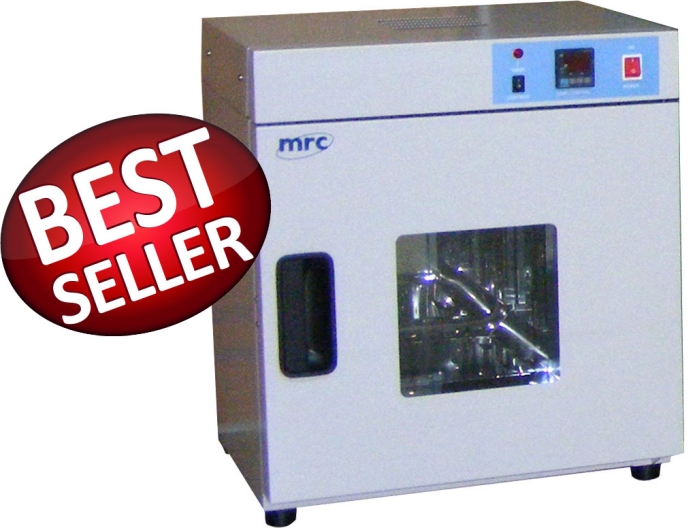
Laboratory Ovens
Dry, bake, or sterilize samples. Available in natural or forced convection models.
Incubators
Maintain precise temperatures for microbial or cell culture growth.
Refrigerators & Freezers
Preserve sensitive samples at low or ultra-low temperatures (as low as -80°C).
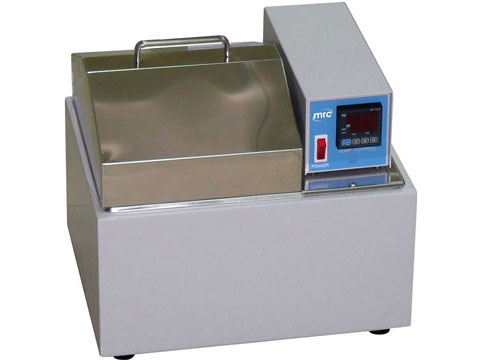
Chillers & Water Baths
Used for maintaining specific temperature ranges for delicate experiments.
4. Environmental and Safety Equipment
To ensure safe and controlled working conditions.
Fume Hoods
Protect users from inhaling toxic vapors or particles.
Glove Boxes
Allow users to handle hazardous or sensitive materials in a sealed environment.
Laminar Flow Cabinets
Provide a sterile workspace for sensitive experiments.
5. Glassware and Plasticware
While basic, these are essential in almost every lab.
Beakers, Flasks, and Graduated Cylinders
Used for mixing, heating, and measuring liquids.
Pipettes and Burettes
For transferring small, accurate volumes of liquid.
Petri Dishes and Test Tubes
Mainstays in biological and chemical analysis.
6. Microscopy Equipment
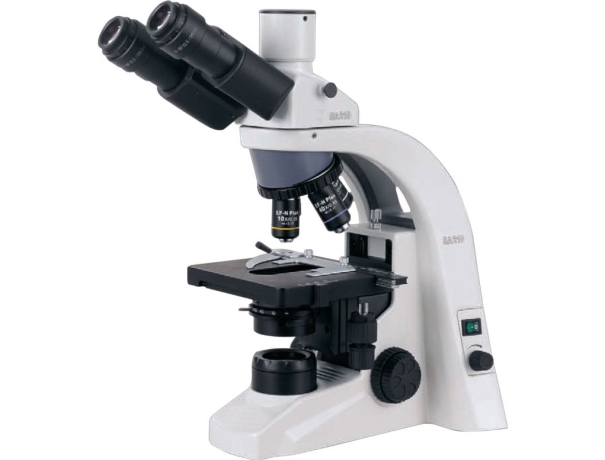
Light Microscopes
Used for magnifying small objects—common in schools and clinical labs.
Electron Microscopes
Offer high-resolution imaging of cells, particles, and materials.
7. Measuring and Calibration Equipment
Thermometers & Temperature Probes
Vital for precise monitoring in various tests.
Conductivity & TDS Meters
Measure ion concentration in water and solutions.
Flow Meters
Used in fluid mechanics or chemical processing labs.
8. Automation & Digital Equipment
Modern labs embrace automation to increase productivity.
Robotic Arms & Pipetting Systems
Automate repetitive tasks like liquid handling.
Smart Lab Systems
Integrated with AI or IoT for real-time monitoring and control.
9. Laboratory Furniture & Utility Systems
Workbenches & Lab Tables
Designed for chemical resistance and ergonomic access.
Gas & Vacuum Lines
Essential for chemical reactions and analytical instruments.
Emergency Showers & Eyewash Stations
Mandatory in chemical and industrial laboratories.