CENTRIFUGES is a laboratory device that separates a liquid mixture into various components. This happens through the high-speed spin of the mixture.
The fast-spinning blend separates the mixture into different layers of materials.
This separation of layers is based on the density of each element in the blend. The fast-spinning will cause high-density materials to accumulate at the test tube of the vial. While the lower-density materials will float up the test tube. In this method, particles can be deposited in a liquid mixture faster than the use of gravitational power.
What does the RCF value represent?
Relative Centrifugation Force is a unitless physical size that indicates the acceleration applied to the mixture and is measured in multiples of gravity (xg).
Converters to RCF by the following formula:
RCF = (n/1000)^2 x r x 11.18
n = speed (revolutions per minute)
r = radius (cm)
Examples of centrifuge use:
Large industrial centrifuges are used to separate mixtures such as milk cream.
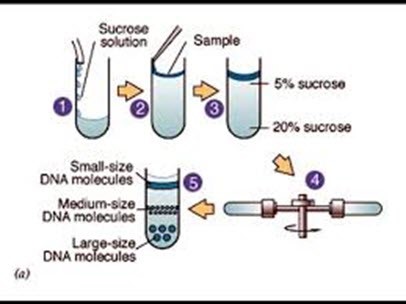
Laboratory centrifuges are usually used for research purposes, for example, separating certain parts of cells or DNA.
In molecular biology laboratories, the use is for example blood tests.
In the oil production industry, The centrifuge is used to separate the selected oil from the remaining sediment in the mixture. The principle of Operation of the centrifuges is similar
2 common types of rotors:
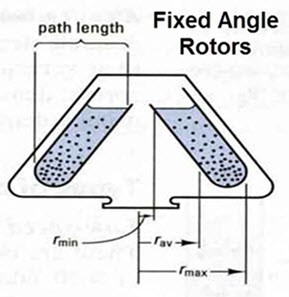
Angle Rotors
Usually used for high-speed srchose.
The diagonal angle of the test tubes reduces the distance of the particle path and requires more speed in the settling process.
Swing out rotors
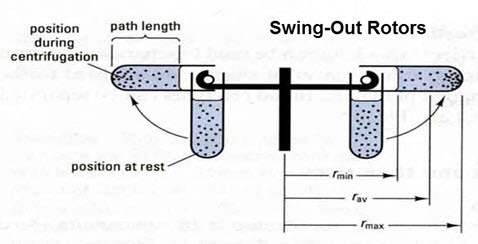
Used for larger quantities of Test tubes at low speeds to medium.
The Test tubes are in horizontal mode.
Types of laboratory centrifuges
Characterized by a small size and saves space in a laboratory.
This centrifuge usually works at RCF accelerations of between hundreds and tens of thousands of xg.
The volume of test tubes can range from smaller than 1 ml (such as PCR) to 1 liter bottles.
In some models, the rotors can be replaced into different types (fixed angle / variable angle).
REFRIGERATED BENCHTOP CENTRIFUGE
Excellent for heat sensitivity samples such as living cells or proteins.Can also reach accelerations up to tens of thousands of xg,And get test tubes in a variety of volumes up to 1 liter bottles.
Low speed(spindown) centrifuge
Compact and economical on the spot.
Designed to concentrate all the drops adhering to the walls of the test tube to the bottom.
Is not intended for separation.Some are for PCR plates and others are for test tubes of 0.2 ml to 2 ml as well as PCR strips.
benchtop and compact,Relatively low speed.Ideal for separating whole blood components such as serum, plasma, red blood cells, etc.May range from 200 to 6,000 rpm.
Designed to centralize small test tubes at high speed.Epandorf test tubes of 1.5 ml, 2 ml.Speed can reach tens of thousands of xg.There are also microcentrifuges with a cooling mechanism.
Hematocrit Centrifuges
For capillaries for blood separation up to about 14000 xg.
UltraCentrifuge
Designed to separate materials with high chemical contact.This separation requires a separation acceleration above 50,000 xg.This centrifuge is a controllable cooling unit, designed for floor (non-desktop) work.
Questions to choose the appropriate centrifuge For purchase:
When choosing the right centrifuge we will first answer the following questions:
• What is the use (material separation / spindown etc.)?
• What volume of test tubes are needed?
• How many test tubes should be in operation at once?
• What is the separation acceleration (xg, RCF) required?
• Does the study require a cooled centrifuge?