Solar radiation is an essential aspect of understanding our environment's energy dynamics. It provides vital information for various applications such as agriculture, meteorology, climate studies, and solar energy production. One of the key instruments used to measure solar radiation is the pyranometer. Solar radiation is the radiant energy emitted by the sun, reaching the Earth's atmosphere and surface. It comprises a spectrum of electromagnetic waves, including visible light, infrared, and ultraviolet radiation. Understanding solar radiation is crucial for numerous scientific and practical purposes.
What is a Pyranometer?
A pyranometer is a specialized instrument designed to measure the solar irradiance flux density (W/m²) from the hemisphere above within a wavelength range of approximately 0.3 to 3 micrometers. It is widely used in meteorology, climatology, agriculture, and solar energy applications.
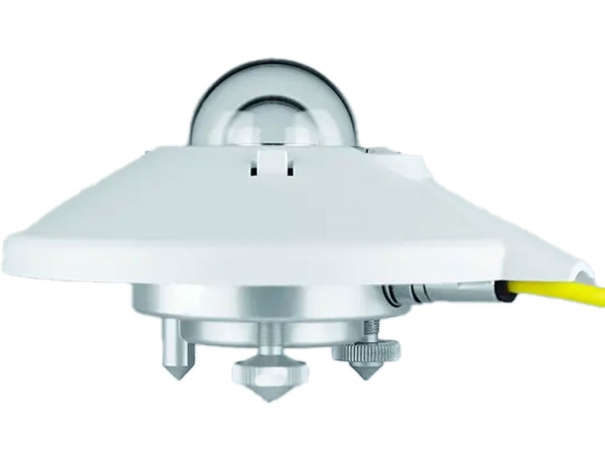
Components of a Pyranometer-Overall
A typical pyranometer consists of three main components:
- Outer Dome: The outer dome is a protective cover made of quartz or glass that allows solar radiation to pass through while protecting the internal components from environmental factors.
- Sensor: The sensor is the core component of the pyranometer responsible for measuring solar radiation. It usually comprises a thermopile or photodiode that converts incoming radiation into an electrical signal.
- Body: The body houses the sensor and other electronic components. It is designed to withstand various weather conditions and environmental factors.
Working Principle of a Pyranometer
Pyranometers operate based on the principle of thermopiles or photodiodes. When solar radiation strikes the sensor surface, it generates heat or produces an electric current proportional to the radiation intensity. This signal is then amplified and converted into irradiance units using calibration factors.
How works
- Sensor Design: The heart of a pyranometer is a sensor that's typically made of thermopiles or photodiodes. These sensors are designed to convert solar radiation into an electrical signal proportional to the solar irradiance.
- Absorption of Solar Radiation: The surface of the pyranometer is designed to absorb incoming solar radiation. This surface is often treated to minimize reflection and maximize absorption.
- Thermopiles or Photodiodes: In thermopile-based pyranometers, the absorbed radiation heats up a set of thermocouples, which generate a voltage proportional to the temperature difference. In photodiode-based pyranometers, photons from the incoming solar radiation create electron-hole pairs in semiconductor materials, generating a current or voltage.
- Calibration: Pyranometers need to be carefully calibrated to ensure accuracy. This involves comparing the electrical output of the sensor to known standards under various conditions.
- Data Processing: The electrical signal generated by the sensor is processed by associated electronics. This may involve amplification, filtering, and conversion to digital form for further processing or display.
- Output: The output of the pyranometer typically represents the solar irradiance measured in watts per square meter (W/m²) or equivalent units.
Applications of Pyranometers
Pyranometers find applications in various fields, including:
- Meteorology and Climatology: Pyranometers help meteorologists and climatologists understand weather patterns, climate change, and solar energy availability.
- Solar Energy Monitoring: Pyranometers are crucial for monitoring solar energy levels and optimizing the performance of solar power systems.
- Agriculture: Pyranometers assist in determining the amount of solar radiation received by crops, which affects plant growth and development.
Using Pyranometers in Solar Radiation Monitoring Systems
For reliable field measurements, a pyranometer is often integrated into broader meteorology instruments and professional weather stations. In solar energy projects, agriculture, climate research, and environmental monitoring, accurate solar irradiance data helps evaluate sunlight intensity, panel efficiency, crop exposure, and long-term atmospheric conditions. When selecting solar meters and pyranometers, it is important to consider sensor range, calibration requirements, installation angle, data logging options, and compatibility with other measuring instruments such as a wind speed and direction sensor or light meter.
Importance of Measuring Solar Radiation
Measuring solar radiation is essential for several reasons:
- Energy Production: Solar radiation data is crucial for planning and optimizing solar power generation systems.
- Climate Studies: Solar radiation data helps scientists study climate patterns and understand the Earth's energy balance.
- Agricultural Productivity: Solar radiation influences plant growth, photosynthesis, and agricultural productivity.
Factors Affecting Pyranometer Measurements
Several factors can affect the accuracy of pyranometer measurements, including:
- Weather Conditions: Cloud cover, humidity, and atmospheric conditions can impact the amount of solar radiation reaching the Earth's surface.
- Sensor Calibration: Proper calibration of pyranometers is essential to ensure accurate measurements.
- Sensor Orientation and Placement: The orientation and placement of pyranometers relative to the sun can affect measurement accuracy.
Calibration of Pyranometers
Calibration is a critical process to ensure the accuracy and reliability of pyranometer measurements. It involves comparing the instrument's output to known reference standards under controlled conditions.
Accuracy and Precision
The accuracy and precision of pyranometer measurements depend on various factors, including sensor quality, calibration methods, and environmental conditions. Regular maintenance and calibration are necessary to maintain accuracy over time.