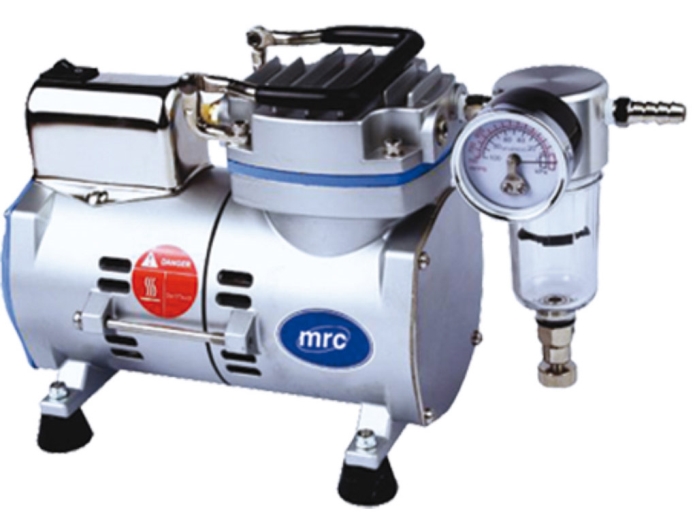
Laboratory vacuum pumps are a convertible mechanical tool that aids vastly in scientific research and engineers. Laboratory vacuum pumps are used frequently in labs for;
• To collect gas samples from test chambers or the atmosphere
• To provide suction to drive the aspiration or filtration of liquid suspended samples or liquid.
• To improve instrument-detection sensitivity by evaluating air molecules that might contaminate samples in a spectrometer.
• To induce or control solvent evaporation by reducing vapor pressure, as in ovens, rotary evaporators, gel dryers, and concentrators.
• To provide a negative pressure (less than the atmospheric pressure) environment to prevent the escape of any hazardous samples.
•To Remove Air and Gases
•To Create Controlled Environments
•In High-Tech Manufacturing
•For Drying, Degassing & Dehydration
•To Improve Thermal Insulation
•In Food & Packaging Industry
•In Medical and Pharmaceutical Applications
Vacuum pumps are mostly used in chemistry and life science labs. Vacuum pumps are built based on their implicational sensitivities. these systems are best used in teaching labs and in labs in which the main applications are filtration and aspiration.