The role of the biological safety cabinet can be up to three types of protections:
1. Protection of the worker - from harmful elements inside the cabinet
2. Protection of the product inside the cabinet - to explain contamination at work, in an experiment or under guidance
3. Protection of the environment - from various pollutants that are created inside the biological cabinet
Types of Biological Safety Cabinet
The biological safety cabinet are divided into 3 classes, each group defining the type of protection:
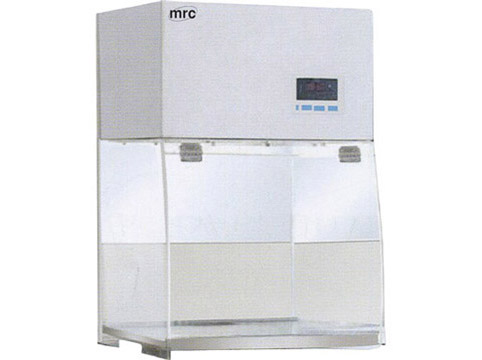
Class I biological safety cabinet
The front opening of the cabinet is open, and there is an air flow from the room inside. A lid with or without gloves can be fitted on the opening.The cabinet protects the worker and the environment only.
This cabinet does not protect the sterility of the product.The protection of the worker is done by the flow of air from the room inwards to the hood through the front opening.
Class II biological safety cabinets
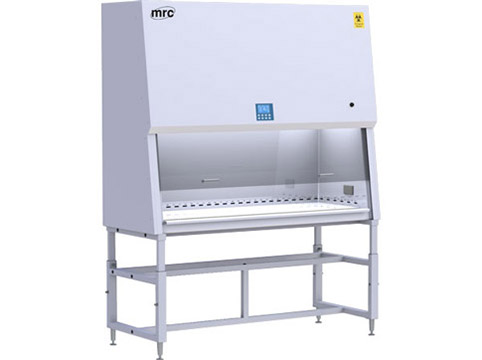
The front opening is open and there is a vertical laminar air flow inside the cabinet.This hood provides protection for the employee, the environment and the product.The principle of protection of this cabinet is in the flow of air from the room to the hood space.
Class II itself is divided into 4 groups: A1, A2, B1, B2.
The differences between these subgroups are mostly in the air.
We will discuss the two main ones:
A2
70% of air recycling, 30% air emissions to the interior of the room
B2
0% of air recycling, 100% air emissions out of the room (by connecting to the building's air conditioning ducts)
Of all of them Class II A2 is the most commonly used.
Class III biological safety cabinet
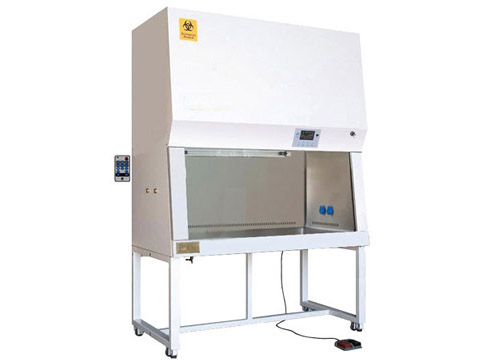
Sealed glove compartments. Both incoming and outgoing air are filtered through a HEPA filter. There is maximum protection for the employee, the environment and also the sterility of the product.
How To Choose BIOLOGICAL CABINETS
You must ask the following questions:
1. What is the type of biological factor according to the risk groups.
2. Is there in addition to the biological risk also a chemical risk or radiation risks.
3. Is it necessary to defend the experiment itself.
4. Is it necessary to limit the release of aerosols generated in the experiment.
5. Are there any special requirements of the workplace.
6.What is the working width required for the cabinet
How to work properly
The work must be planned in advance, and a labeling list of equipment, materials, and order of operations must be prepared
-Avoid interfering with the air barrier.
-Avoid moving people in the room.
-Take advantage of the one-way flow of air. Use sterile work techniques.
-Turn on the cabinet at least 5 minutes before starting work.
-Insert only necessary equipment and materials.
-Wait an additional 3 minutes to rinse the equipment in the filtered air.
- Perform the work calmly.
-At the end of the work, wait another 3 minutes for the air to rinse.
Key Components and Features
HEPA Filters: Essential for filtering airborne particulates, including microorganisms, ensuring sterile air flow.
Air Flow Patterns: Carefully regulated airflow prevents contamination and ensures containment of hazardous materials.
Front Opening: Usually fitted with a sash window, allowing safe manipulation of materials.
UV Lamps: Commonly integrated to disinfect surfaces, though their effectiveness is debated due to uneven exposure.
Proper Usage Guidelines
Training: Users should receive formal training on the operation and safety protocols specific to the cabinet model.
Maintenance and Certification: Annual certification and routine maintenance are mandatory to ensure optimal performance and safety compliance.
Operational Practices:
Always work at least 10-15 cm within the cabinet to maintain proper airflow.
Minimize movements to prevent airflow disruptions.
Regularly disinfect surfaces before and after use with appropriate disinfectants.
Protect workers and the laboratory from bacteria. Book now biological safety cabinets