Surface science are important in understanding how materials interact with each other at their interfaces. One of the key parameters studied in surface science is the contact angle, a measure of the wettability of a surface by a liquid. This measurement is vital in numerous fields, from material science to pharmaceuticals. But how do we measure the contact angle accurately? Enter the tensiometer, an essential tool in the surface scientist's arsenal. In this article, we'll explore the significance of measuring contact angle with a tensiometer and why it matters in surface science.
Definition
The contact angle is defined as the angle formed at the junction where a liquid, solid, and gas phase meet. It is a crucial parameter that describes how a liquid droplet interacts with a solid surface, indicating whether the surface is hydrophilic (water-attracting) or hydrophobic (water-repelling).
How Contact Angle is Formed
The contact angle is determined by the balance of forces acting at the interface of the three phases: solid, liquid, and gas. If the adhesive forces between the liquid and the solid are stronger than the cohesive forces within the liquid, the liquid will spread out, resulting in a low contact angle. Conversely, if the cohesive forces dominate, the liquid will bead up, creating a high contact angle.
Factors Affecting Contact Angle
Several factors can influence the contact angle, including surface roughness, chemical composition, and the presence of contaminants. Understanding these factors is essential for accurate contact angle measurements, as they can significantly affect the results.
What is a Tensiometer?
A tensiometer is an instrument used to measure the surface tension of liquids and the contact angle between a liquid and a solid surface. There are various types of tensiometers, including optical tensiometers, force tensiometers, and bubble pressure tensiometers, each suited for different applications.
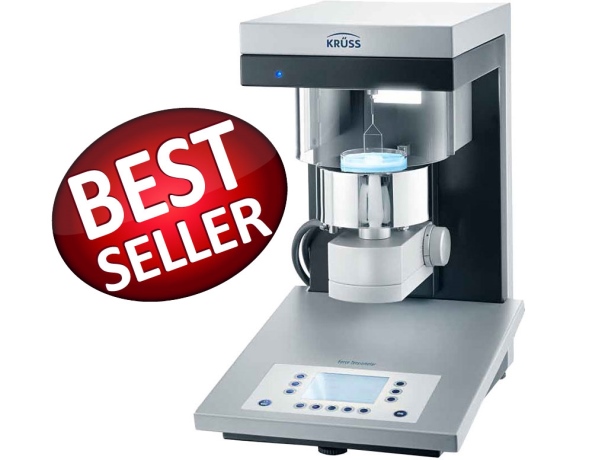
Modern Advancements in Tensiometry
Today's tensiometers are equipped with advanced optics and software that allow for automated measurements and detailed analysis. These modern instruments provide researchers with more reliable and reproducible data, essential for cutting-edge research in surface science.
The Process of Contact Angle Measurement
Measuring the contact angle with a tensiometer involves placing a droplet of liquid on a solid surface and capturing its image using a high-resolution camera. The tensiometer then analyzes the droplet's shape to calculate the contact angle. This process can be done using different methods, such as the static drop method, dynamic contact angle measurement, or the tilting plate method.
Different Methods of Using Tensiometers for Contact Angle Measurement
- Static Drop Method: The most common technique, where a droplet is placed on the surface, and the contact angle is measured once it stabilizes.
- Dynamic Contact Angle Measurement: Involves measuring the contact angle while the droplet is advancing or receding, providing insights into surface heterogeneity.
- Tilting Plate Method: The surface is tilted to observe the advancing and receding angles of a droplet as it moves, useful for studying surfaces with varying wetting properties.
Calibration and Accuracy of Tensiometers
Ensuring the accuracy of a tensiometer is critical for reliable measurements. Regular calibration using standard liquids and surfaces is essential. Additionally, maintaining a controlled environment during measurements can significantly improve accuracy.
How Contact Angle Influences Surface Interactions
The contact angle is more than just a number; it provides insights into the interactions between surfaces and liquids. A low contact angle indicates good wetting, which is important in applications like coating and painting, while a high contact angle suggests poor wetting, which could be desirable in waterproofing materials.
Applications of Contact Angle Measurements in Various Industries
Contact angle measurements are widely used in industries such as pharmaceuticals, where they help in formulating drugs that require specific dissolution rates. In material science, these measurements assist in developing new materials with tailored surface properties.
Surface Energy and Its Relation to Contact Angle
Understanding Surface Energy
Surface energy is the energy present at the interface between a solid and a liquid or gas. It plays a significant role in determining the wettability of a surface and, consequently, the contact angle.
Relationship Between Contact Angle and Surface Energy
There is a direct relationship between surface energy and contact angle. A higher surface energy typically results in a lower contact angle, indicating better wettability. This relationship is crucial in applications where surface adhesion is a key factor, such as in adhesives and coatings.
Practical Implications of Surface Energy Measurements
Measuring surface energy can help predict how different materials will interact, which is essential in designing products that require specific adhesion properties, like glues or paints.
Applications of Tensiometers in Surface Science
Use of Tensiometers in Material Science
In material science, tensiometers are used to study the surface properties of materials, helping scientists develop new composites and coatings with desired characteristics.
Tensiometry in Pharmaceuticals and Biotechnology
Tensiometers play a crucial role in the pharmaceutical industry, where they help in the formulation of drugs and the development of medical devices that require specific surface interactions.
Role of Tensiometers in the Development of Coatings and Paints
Tensiometers are instrumental in the coatings and paints industry, where they are used to optimize formulations for better application and durability, ensuring that the coatings adhere well to surfaces and provide long-lasting protection.
Advancements in Tensiometer Technology
Innovations in Tensiometer Design and Functionality
Recent innovations in tensiometer technology include the development of portable devices, automated systems for high-throughput measurements, and integration with computer software for real-time data analysis.
Integration of Software for Enhanced Data Analysis
Modern tensiometers often come with software that allows for the automatic calculation of contact angles, surface tension, and surface energy. This integration makes it easier for researchers to analyze complex data sets and draw meaningful conclusions.