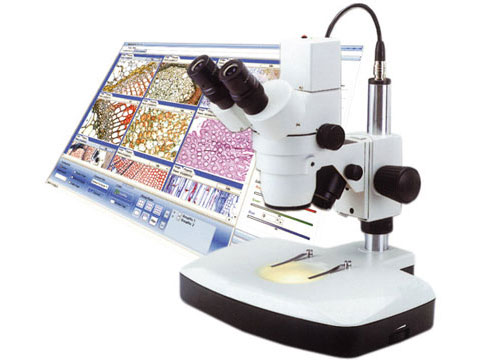
Digital microscopes have revolutionized the way scientists, researchers, and hobbyists examine microscopic details.
But just how powerful can they get? What is the maximum magnification available in high-end digital microscopes? Let’s dive deep into the world of digital microscopy to find out.
Understanding Magnification in Digital Microscopes
Optical vs. Digital Magnification
Magnification in Digital microscopes can be categorized into two types:
- Optical magnification – Achieved using the physical lenses in the microscope.
- Digital magnification – Achieved through image processing, where pixels are enlarged on the display screen.
How Digital Zoom Works
Digital zoom increases the image size by enlarging pixels rather than adding more detail. While this can be useful, it has limitations as it does not improve resolution beyond what the camera sensor captures.
Key Components Affecting Magnification
Lenses and Optics
High-quality objective lenses are crucial for achieving high optical magnification. Premium digital Microscopes use specialized lenses to provide crisp, high-resolution images.
Image Sensors and Resolution
The camera sensor plays a vital role in determining the level of detail captured. High-end digital microscopes often feature 4K or higher-resolution sensors to maintain clarity even at extreme magnification levels.
What Defines a High-End Digital Microscope?
Features of Premium Digital Microscopes
- Ultra-high-definition (UHD) image sensors
- Advanced optics
- AI-powered image processing
- 3D imaging capabilities
Applications in Research and Industry
These microscopes are used in biomedical research, semiconductor inspections, and forensic science, where ultra-fine details need to be analyzed.
Maximum Magnification in High-End Digital Microscopes
Typical Magnification Ranges
High-end digital microscopes can achieve magnifications between 5000x and 10,000x through combined optical and digital magnification.
Applications of High-Magnification Digital Microscopes
- Biomedical Research – Examining cellular structures
- Industrial Quality Control – Inspecting microelectronics
- Forensic Investigations – Analyzing trace evidence