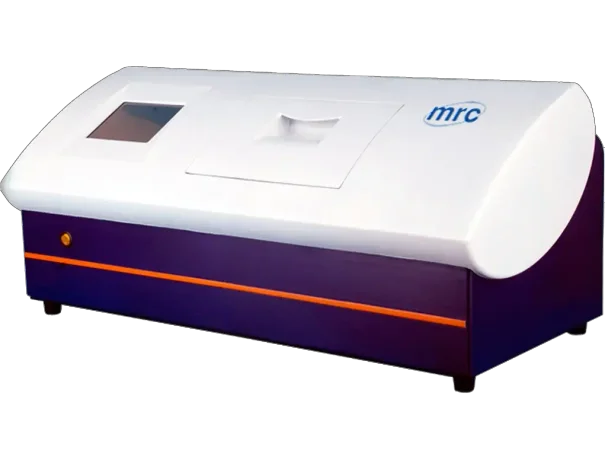
A polarimeter is a scientific instrument used to measure the angle of rotation caused by passing polarized light through an optically active substance. These measurements are crucial in industries such as pharmaceuticals, food processing, and chemical research, where the concentration, purity, or molecular structure of substances needs to be determined accurately.
In simple terms, a polarimeter measures the optical rotation of substances. Certain compounds, especially those with chiral molecules, rotate polarized light either to the right (dextrorotatory) or to the left (levorotatory). The extent of this rotation reveals valuable insights into the composition and concentration of the sample.
Working Principle of a Polarimeter
While this section introduces the basics, a more detailed explanation of the polarimeter principle, including optical rotation calculations and instrument design, can be found here.
Polarized Light Explained
Light waves vibrate in multiple directions. When light passes through a polarizer, it becomes polarized, meaning it vibrates in a single plane.
Optical Rotation in Substances
When polarized light passes through an optically active substance, the plane of vibration rotates. This rotation depends on the path length, concentration of the solution, temperature, and wavelength of the light.
Measurement Process
The polarimeter detects this angle of rotation and translates it into values that reflect the sample’s properties.
Components of a Polarimeter
Light Source
Traditionally, sodium lamps are used, though modern polarimeters often use LEDs for stability and efficiency.
Polarizer
A special lens that converts natural light into polarized light.
Sample Tube
A transparent tube that holds the liquid sample through which the light passes.
Analyzer
A second polarizer that determines how much the light has rotated after passing through the sample.
Detector
An electronic sensor or visual scale that measures the degree of rotation.
Types of Polarimeters
Manual Polarimeters
Require manual alignment and observation. Still used in education and basic labs.
Digital Polarimeters
Feature electronic detectors and digital displays, offering improved precision.
Automatic Polarimeters
Eliminate human error by automating alignment, data recording, and analysis.
Spectropolarimeters
Advanced instruments that measure optical rotation across different wavelengths for research purposes.
Applications of Polarimeters in Industry
Pharmaceutical Industry
Used to verify drug purity and concentration, ensuring compliance with strict standards.
Food and Beverage Industry
Essential for measuring sugar content in products like honey, juices, and soft drinks.
Chemical Manufacturing
Helps in determining concentrations of chemicals and monitoring production quality.
Essential Oils and Flavor Industry
Measures purity and authenticity of oils and flavoring agents.
Polarimeter in Research and Academia
In universities and research labs, polarimeters are indispensable for studying stereochemistry, molecular structures, and chirality.
Advantages of Using a Polarimeter
- Non-destructive analysis
- High accuracy and precision
- Fast measurement process
- Applicable to a wide range of industries