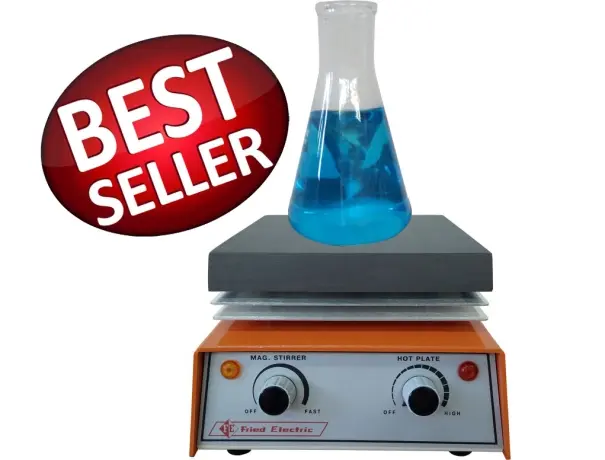
Hotplates provide a flat heating surface, while stirrers use magnetic or mechanical forces to mix solutions. Some devices combine both functions to allow simultaneous heating and stirring.
Key Measurements by Hotplates and Stirrers
These devices help measure multiple parameters critical to experimental success:
Temperature Control
Laboratory Hotplates measure temperature using built-in thermostats or external probes. Digital displays provide real-time readings to ensure precision.
Heating Rate
The rate at which a substance heats depends on the power of the hotplate, surface area, and thermal conductivity of the material.
Stirring Speed (RPM - Rotations Per Minute)
Stirrers operate at specific RPMs, which can be adjusted to achieve desired mixing effects. Higher speeds provide better homogenization.
Viscosity of Liquids
Stirrers indirectly measure viscosity by assessing how easily a substance mixes at different speeds. More viscous liquids require higher torque to stir effectively.
Chemical Reaction Rates
The ability to measure reaction speed is vital in chemical synthesis and pharmaceutical development. Controlled heating accelerates reactions, providing measurable data.
Dissolution Efficiency
Hotplate stirrers help measure how quickly a solute dissolves in a solvent by controlling both temperature and mixing speed.

Advanced Features in Modern Hotplates and Stirrers
Recent advancements include:
- Digital controls for precise adjustments
- Safety features like automatic shutoff
- Programmable settings for consistency in experiments
Common Applications in Laboratories
These devices are widely used in:
- Chemical synthesis for precise heating and mixing
- Pharmaceutical research to develop new formulations
- Biological studies for cell culture and sample preparation
Industrial Applications
Industries rely on hotplates and stirrers for:
- Food processing to test consistency and stability
- Petrochemical analysis for studying oil viscosity
- Material testing to develop coatings and adhesives
Choosing the Right Hotplate or Stirrer
Factors to consider include:
- Temperature range and accuracy
- Stirring speed and capacity
- Safety features such as overheat protection
In a laboratory, hotplates and stirrers are commonly used for heating and mixing solutions. If you need to weigh materials using these devices, consider the following:
Suitable Materials for Weighing on Hotplates/Stirrers
- Liquids – Water, solvents, acids, and other chemical solutions.
- Powders – Salts, sugars, and other fine-grained chemicals.
- Granules – Small solid particles like resin beads or metal granules.
- Biological Samples – Some biological solutions and cell cultures.
Precautions:
- Use a Weighing Container – Never place materials directly on the surface. Use beakers, flasks, or metal pans.
- Check Compatibility – Ensure the substance can withstand heat and stirring without degrading.
- Avoid Volatile or Flammable Materials – Heating these can be dangerous.