If you work in a laboratory or industrial setting, you may need to keep your samples or products at a specific temperature. This is where refrigerated/heated bath circulators come in. These devices are used to maintain the temperature of a bath or vessel, ensuring that it stays within a certain range. In this article, we will discuss what refrigerated/heated bath circulators are, how they work, and their applications.
What are refrigerated/heated bath circulators?
A refrigerated/heated bath circulator is a device that maintains the temperature of a bath or vessel by circulating liquid through it. It consists of a bath or vessel, a refrigeration system, a heating system, and a pump to circulate the liquid. The bath or vessel is filled with a liquid, such as water or oil, which is circulated through the system. The refrigeration system cools the liquid, while the heating system heats it up, maintaining a specific temperature range.
How do refrigerated/heated bath circulators work?
Refrigerated/heated bath circulators work by circulating liquid through a bath or vessel. The liquid is cooled or heated depending on the temperature requirements. The refrigeration system uses a compressor and evaporator to cool the liquid. The heating system uses an electrical heating element to heat the liquid. The pump circulates the liquid through the system, ensuring that the temperature is maintained throughout the bath or vessel.
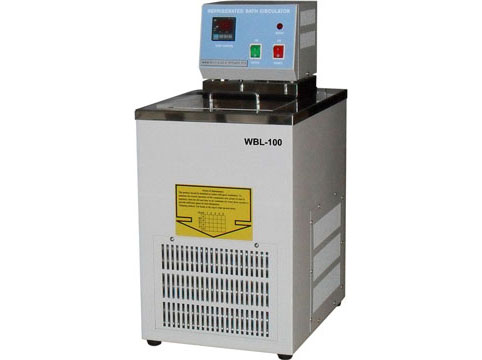
Applications of refrigerated/heated bath circulators
1. Laboratory research
Used to maintain the temperature of samples. They are used in experiments that require a specific temperature range, such as DNA amplification, enzyme reactions, and protein crystallization.
2. Industrial production
Used to maintain the temperature of products. They are used in manufacturing processes that require precise temperature control, such as the production of chemicals, pharmaceuticals, and plastics.
3. Food and beverage industry
Used in the food and beverage industry to maintain the temperature of products. They are used in the production of dairy products, beer, wine, and other beverages.
4. Medical industry
Used to maintain the temperature of medical equipment and solutions. They are used in procedures such as tissue culture, cryopreservation, and blood banking.
Types of refrigerated/heated bath circulators
There are several types of refrigerated/heated bath circulators, including:
1. Immersion circulators
Immersion circulators are compact devices that can be immersed directly into a bath or vessel. They are ideal for small volume applications and are often used in laboratory settings.
2. Bath circulators
Bath circulators are larger devices that are designed to be used with a separate bath or vessel. They are ideal for larger volume applications and are often used in industrial and medical settings.
3. Refrigerated/heated recirculating chillers
Refrigerated/heated recirculating chillers are larger devices that are designed to provide cooling and heating for multiple baths or vessels. They are often used in industrial settings where multiple temperature-controlled processes are required.
Choosing the right refrigerated/heated bath circulator
When choosing a refrigerated/heated bath circulator, it is important to consider the following factors:
1. Temperature range
The temperature range of the circulator should match the temperature requirements of your application.
2. Volume
The volume of the bath or vessel you will be using should be taken into account to ensure that the circulator can handle the amount of liquid needed.
3. Pump capacity
The pump capacity should be sufficient to circulate the liquid through the system at the required flow rate.
4. Accuracy and precision
The circulator should have accurate and precise temperature control to ensure that the temperature is maintained within the required range.
5. Ease of use
The circulator should be easy to operate, with intuitive controls and clear displays.