Vacuum pumps are vital components in laboratories, industrial systems, and research facilities. They remove gas molecules from sealed environments to create a partial vacuum—essential for countless applications ranging from sample preparation to semiconductor manufacturing.
But not all vacuum pumps are the same. Choosing the right type—Chemical, Dry, or Oil-sealed—depends on your process requirements, chemical compatibility, and maintenance preferences.
Below is a detailed comparison of how these three types differ in design, performance, and ideal applications.
Chemical Vacuum Pumps
Chemical vacuum pumps are specifically engineered to handle aggressive and corrosive vapors produced in chemical, pharmaceutical, or analytical processes. They are often made from chemically resistant materials such as PTFE (Teflon), FEP, or stainless steel, ensuring long service life in harsh environments.
How They Work
These pumps operate without oil, using diaphragm or corrosion-resistant piston mechanisms to generate vacuum. This eliminates contamination risk from oil vapors, which is crucial for maintaining sample integrity.
Advantages
- Excellent resistance to acids, solvents, and reactive gases
- 100% oil-free operation (clean and maintenance-friendly)
- Ideal for laboratory evaporation, filtration, and rotary evaporation
Limitations
- Lower ultimate vacuum than oil-sealed pumps
- Typically lower pumping speed
Best For
- Chemical and pharmaceutical laboratories
- Rotary evaporators and vacuum filtration
- Acidic and solvent-laden vapors
Dry Vacuum Pumps
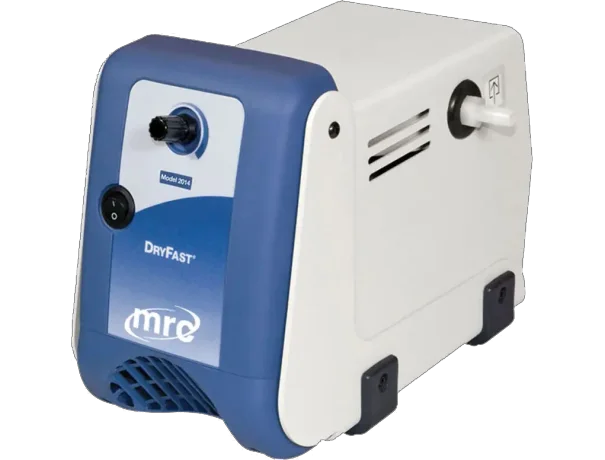
Dry vacuum pumps eliminate the need for lubricating oil in the compression chamber, providing a clean, particle-free environment. They are commonly used in industrial and analytical processes requiring clean, contamination-free operation.
How They Work
Dry pumps use scroll, screw, claw, or diaphragm mechanisms that compress gases without any lubricants in the vacuum path. This design drastically reduces maintenance and eliminates the risk of oil backstreaming.
Advantages
- Completely oil-free operation
- High reliability and reduced maintenance costs
- Stable performance under continuous operation
- Fast startup and shutdown
Limitations
- Higher initial cost
- Sensitive to particulate contamination if not filtered properly
Best For
- Semiconductor manufacturing
- Freeze drying (lyophilization)
- Analytical instruments (mass spectrometry, electron microscopy)
- Laboratories requiring clean, dry vacuum
Oil Vacuum Pumps (Oil-Sealed Rotary Vane Pumps)
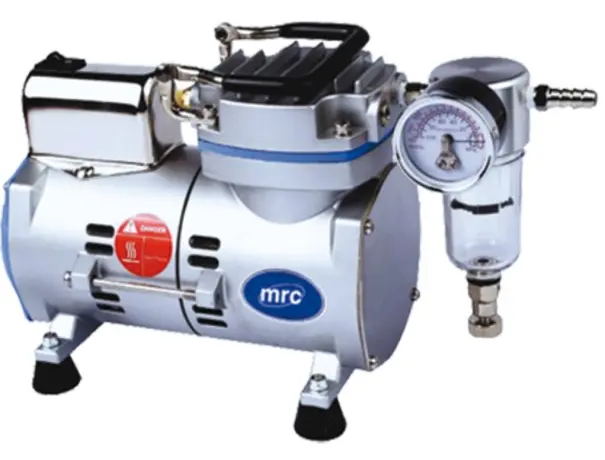
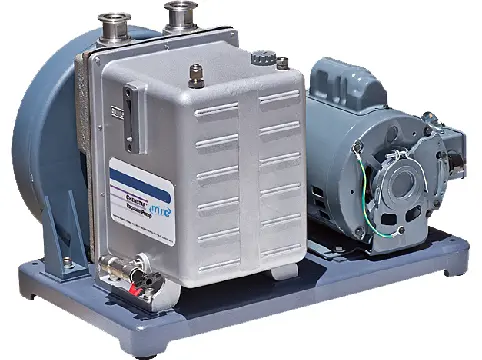
Oil-sealed vacuum pumps, often rotary vane type, are the workhorses of general laboratory and industrial vacuum systems. They use lubricating oil to seal and cool the internal components, allowing them to achieve deep vacuum levels with consistent performance.
How They Work
Inside an oil rotary vane pump, vanes rotate inside a sealed housing, with oil providing both a seal and lubrication. The oil traps gas molecules, enabling high vacuum levels (down to 10⁻³ mbar or lower).
Advantages
- High ultimate vacuum
- Excellent pumping speed for a wide pressure range
- Robust and reliable design for demanding applications
Limitations
- Requires regular oil changes and maintenance
- Risk of oil vapor contamination
- Not suitable for corrosive or reactive gases
Best For
- Vacuum ovens and coating systems
- Freeze dryers (with vapor traps)
- General laboratory and industrial use
Comparison Table
| Feature / Type | Chemical Vacuum Pump | Dry Vacuum Pump | Oil Vacuum Pump |
| Lubrication | Oil-free | Oil-free | Oil-sealed |
| Chemical Resistance | Excellent (PTFE body) | Moderate | Low |
| Maintenance | Minimal | Low | Regular oil service |
| Ultimate Vacuum | Medium (1–10 mbar) | Medium-High (0.1–1 mbar) | High (10⁻³ mbar) |
| Contamination Risk | None | None | Possible oil vapors |
| Best Applications | Chemical labs, evaporators | Semiconductor, clean vacuum | General lab, industrial use |
Choosing the Right Vacuum Pump
Selecting the correct vacuum pump depends on your application, required vacuum level, and gas composition:
- For chemical resistance and oil-free operation, choose a Chemical Vacuum Pump.
- For clean, maintenance-free vacuum in high-tech or analytical processes, select a Dry Vacuum Pump.
- For deep vacuum and high pumping speed in general or physical processes, an Oil Vacuum Pump remains the most cost-effective solution.