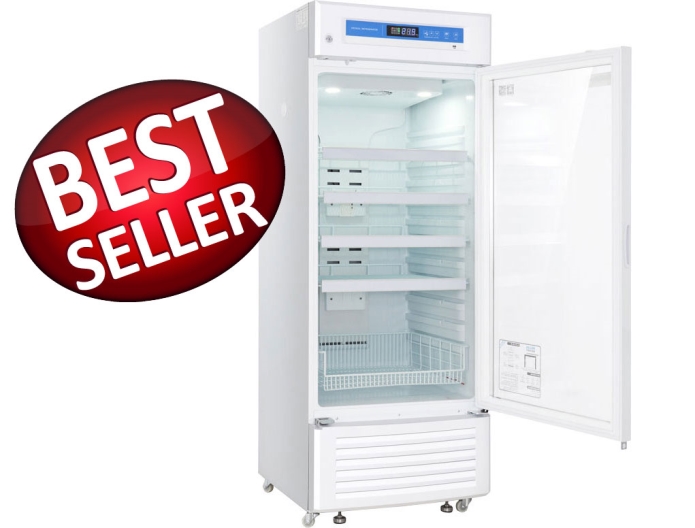
With so many options available, how do you know which temperature range is right for your needs—and which freezer type to choose? Let’s break it down.
Understanding Laboratory Freezer Temperature Ranges
Laboratory freezers aren’t your average household appliances—they’re engineered for precision.
- Standard Laboratory Freezers operate at around -20°C, perfect for short-term storage of reagents and non-critical biological samples.
- Low-Temperature Freezers can go to -40°C, extending storage life for temperature-sensitive samples.
- Ultra-Low Temperature (ULT) Freezers range between -80°C and -86°C, keeping biological material viable for years.
- Cryogenic Freezers go below -150°C, often using liquid nitrogen for ultimate preservation.
Why the Right Temperature Matters
Temperature isn’t just a number—it’s the difference between preserving integrity and losing months of work.
- Sample stability: Proteins, enzymes, and biological samples degrade faster at higher temperatures.
- Avoiding freeze-thaw damage: Fluctuating temperatures can cause ice crystal formation, damaging cells and structures.
- Compliance: Certain research standards and regulatory bodies require specific temperature maintenance.
Common Types of Laboratory Freezers
-20°C Freezers
Best for everyday lab items like buffers, enzymes, and general reagents. Affordable and energy-efficient, but unsuitable for long-term biological storage.
-40°C Freezers
A good middle ground for medium-term sample preservation, especially for clinical and pharmaceutical applications.
Ultra-Low Temperature (ULT) Freezers: -80°C
The gold standard for research institutions. Perfect for long-term preservation of DNA, RNA, proteins, and cell lines.
Cryogenic Freezers: Below -150°C
Used when biological activity must be stopped entirely—common in stem cell storage, IVF, and genetic research.
Factors to Consider When Choosing a Lab Freezer
- Sample type: Different samples require different conditions.
- Storage duration: Short-term storage might not require extreme cold.
- Regulatory compliance: Some projects have strict storage requirements.
- Budget & energy use: Higher performance often means higher cost.
Matching Freezer Type to Application
- Biological samples: ULT or cryogenic.
- Vaccines: Often -40°C or -80°C depending on manufacturer guidelines.
- Enzymes & reagents: -20°C for short-term, -80°C for long-term.
- Archival storage: Cryogenic for decades-long preservation.
Temperature Stability and Monitoring
Even the best freezer is useless if temperatures fluctuate. Look for:
- High-accuracy digital controllers
- Alarm systems for deviations
- Data logging for compliance
- Remote monitoring capabilities