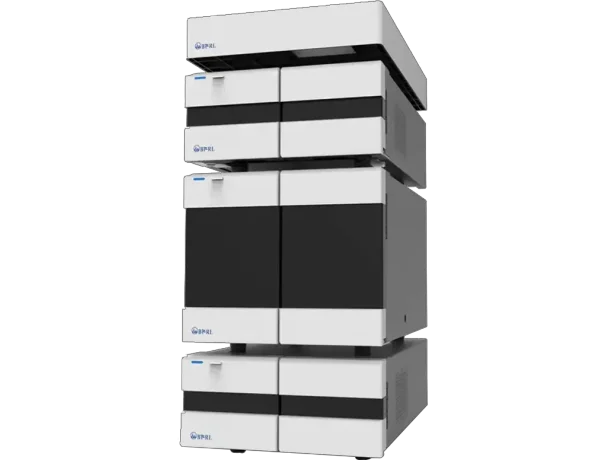
HPLC systems are among the most important and accurate analytical systems used in research laboratories, quality control laboratories, pharmaceutical production, chemistry, food testing, environmental analysis, cosmetics, biotechnology, and industrial applications. HPLC stands for High-Performance Liquid Chromatography. The purpose of this method is to separate, identify, and quantify different components within a liquid or dissolved sample, even when dealing with highly complex mixtures and very low concentrations.
Unlike more basic testing methods, an HPLC system provides accurate, repeatable, and reliable information about the composition of the tested material. For this reason, it is widely used in laboratories where a high level of certainty is required, including raw material testing, final product testing, impurity identification, active ingredient quantification, stability testing, formulation development, organic compound analysis, and regulatory testing.
What Is an HPLC System?
An HPLC system is an analytical system based on the flow of a liquid mobile phase through a separation column under high pressure. The sample is injected into the system, carried by a liquid solvent, and passed through a column containing a dedicated stationary phase. Inside the column, the components of the sample are separated according to their chemical and physical properties.
Each component in the sample interacts differently with the stationary phase in the column and with the liquid mobile phase. As a result, different components exit the column at different times. The detector identifies the components as they leave the column, and the result is displayed as a chromatogram: a graph in which each peak represents a specific component in the sample.
By analyzing the chromatogram, it is possible to determine which substances are present in the sample, their concentration, whether impurities or degradation products are present, and whether the sample meets the required quality or regulatory standards.
How Does High-Performance Liquid Chromatography Work?
The HPLC process includes several key stages. First, the sample is prepared for analysis, usually by filtration, dilution, extraction, or dissolution. The sample is then injected into the system in a precise volume. The high-pressure pump moves the solvent through the system at a controlled and stable flow rate.
When the sample enters the column, its components begin to separate from one another. Components that interact less strongly with the stationary phase will exit the column more quickly, while components that interact more strongly will remain in the column for a longer time. After leaving the column, the components pass through a detector, which measures the analytical signal and sends the data to the system software.
The final result allows both qualitative and quantitative analysis. Qualitative analysis answers the question “What is present in the sample?” while quantitative analysis answers the question “How much of it is present in the sample?”
Main Components of an HPLC System
An HPLC system consists of several units that work together in a precise and coordinated way. Each component has a direct effect on separation quality, detection sensitivity, and result reliability.
Solvent Reservoirs
The solvents, also known as the mobile phase, are responsible for carrying the sample through the system. The choice of solvents has a major effect on separation quality, analysis time, and peak shape in the chromatogram. Many HPLC methods use combinations of water, acetonitrile, methanol, buffers, and various additives.
High-Pressure Pump
The pump is one of the most important components of an HPLC system. It is responsible for delivering the mobile phase at high pressure and at a precise flow rate. Flow stability is essential for repeatable results, especially when performing quantitative analysis or comparing multiple samples.
Sample Injector or Autosampler
The sample is introduced into the system manually or through an autosampler. An autosampler enables work with a large number of samples, improves precision, reduces operator error, and supports continuous operation over long periods. In quality control laboratories, an autosampler is almost always an essential component.
HPLC Column
The column is the heart of the separation system. It contains a dedicated stationary phase that largely determines the quality of separation between sample components. There are different types of HPLC columns, including C18, C8, Phenyl, CN, NH2, ion-exchange columns, size-exclusion columns, and chiral columns.
The choice of column depends on the type of substances being analyzed, compound polarity, molecular size, resolution requirements, and the analytical method.
HPLC Detector
The detector identifies the components exiting the column and converts them into a measurable signal. The type of detector is selected according to the compounds being analyzed and the required sensitivity. Common HPLC detectors include:
UV/VIS detector - A very common detector for identifying substances that absorb light in the ultraviolet or visible range.
PDA/DAD detector - A photodiode array or diode array detector that allows broader spectral data collection.
Fluorescence detector - Suitable for compounds with natural fluorescence or compounds that have been chemically derivatized.
RI detector - A refractive index detector, suitable for substances that do not absorb UV well, such as sugars and certain polymers.
ELSD or CAD detectors - Suitable for compounds that are difficult to detect using a standard UV detector.
Types of HPLC Systems
There are several types of HPLC systems, each suitable for different laboratory needs and workflows.
Analytical HPLC
Analytical HPLC systems are designed for the identification and quantification of substances in samples. This is the most common type of HPLC system used in quality control, research, and development laboratories. The goal is to achieve accurate separation, clear peaks, and reliable quantitative results.
Preparative HPLC
Preparative HPLC systems are used for the separation and collection of larger quantities of material. Instead of only identifying and measuring components, the purpose is to isolate a specific component from a mixture for further use, research, or production.
UHPLC
UHPLC, or Ultra-High-Performance Liquid Chromatography, is an advanced version of HPLC that operates at higher pressures and uses columns with smaller particle sizes. Its advantages include shorter analysis time, higher resolution, and improved separation efficiency. However, these systems require full compatibility between the system, columns, accessories, and working method.
Common Applications of HPLC Systems
HPLC systems are used across a wide range of fields because they are suitable for accurate analysis of organic compounds, pharmaceuticals, active ingredients, impurities, additives, contaminants, and natural components.
HPLC in the Pharmaceutical Industry
In the pharmaceutical industry, HPLC is a central method for quality control, drug development, stability testing, and raw material approval. The system can be used to test the concentration of active pharmaceutical ingredients, identify degradation products, check material purity, detect impurities, and verify compliance with regulatory requirements.
The method is also used in dissolution testing, dosage uniformity testing, analytical method development, method validation, and manufacturing process control.
HPLC in Food and Beverage Laboratories
In the food industry, HPLC systems are widely used to test sugars, organic acids, vitamins, food colorants, preservatives, caffeine, food additives, natural toxins, and contaminant residues. The method helps verify product quality, ensure compliance with standards, and identify deviations in chemical composition.
For example, HPLC can be used to test vitamin concentration in fortified foods, caffeine levels in beverages, preservative content, or sugar profiles in different products.
HPLC in Environmental Laboratories
Environmental laboratories use HPLC to identify and quantify contaminants in water, soil, wastewater, and other environmental samples. The method is suitable for testing pesticides, organic compounds, industrial contaminants, pharmaceutical residues, and chemical substances at low concentrations.
In many cases, HPLC provides an effective solution when high sensitivity and strong separation between chemically similar components are required.
HPLC in Cosmetics
In the cosmetics industry, HPLC systems are used to test active ingredients, preservatives, UV filters, colorants, fragrances, impurities, and degradation products. The system helps verify that the product contains the required concentration of active ingredients and remains stable over time.
HPLC in Academic Research and Biotechnology
In research laboratories, HPLC is used to analyze proteins, peptides, metabolites, amino acids, natural compounds, plant extracts, synthetic materials, and biochemical products. The flexibility of the method makes it possible to adjust separation conditions for a very wide range of samples.
Advantages of HPLC Systems
The main advantage of HPLC is the ability to separate and quantify components in complex mixtures with a high level of accuracy. In addition, the method is suitable for a wide range of substances, including compounds that are not volatile or are not suitable for GC analysis.
Additional key advantages include:
High accuracy in quantitative measurement.
Strong separation capability between similar components.
Suitability for a wide range of samples and industries.
Compatibility with different detector types according to the material being analyzed.
Repeatable and reliable results when the method is properly controlled.
Suitability for quality control, research and development, and production.
Automation capability and efficient handling of large sample batches.
How to Choose an HPLC System
Choosing an HPLC system should be based on the type of samples, the purpose of the analysis, the required sensitivity level, the daily sample volume, the detector type, regulatory requirements, and budget.
Before selecting a system, it is important to define several key points:
Which substances need to be analyzed?
Is identification alone required, or is accurate quantification also needed?
What is the expected concentration range?
Do the substances absorb UV light?
How many samples are tested per day?
Is an autosampler required?
Is the work analytical or preparative?
Is there an existing method that the system must support?
Is operation under GMP, GLP, or another regulatory framework required?
In laboratories with a high sample load, it is recommended to choose a system with an autosampler, user-friendly data management software, a stable pump, and a detector suitable for routine methods. In research laboratories, on the other hand, greater flexibility may be required, including the option to change detectors, use different gradients, and work with a wide range of columns.
The Difference Between HPLC and GC
HPLC and GC are two common chromatographic methods, but they are suitable for different types of samples. GC, or gas chromatography, is mainly suitable for volatile compounds that are stable at high temperatures. HPLC, on the other hand, is suitable for liquid, dissolved, non-volatile, or heat-sensitive substances.
For this reason, HPLC is very common in fields such as pharmaceuticals, biotechnology, food, cosmetics, and environmental testing, where compounds often cannot be evaporated or exposed to high temperatures.
The Importance of Maintenance in HPLC Systems
To maintain accurate results over time, proper HPLC system maintenance is essential. Poor maintenance can cause unstable pressure, detector noise, blockages, distorted peaks, shifting retention times, and reduced result reliability.
Basic maintenance actions include filtering solvents, using high-quality solvents, flushing the system after use, replacing filters, checking seals, cleaning autosampler needles, storing the column according to the manufacturer’s instructions, and checking pressure and flow stability.
It is also important to document faults, calibrations, part replacements, and changes in working methods. In regulated laboratories, this documentation is an essential part of process reliability.
HPLC Columns and Separation Quality
Choosing the right HPLC column is one of the most important factors in successful analysis. Even a highly advanced system will not provide good results if the column is not suitable for the substance being analyzed.
The C18 column is one of the most widely used columns, mainly in reverse-phase methods. It is suitable for a wide range of organic compounds and is used in many industries. However, in some cases, other columns are required, such as ion-exchange columns for charged compounds, chiral columns for separating enantiomers, or size-exclusion columns for separating molecules according to size.
When selecting a column, it is important to consider column length, internal diameter, particle size, stationary phase type, allowed pH range, pressure resistance, and solvent compatibility.
HPLC Software and Data Management
A modern HPLC system is not only about hardware. The control and analysis software is highly important, especially in laboratories performing routine work, repeated testing, or regulatory documentation.
The software allows control of the pump, autosampler, detector, and method conditions. It also performs peak integration, concentration calculations, report generation, data storage, and comparison between samples. In pharmaceutical or accredited laboratories, user permissions, audit trail, change history, and data security are also important.
Matching an HPLC System to Laboratory Needs
Not every laboratory needs the same system. An academic research laboratory may need a flexible system with the ability to change columns and detectors. A QC laboratory in industry may prefer a stable, automated, and easy-to-operate system with fixed working methods. A pharmaceutical laboratory must also consider regulation, validation, documentation, and software reliability.
Therefore, choosing the right HPLC system should not be based only on the price of the instrument. It should be based on full compatibility between the application, sample type, working method, required accuracy, and daily workload in the laboratory.
Frequently Asked Questions About HPLC Systems
What Is an HPLC System Used For?
An HPLC system is used to separate, identify, and quantify components within a sample. It is especially common in testing pharmaceuticals, food, water, cosmetics, chemicals, plant extracts, proteins, peptides, and contaminants.
What Is the Difference Between HPLC and UHPLC?
UHPLC operates at higher pressures and usually uses columns with smaller particles. This enables faster and more efficient separation, but it also requires higher compatibility between the system, columns, and maintenance procedures.
Can Every Substance Be Tested by HPLC?
Not every substance is suitable for direct HPLC analysis, but the method is suitable for a very wide range of compounds. In some cases, special sample preparation, chemical derivatization, a suitable detector, or dedicated method development may be required.
Which Detector Is Suitable for an HPLC System?
The choice depends on the type of compound. A UV detector is suitable for substances that absorb UV light. A PDA detector is useful when broader spectral information is required. A fluorescence detector is suitable for fluorescent or highly sensitive compounds. An RI detector is suitable for substances such as sugars that do not absorb UV light effectively.
Is an HPLC System Suitable for Quality Control?
Yes. HPLC is one of the central methods used in quality control, especially in industries that require accurate testing of active ingredients, impurities, degradation products, chemical composition, and compliance with standards.
HPLC Systems for Professional Laboratories
HPLC systems provide an advanced analytical solution for laboratories that require precise separation, reliable identification, and high-accuracy quantification. They are suitable for a wide range of applications, from routine quality control testing to research and development of new materials.
When choosing an HPLC system, it is important to consider not only the technical specifications of the instrument, but also the type of samples, working methods, number of tests, detector type, column compatibility, software usability, and maintenance requirements. Correctly matching the system to the laboratory’s needs ensures efficient operation, reliable results, and the ability to handle a wide range of analytical tasks over time.