Blood centrifugation is a crucial process in clinical and research laboratories for separating blood components, such as red blood cells, white blood cells, plasma, and platelets. The speed at which a centrifuge spins—measured in rotations per minute (RPM)—significantly influences the quality of separation. Understanding how RPM impacts this process can help optimize centrifugation protocols, ensuring accurate results and maintaining the integrity of blood components.
Centrifugal Force and RPM
The primary purpose of a centrifuge is to apply centrifugal force to a sample, causing denser components to move outward. Centrifugal force is directly proportional to RPM; as RPM increases, the force exerted on the blood sample also rises, leading to faster and more efficient separation. However, simply increasing RPM is not always the solution, as it can also have adverse effects on the sample if not carefully controlled.
Optimizing RPM for Blood Component Separation
Different blood components have distinct densities and require specific centrifugal forces to achieve optimal separation. Plasma and platelets are less dense than red and white blood cells. Lower RPMs might not generate sufficient force to fully separate these components, leading to incomplete separation and cross-contamination. Conversely, excessively high RPMs can damage delicate cells, especially platelets and some proteins within the plasma, potentially compromising the integrity of the sample.
Typical RPM Ranges for Blood Separation:
- Low Speed (500–1,000 RPM): Primarily used for gently separating plasma without disturbing delicate components. This range is often used in low-speed centrifuges for plasma extraction.
- Medium Speed (1,500–2,500 RPM): Ideal for separating red blood cells from plasma and platelets. This range provides a balance of force, achieving a clear separation of denser and lighter components.
- High Speed (3,000–5,000 RPM): Used for rapid separation where high throughput is required. However, this speed can result in higher shear forces, potentially damaging fragile blood cells.
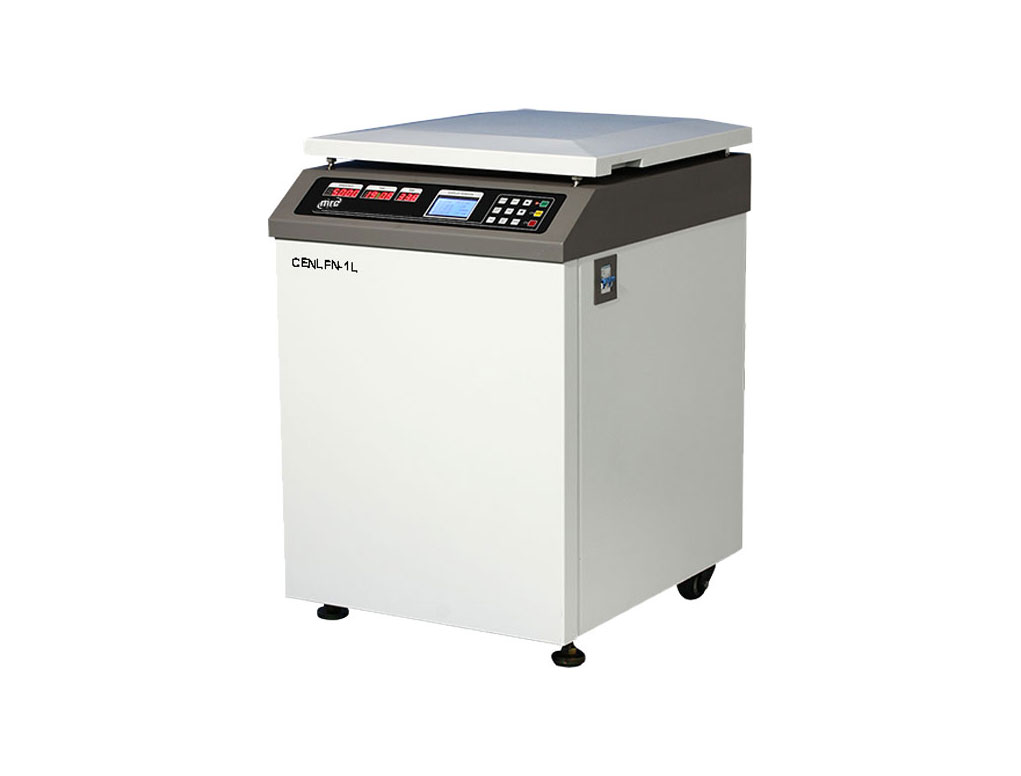
Effect of RPM on Different Blood Fractions
- Red Blood Cells (RBCs): Being the heaviest component, RBCs settle at the bottom of the tube quickly, even at moderate RPMs. High RPMs may be unnecessary and could increase the risk of hemolysis, where red blood cells break apart, releasing hemoglobin into the plasma and affecting downstream analyses.
- White Blood Cells (WBCs): Found in the “buffy coat” layer between red cells and plasma, WBCs require moderate RPMs for optimal separation. Excessive speeds can damage or distort these cells, affecting diagnostic results.
- Platelets: Being fragile and lightweight, platelets are most susceptible to damage at high RPMs. High centrifugal force can lead to activation or destruction, compromising any further analysis or therapeutic use. Lower to moderate speeds are recommended for platelet-rich plasma (PRP) preparation.
- Plasma Proteins and Soluble Factors: High-speed centrifugation can lead to denaturation or loss of certain proteins. For specific analyses requiring intact protein structures, such as enzyme assays or immunoassays, lower RPMs may be preferable.
The Role of G-Force Over RPM
While RPM is a common parameter, g-force (relative centrifugal force, or RCF) is often a more precise measure for setting centrifugation conditions. Since g-force is determined by both RPM and the rotor’s radius, setting centrifugation parameters based on RCF rather than RPM can yield more consistent results across different Laboratory centrifuge models and rotor sizes.
The equation for RCF is:
RCF=1.118×10⁻⁵×r×(RPM)2RCF=1.118×10⁻⁵×r×(RPM)2
where rr is the radius of the rotor (in centimeters). By calculating the g-force, lab technicians can adjust the RPM to achieve a specific force, leading to more accurate and reproducible separations.
Temperature Considerations at High RPMs
Higher RPMs generate more heat due to friction within the centrifuge, which can denature sensitive blood components. Many centrifuges are equipped with cooling systems, but it’s essential to monitor temperature during high-speed separations to prevent overheating, which could affect plasma proteins and cell viability.
Quality and Consistency in Blood Sample Processing
For diagnostic labs, consistency in centrifugation is crucial. Variations in RPM can lead to inconsistent separation, affecting test results. Standardizing centrifugation protocols with precise RPM or g-force settings helps reduce variability, enhancing reliability in tests like hematocrit measurements, blood chemistry analyses, and cell counts.