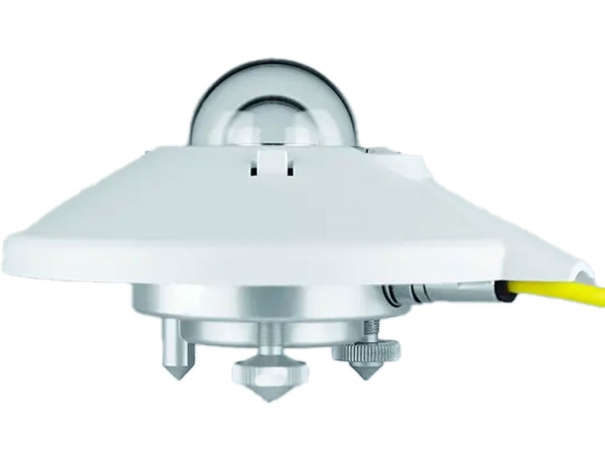
A pyranometer is a device used to measure the solar radiation received from the entire hemisphere above within a wavelength range of approximately 0.3 to 3 micrometers. It is commonly used in meteorology, climatology, and solar energy applications to quantify solar irradiance, which is the power per unit area received from the Sun.
Here's how a pyranometer typically measures solar radiation:
- Sensor Design: A pyranometer consists of a radiation sensor, which is usually a thermopile or photovoltaic cell, covered by a glass dome. The dome is transparent to solar radiation but minimizes heat loss from the sensor.
- Absorption of Solar Radiation: When solar radiation strikes the surface of the pyranometer, it is absorbed by the sensor material. The energy from the absorbed radiation heats up the sensor.
- Temperature Difference Measurement: The thermopile or photovoltaic cell in the sensor generates a voltage or current proportional to the temperature difference between the sensor and its surroundings. The temperature of the sensor rises due to the absorbed solar radiation.
- Conversion to Irradiance: The voltage or current output from the sensor is then converted into irradiance units, typically watts per square meter (W/m²), using calibration factors specific to the pyranometer model and its sensitivity to solar radiation.
- Data Recording: The irradiance values obtained from the pyranometer are recorded over time to monitor variations in solar radiation throughout the day, seasons, and different weather conditions.
- Calibration and Maintenance: Pyranometers require periodic calibration to ensure accurate measurements. Additionally, they need to be maintained properly, including regular cleaning of the dome to prevent dirt and debris from interfering with solar radiation measurements.
How do atmospheric conditions affect the accuracy of pyranometer measurements?
- Cloud Cover: Cloud cover can greatly attenuate incoming solar radiation. Thick clouds can block a significant portion of solar radiation from reaching the pyranometer, leading to lower measured values. Conversely, thin clouds may scatter solar radiation, affecting the uniformity of the incoming radiation.
- Aerosols and Particles: Atmospheric aerosols such as dust, smoke, and pollutants can scatter and absorb solar radiation before it reaches the pyranometer. This scattering and absorption reduce the amount of radiation reaching the sensor, leading to lower measured values.
- Water Vapor: Water vapor in the atmosphere can absorb specific wavelengths of solar radiation. High humidity levels can lead to increased absorption of solar radiation before it reaches the pyranometer, resulting in lower measured values.
- Altitude and Air Density: Atmospheric pressure and air density decrease with increasing altitude. Pyranometer measurements taken at higher altitudes may differ from those taken at sea level due to variations in air density. Corrections may be necessary to account for these differences.
- Temperature: Pyranometer sensitivity can be influenced by temperature variations. Changes in temperature can affect the sensitivity of the sensor and the thermal characteristics of its components, potentially leading to measurement inaccuracies.
- Solar Angle: The angle of the sun relative to the pyranometer affects the amount of solar radiation intercepted by the sensor. As the solar angle changes throughout the day and across seasons, the measured radiation levels vary accordingly.
- Instrument Calibration: Regular calibration is essential to ensure the accuracy of pyranometer measurements. Changes in atmospheric conditions and instrument aging can affect calibration over time, leading to inaccuracies in measurements.