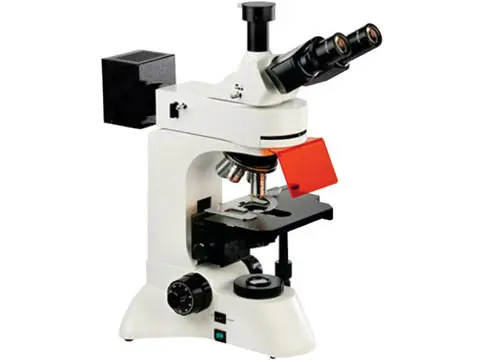
Microscopes have been essential tools in biology and medicine, allowing scientists to explore the microscopic world. Two of the most commonly used types are conventional biological microscopes and fluorescence microscopes. But how do they differ? Let’s break it down.
What is a Conventional Biological Microscope?
A conventional biological microscope, also known as a brightfield microscope, is the standard optical microscope used in laboratories. It uses visible light to illuminate specimens, which are typically stained to enhance contrast. These microscopes are widely used for studying bacteria, tissues, and cells in their natural state.
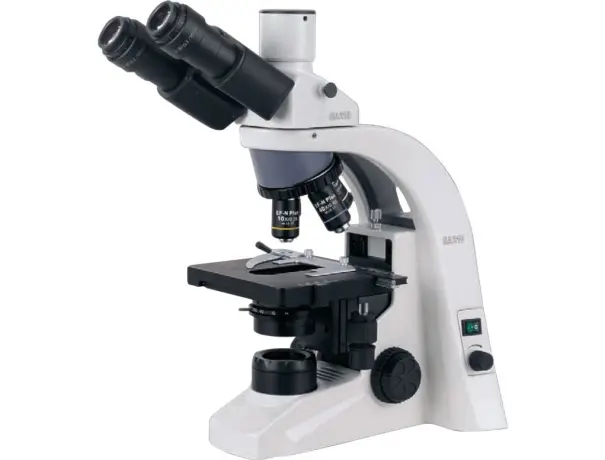
Key Components of a Conventional Microscope:
- Light source: Halogen or LED
- Lenses: Objective and eyepiece lenses for magnification
- Stage: Holds the specimen slide
- Diaphragm: Controls light intensity
- Stains: Often required for better contrast
What is a Fluorescence Microscope?
A fluorescence microscope is a more advanced type of optical Microscope that uses high-intensity light sources to excite fluorescent molecules (fluorophores) in a sample. When these molecules absorb light at one wavelength, they emit light at another, allowing scientists to visualize specific structures in cells and tissues.
Key Components of a Fluorescence Microscope:
- Excitation light source: Mercury, xenon, or LED lamps
- Excitation and emission filters: Control the light wavelengths
- Fluorophores: Dyes or proteins that fluoresce under specific light
- High-sensitivity detectors: Capture the emitted fluorescence
Key Differences Between Fluorescence and Conventional Microscopes
| Feature | Conventional Microscope | Fluorescence Microscope |
| Light Source | Visible light | High-energy light (UV, blue, or green) |
| Optical Filters | None | Excitation and emission filters |
| Staining | Often requires chemical dyes | Uses fluorescent dyes or proteins |
| Sensitivity | Limited | High, can detect single molecules |
| Live Cell Imaging | Difficult | Possible with fluorescent markers |
Principle of Fluorescence Microscopy
Fluorescence microscopy works by exciting fluorophores in the sample with high-energy light. These fluorophores then emit lower-energy light, which is detected and used to form an image. This method provides high contrast and specificity, making it useful for observing cellular structures and molecular interactions.
Advantages of Fluorescence Microscopes Over Conventional Microscopes
- High specificity: Can target and visualize specific molecules in cells.
- Live-cell imaging: Allows real-time observation of cellular processes.
- Multicolor imaging: Different fluorophores enable visualization of multiple structures simultaneously.
Can fluorescence microscopy be used on live cells?
Yes, They allows real-time imaging of live cells using specific fluorescent markers.
Why do fluorescence microscopes use filters?
Filters ensure that only specific wavelengths of light excite the fluorophores and that emitted light is properly detected.
Is fluorescence microscopy better than conventional microscopy?
It depends on the application. Fluorescence is better for detecting specific molecules, while conventional microscopy is simpler and more cost-effective.