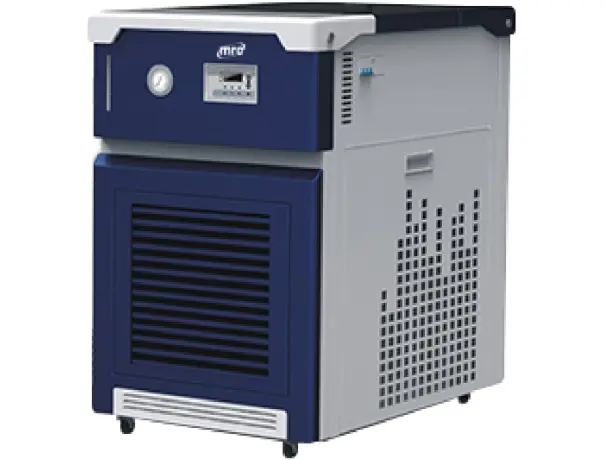
Selecting the appropriate cooling fluid for a laboratory chiller depends on several factors, including:
Key Considerations:
- Operating Temperature: Will the chiller operate at sub-zero temperatures?
- Application: Is the chiller used in the food and beverage industry or other applications requiring a non-toxic coolant?
- Freezing Point: Water freezes at 0°C, making it unsuitable for low-temperature applications or chillers placed in cold environments (e.g., outdoors). Freezing may cause severe damage to the system.
- Corrosion and Scaling: Pure water can cause corrosion and scale buildup. Therefore, it's often used with additives to prevent these issues.
Recommendation: Use distilled (DI) or reverse osmosis (RO) water instead of tap water to prevent mineral buildup and corrosion.
Glycol – The Preferred Choice
Choosing the right cooling fluid is critical for the chiller’s performance, longevity, and safety. While the specific recommendation depends on the application, glycol solutions (either ethylene glycol or propylene glycol) are generally the most common and recommended options for most chillers.
Key Benefits of Glycol:
- Freeze Protection: Glycol significantly lowers the freezing point of water, preventing ice formation and damage to the chiller and piping—especially in low-temperature or outdoor systems.
- Corrosion Protection: Glycol-based coolants designed for chiller systems contain corrosion inhibitors that protect metal components from rust and deterioration, extending the chiller's lifespan and reducing maintenance needs.
- Efficient Heat Transfer: Although slightly less effective than pure water in thermal conductivity, glycol solutions offer sufficient heat transfer efficiency for most applications. The safety and protective benefits outweigh the minor performance trade-off.
Glycol is typically mixed with water to reduce the freezing point and increase the boiling point, making it ideal for chillers in cold environments or outdoor installations.
Types of Cooling Fluids for Laboratory Chillers:
Propylene Glycol (PG)
A recommended coolant when freeze protection is needed or when a non-toxic fluid is required.
Advantages:
- Freeze Protection: Lowers the freezing point and protects the system in cold conditions.
- Non-Toxic: Safe for use in food and beverage applications or where human contact is possible.
- Corrosion Inhibition: Typically contains corrosion inhibitors to protect components and extend equipment life.
- Thermal Stability: Maintains its properties over time.
Disadvantages:
- More expensive than ethylene glycol.
- Slightly less efficient in heat transfer.
Important Notes:
- Use the correct mixing ratio (usually 30–50% PG with water), depending on the required operating temperature. Too high a concentration can reduce heat transfer efficiency.
- Periodically test the glycol concentration to ensure proper protection levels.
Ethylene Glycol (EG)
Advantages:
- Superior Heat Transfer: More efficient than propylene glycol.
- Very Low Freezing Point: Offers excellent freeze protection.
Disadvantages:
- Toxic: Not recommended for applications involving possible contact with food, beverages, or people. Requires careful handling and storage. Toxic to humans and animals.
- Must be disposed of according to safety regulations.
Typical Use: Industrial settings where toxicity is not a concern, such as machine cooling and chemical processes.
Additional Critical Considerations:
- Glycol Concentration: Should be based on the lowest expected system operating temperature. The glycol manufacturer or a professional technician can help determine the ideal ratio. Over-concentration reduces heat transfer, while under-concentration risks freeze damage.
- Water Quality: Use distilled or treated water (e.g., RO water) when mixing glycol. High-salinity or hard water can cause scale deposits and damage the system.
- Maintenance & Testing: After filling the coolant, conduct periodic testing for glycol concentration and corrosion inhibitor levels. Over time, inhibitors degrade and may need replenishing or replacement of the fluid.
- Consult with an Expert: Always consult with a certified chiller technician or the specific chiller manufacturer. They can assess your system's needs and recommend the most suitable fluid and concentration.
- Additives for Corrosion Prevention: Unless using pre-mixed glycol with built-in inhibitors, ensure your chosen fluid contains high-quality additives to prevent corrosion, scaling, and biological growth.
- Never Use Automotive Coolant: Car coolants contain additives that are incompatible with chiller systems and may cause significant damage.
Bottom Line: Always consult your chiller’s manufacturer or a cooling systems expert to confirm the selected fluid is specifically compatible with your chiller model and the operational requirements of your application.