Frequently Asked Questions About Digital Pipettes
What is a digital pipette and how does it differ from a traditional mechanical pipette?
A digital pipette is a laboratory instrument used for precisely measuring and transferring small volumes of liquid. Unlike a traditional mechanical pipette, which relies on a spring-loaded plunger and manual force to draw and dispense liquid, a digital pipette uses an electronic motor to control the piston movement. This electronic control provides greater accuracy and consistency, as it eliminates the variability introduced by manual operation.
What are the advantages of using a digital pipette in a lab?
The advantages of using a digital pipette are numerous and include:
- Improved Accuracy and Precision: The electronic motor ensures consistent piston speed and depth, reducing human error.
- Reduced User Fatigue: The electronic dispensing button requires less force than a manual plunger, which is a significant benefit for repetitive tasks, helping to prevent repetitive strain injuries (RSI).
- Enhanced Repeatability: Automated functions and programmable protocols ensure that the same pipetting sequence is executed identically every time.
- Ergonomic Design: Many digital pipettes are designed with user comfort in mind, featuring lightweight construction and comfortable grips.
- Advanced Features: Digital pipettes often come with multiple pipetting modes, programmable memory, and automatic calibration functions.
How does the electronic piston movement in a digital pipette work?
The electronic piston movement is driven by a small, precisely controlled motor. When the user presses the dispensing button, the motor receives a signal and moves the piston to a pre-programmed position. This action creates a vacuum that draws the liquid into the tip. To dispense the liquid, the motor reverses, pushing the piston down to eject the fluid. The speed and distance of the piston's travel are controlled by a microprocessor, which ensures high precision and consistency.
What is the difference between a single-channel and a multi-channel digital pipette?
A single-channel digital pipette is designed to aspirate and dispense liquid through a single tip at a time. It is ideal for tasks that involve transferring liquid to a single tube or well.
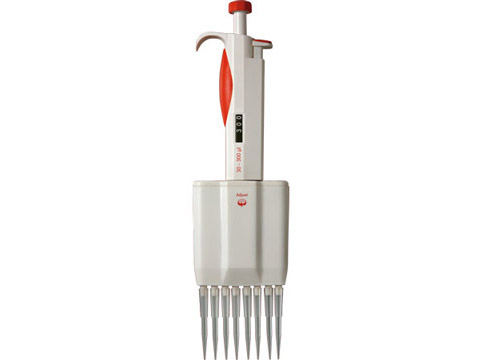
A multi-channel digital pipette, on the other hand, is equipped with multiple pipetting channels (e.g., 8, 12, or 16) that can aspirate and dispense liquid simultaneously. This is especially useful for high-throughput applications, such as filling multi-well plates (e.g., 96-well plates), as it significantly speeds up the workflow.
Are there digital pipettes with adjustable volume settings?
Yes, virtually all digital pipettes have adjustable volume settings. The volume is typically set using an intuitive digital display and control buttons, allowing for precise and easy adjustment within the pipette's specified volume range.
Technical Specifications & Features
What is the volume range of typical digital pipettes (e.g., microliter, milliliter)?
Digital pipettes are available in a wide range of volumes to suit various applications. Common volume ranges include:
- Microliter (μL) range:
- 0.2 - 2 μL
- 1 - 10 μL
- 10 - 100 μL
- 20 - 200 μL
- 100 - 1000 μL
- Milliliter (mL) range:
How do I select the correct tip size for a specific digital pipette?
Selecting the correct tip size is crucial for ensuring accuracy. Pipette tips are designed to fit specific pipette models and volume ranges. The general rule is to match the tip size to the pipette's volume range (e.g., use a 1000 μL tip for a 200-1000 μL pipette). Manufacturers often specify compatible tips, and using the recommended tips from the same brand or a certified compatible brand (such as MRC LTD) is highly recommended.
What is the accuracy and precision of a digital pipette, and how is it measured?
- Accuracy is the measure of how close the dispensed volume is to the set volume. It is expressed as a percentage or a volume deviation (μL).
- Precision (or repeatability) is the measure of how reproducible the dispensed volumes are from one pipetting cycle to the next. It is typically expressed as the coefficient of variation (CV) or standard deviation (SD).
Both accuracy and precision are measured by dispensing a set volume of liquid (usually distilled water) and weighing it on a high-precision balance. The measured weight is then converted to volume using the density of water. These measurements are typically performed under controlled temperature and humidity conditions to ensure reliability.
What are the different pipetting modes available on digital pipettes (e.g., standard, reverse, stepper)?
Many digital pipettes offer multiple pipetting modes to handle different liquid types and tasks:
- Standard (Forward) Pipetting: The most common mode. The user aspirates the liquid and then dispenses it with a single push of the button.
- Reverse Pipetting: Useful for highly viscous or volatile liquids. It involves aspirating more liquid than required, dispensing the desired volume, and then discarding the remaining excess.
- Stepper (Multiple Dispensing): Allows the user to aspirate a large volume and then dispense smaller, equal aliquots repeatedly without having to refill the tip.
- Dilution: Used for aspirating a sample and a diluent into the same tip, followed by dispensing.
How long does the battery of a digital pipette typically last, and is it rechargeable?
Most digital pipettes are powered by rechargeable batteries, often lithium-ion. A single full charge can typically last for a full day of continuous operation, or even several days, depending on usage frequency and the model. They come with a charging stand or a direct cable for recharging.
Are there digital pipettes with built-in memory to store protocols?
Yes, many advanced digital pipettes feature built-in memory that allows users to save custom protocols. This is particularly useful for complex or frequently repeated tasks, as it ensures that the exact same sequence of steps (e.g., volume, speed, and mode) is performed every time, reducing the chance of manual programming errors.
What is a digital pipette with automatic calibration?
A digital pipette with automatic calibration is an advanced model that can be calibrated in-house without the need for an external service provider. These pipettes often have a built-in calibration function that guides the user through the process, making it faster and more convenient to maintain the instrument's accuracy.
How do you calibrate a digital pipette?
Calibration of a digital pipette involves checking and, if necessary, adjusting its volume settings to ensure it dispenses the correct volume. The process typically involves:
- Gravimetric Testing: Dispensing a set volume of deionized water onto a high-precision analytical balance.
- Calculation: Calculating the dispensed volume from the measured weight and the density of water at the ambient temperature.
- Comparison: Comparing the measured volume to the set volume.
- Adjustment: If there is a significant discrepancy, the pipette's internal settings are adjusted using the calibration function.
What's the proper technique for using a digital pipette to ensure accuracy?
To ensure maximum accuracy:
- Pre-wetting: Before pipetting, aspirate and dispense the liquid 2-3 times to condition the tip.
- Immersion Depth: Immerse the tip to the correct depth (typically 1-2 mm for small volumes) to avoid bubbles and ensure a full draw.
- Vertical Position: Hold the pipette vertically during aspiration.
- Smooth Motion: Use a smooth and steady motion for both aspiration and dispensing.
- Tip Ejection: Use the tip ejector to discard used tips to prevent contamination.
How do I troubleshoot common error messages on a digital pipette's display?
Common error messages are often related to:
- Low Battery: The display will show a low battery icon or message, indicating the need for recharging.
- Overload: An overload error might occur if the piston encounters an obstruction. Check for a proper tip fit and ensure the tip is not clogged.
- Communication Error: This may indicate an issue with the motor or internal electronics. Consult the user manual for specific troubleshooting steps or contact the manufacturer's support.
How do you clean and decontaminate a digital pipette?
- Exterior Cleaning: The exterior can be wiped down with a soft cloth moistened with a mild detergent solution or 70% ethanol. Avoid getting liquid into the electronic components.
- Decontamination: For biological contamination, a surface wipe with a decontaminating solution (e.g., 10% bleach, then a water rinse) is effective. Always follow the manufacturer's recommendations. For more extensive decontamination, some components, like the tip cone, may be autoclavable.
What are the best practices for storing digital pipettes to maintain their functionality?
- Vertical Storage: Store pipettes vertically on a dedicated stand to prevent liquid from flowing into the shaft and contaminating the internal components.
- Recharging: Keep the pipette on its charging stand when not in use to ensure it's always ready for operation.
- Ambient Conditions: Store in a clean, dry environment at room temperature, away from direct sunlight and extreme temperatures.
Are the tip cones on digital pipettes autoclavable?
The autoclavability of the tip cone depends on the specific model and manufacturer. Many digital pipettes are designed with autoclavable lower parts (the tip cone assembly) to allow for sterilization between uses, particularly important for sterile applications. Always check the product specifications and user manual to confirm if a specific model's components are autoclavable.