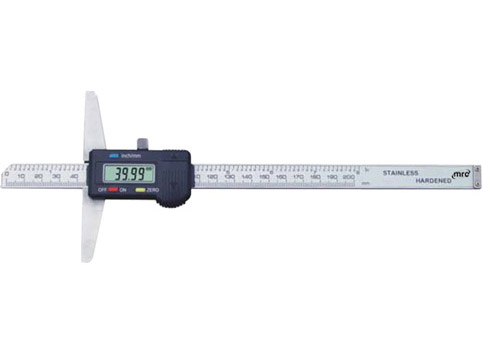
Digital depth gauges are advanced measuring instruments designed to measure the depth of any indented surface with extreme accuracy. Unlike traditional depth gauges, digital versions offer a digital readout, ensuring easy readability and reducing human error.
Types of Digital Depth Gauges
There are several types of digital depth gauges, each catering to specific needs and applications:
- Standard Digital Depth Gauges: These are versatile tools used for general purposes. They come with a flat base and a measuring range typically between 0-150mm or 0-6 inches.
- Hook Depth Gauges: Specifically designed for measuring the depth of grooves and recesses, these gauges have a hook-like structure that fits into the groove to provide accurate measurements.
- Micrometer Depth Gauges: These gauges are used when ultra-precise measurements are required. They offer higher resolution and accuracy compared to standard digital depth gauges.
- Vernier Digital Depth Gauges: Combining the traditional vernier scale with a digital readout, these gauges provide high precision and are often used in quality control processes.
Key Features
Digital depth gauges come equipped with various features that enhance their functionality and ease of use:
- Digital Readout: Provides a clear and accurate measurement display, reducing the possibility of reading errors.
- Zero Setting Function: Allows users to set the zero point at any position, facilitating relative measurements.
- Metric/Inch Conversion: Many digital depth gauges offer the ability to switch between metric and inch units.
- Data Output: Some advanced models come with data output ports for connecting to computers or data loggers, enabling easy data collection and analysis.
- Hardened Stainless Steel Construction: Ensures durability and longevity, even in harsh working environments.
- Large LCD Screen: Enhances readability, making it easier to take measurements in various lighting conditions.
Applications
Digital depth gauges are indispensable in a variety of fields due to their precision and versatility. Here are some key applications:
- Manufacturing: Ensuring the precise depth of drilled holes, slots, and recesses in components.
- Automotive Industry: Measuring the depth of tire treads, brake discs, and engine components.
- Aerospace: Verifying the depth of critical components in aircraft manufacturing and maintenance.
- Engineering: Used in various engineering tasks where precise depth measurement is crucial.
- Metalworking: Measuring the depth of milled parts and machined components to ensure compliance with design specifications.
Choosing the Right Digital Depth Gauge
Selecting the appropriate digital depth gauge depends on several factors, including the specific requirements of the task at hand. Here are some considerations:
- Measuring Range: Determine the depth range you need to measure and choose a gauge that covers this range.
- Resolution and Accuracy: Higher resolution and accuracy are essential for tasks requiring precise measurements.
- Build Quality: Opt for gauges made from durable materials like stainless steel to ensure longevity.
- Ease of Use: Consider features like a large LCD screen, ergonomic design, and user-friendly interface.
- Additional Features: Depending on your needs, look for features like data output ports, zero setting function, and metric/inch conversion.
Using Digital Depth Gauges: Best Practices
To achieve the best results with digital depth gauges, it is important to follow certain best practices:
- Calibration: Regularly calibrate your digital depth gauge to maintain accuracy. Most gauges come with a calibration certificate from the manufacturer.
- Cleanliness: Keep the gauge and the surface to be measured clean and free of debris. Dirt and dust can affect measurement accuracy.
- Proper Handling: Handle the gauge with care to avoid damage to the sensitive digital components. Store it in a protective case when not in use.
- Consistent Pressure: Apply consistent pressure when taking measurements to ensure repeatability and accuracy.
- Environmental Conditions: Be mindful of temperature and humidity, as extreme conditions can affect measurement accuracy.
Maintaining Digital Depth Gauges
Maintaining your digital depth gauge is crucial for ensuring its longevity and accuracy. Here are some maintenance tips:
- Regular Cleaning: Clean the gauge regularly with a soft cloth and avoid using harsh chemicals.
- Battery Replacement: Replace the batteries as needed to prevent display issues and ensure consistent performance.
- Storage: Store the gauge in a dry, cool place, preferably in its original case, to protect it from environmental damage.
- Periodic Calibration: Send the gauge for professional calibration periodically to ensure its accuracy remains within specified limits.