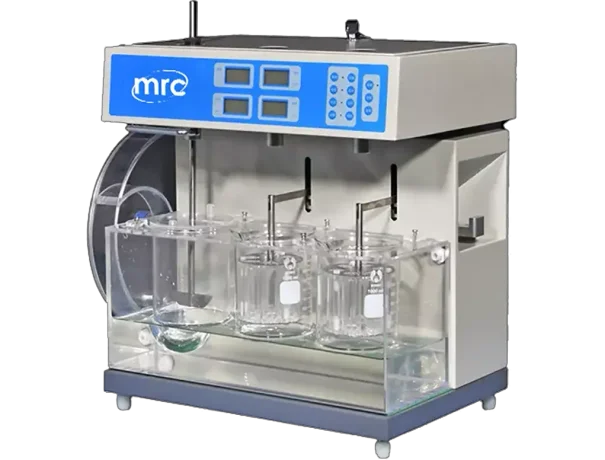
In the pharmaceutical industry, tablet dosage forms must meet strict quality, safety, and performance standards. Tablets testing is a critical process used to ensure that solid dosage forms deliver the correct amount of active ingredients, disintegrate properly, and maintain mechanical integrity during handling and transportation.
Quality control laboratories rely on specialized testing equipment to evaluate physical and chemical properties of tablets throughout production. These tests are essential for compliance with pharmacopeial standards such as USP, EP, and BP.
Why Tablet Testing is Critical
Tablet testing ensures that every product released to the market is:
- Safe for consumption
- Consistent in dosage
- Stable during storage and transport
- Effective in drug release
Failure to properly test tablets can result in inconsistent dosing, poor bioavailability, or even product recalls.
Key Tablet Quality Parameters
Several critical parameters are evaluated during tablet testing:
- Hardness (crushing strength)
- Friability (resistance to abrasion)
- Disintegration time
- Dissolution rate
- Uniformity of weight and content
Each parameter is measured using dedicated laboratory instruments.
Dissolution Tester
What is a Dissolution Tester?
A dissolution tester measures the rate and extent to which the active pharmaceutical ingredient (API) is released from a tablet into a dissolution medium.
This test simulates the conditions inside the human body, providing insight into how the drug will behave after ingestion.
How It Works
The tablet is placed in a vessel containing a dissolution medium (such as simulated gastric fluid). The system maintains:
- Controlled temperature (usually 37°C)
- Constant stirring using paddles or baskets
Samples are taken at specific intervals to determine the amount of drug released.
Key Features
- Multi-station systems (6, 8, or more vessels)
- Digital temperature and speed control
- Automated sampling systems
- Compliance with USP Apparatus I & II
Applications
- Drug development and formulation
- Quality control laboratories
- Stability testing
Tablet Four-Usage Tester
Overview
A Tablet Four-Usage Tester is a multifunctional instrument designed to measure four critical tablet parameters in one system:
- Hardness
- Friability
- Thickness
- Diameter (or weight, depending on configuration)
Advantages
- Combines multiple tests into one device
- Saves laboratory space
- Reduces testing time
- Improves workflow efficiency
How It Works
The device integrates different testing modules, allowing operators to perform several measurements on a single tablet sample without transferring it between instruments.
Typical Use Cases
- Pharmaceutical manufacturing lines
- Quality assurance labs
- Research and development
Disintegration Time Limit Tester
What is Disintegration Testing?
Disintegration testing measures how long it takes for a tablet to break down into smaller particles under simulated physiological conditions.
Principle of Operation
Tablets are placed in basket racks immersed in a liquid medium maintained at 37°C. The baskets move up and down at a controlled frequency.
The test ends when the tablet completely disintegrates.
Key Features
- Multi-basket configurations (6 or more tubes)
- Precise temperature control
- Programmable timers
- Compliance with USP/EP standards
Importance
Disintegration is a prerequisite for dissolution. A tablet must first break apart before the active ingredient can dissolve.
Tablet Friability Tester
Purpose
A friability tester evaluates the tablet's ability to resist abrasion, chipping, and breakage during handling, packaging, and transport.
Testing Method
Tablets are placed in a rotating drum that spins at a defined speed. After a set number of rotations, tablets are weighed again.
The percentage weight loss indicates friability.
Acceptance Criteria
Typically, a weight loss of less than 1% is considered acceptable.
Key Features
- Transparent drum for observation
- Adjustable rotation speed
- Automatic stop and timing
- Easy cleaning
Tablet Hardness Tester
What is Tablet Hardness?
Tablet hardness, also known as crushing strength, measures the force required to break a tablet.
Why It Matters
- Too hard: tablet may not disintegrate properly
- Too soft: tablet may break during handling
Testing Principle
A tablet is placed between two anvils, and force is applied until it breaks. The force required is recorded.
Features
- Digital force measurement
- High precision sensors
- Multiple units (N, kg, lb)
- Data storage and export options
Applications
- Quality control during production
- Formulation development
- Batch consistency verification
Integration of Tablet Testing Equipment in Laboratories
Modern laboratories integrate multiple testing instruments into automated workflows:
- Data logging systems
- LIMS integration
- Automated sampling and analysis
- Compliance with 21 CFR Part 11
This ensures traceability, accuracy, and regulatory compliance.
Regulatory Standards for Tablet Testing
Pharmaceutical tablet testing must comply with international standards:
- USP (United States Pharmacopeia)
- EP (European Pharmacopoeia)
- BP (British Pharmacopoeia)
Each standard defines testing procedures, acceptance criteria, and equipment requirements.
Choosing the Right Tablet Testing Equipment
When selecting equipment, consider:
1. Compliance
Ensure compatibility with USP/EP/BP standards.
2. Automation Level
Manual, semi-automatic, or fully automatic systems.
3. Throughput
Number of samples processed per batch.
4. Accuracy and Repeatability
High precision sensors and calibration capabilities.
5. Data Management
Connectivity to LIMS or external systems.
what are Tablets testing for laboratory
Tablet testing in a laboratory refers to a set of analytical tests performed on pharmaceutical tablets to ensure they meet quality, safety, and performance standards. These tests are required during R&D, production, and quality control (QC).
Below is a structured breakdown of the key tablet tests:
1. Physical Tests
Tablet Hardness (Crushing Strength)
- Measures the force required to break a tablet
- Ensures tablets can withstand handling, packaging, and transport
- Typical units: Newton (N) or kg/cm²
- Instrument: Hardness tester
Friability
- Measures how easily tablets crumble or chip
- Tablets are rotated in a drum and weight loss is measured
- Acceptable limit: usually < 1% weight loss
- Instrument: Friability tester
Weight Variation
- Ensures uniformity of tablet weight
- Individual tablets are weighed and compared to the average
- Important for dose consistency
Thickness & Diameter
- Measures tablet dimensions
- Ensures uniformity for packaging and coating
- Instrument: Digital caliper or thickness tester
2. Mechanical Strength Tests
Disintegration Test
- Measures how long a tablet takes to break down into smaller particles
- Critical for drug release
- Conducted in a liquid medium at 37°C
- Instrument: Disintegration tester
Dissolution Test
- Measures the rate and extent of drug release into solution
- One of the most critical QC tests
- Simulates conditions in the human body
- Instrument: Dissolution tester
3. Chemical Tests
Assay (Active Ingredient Content)
- Determines the amount of active pharmaceutical ingredient (API)
- Typically performed using:
- HPLC
- UV-Vis spectrophotometer
Content Uniformity
- Ensures each tablet contains the correct amount of API
- Important for low-dose drugs
Impurity / Stability Testing
- Detects degradation products
- Ensures shelf life and safety
4. Special Tests
Moisture Content
- Determines water content in tablets
- Affects stability and hardness
- Methods:
- Loss on drying (LOD)
- Karl Fischer titration
Dissolution Profile Comparison
- Used in generics to compare with reference drug
- Required for regulatory approval
Coating Uniformity
- Ensures even coating thickness and weight gain
5. Microbiological Tests (when applicable)
- Checks for microbial contamination
- Required for certain formulations
6. Stability Studies
- Tablets are stored under controlled conditions:
- Monitored over time to determine shelf life
Key Equipment Used
Common instruments in tablet testing labs include:
- Hardness tester
- Friability tester
- Disintegration tester
- Dissolution tester
- Analytical balance
- HPLC / UV spectrophotometer
Why Tablet Testing Is Critical
- Ensures dosage accuracy
- Guarantees patient safety
- Confirms regulatory compliance (USP, EP, BP standards)
- Maintains product consistency and quality