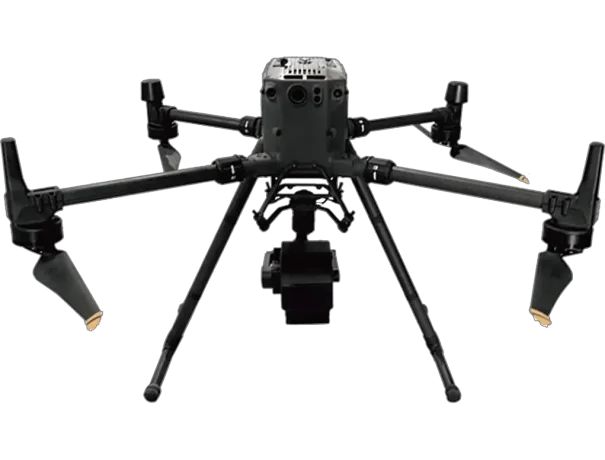
Hyperspectral Cameras for Military, Agricultural, and Mineral Exploration Applications, with Emphasis on Drone and Aircraft Integration.
Airborne Hyperspectral Cameras (Drones, UAVs, and Aircraft) for Military, Agricultural, and Geological Applications
Hyperspectral cameras are advanced remote sensing systems capable of capturing the visible and invisible light spectrum in great detail, divided into thousands of narrow spectral bands. The combination of high spectral resolution and spatial coverage enables the detection and analysis of chemical, physical, and biological properties of objects from the air – quickly, accurately, and efficiently.
Hyperspectral cameras have become a core technology in military, agricultural, and geological fields. Their ability to distinguish between materials, identify invisible changes, and analyze multi-channel data provides significant operational advantages in every arena. When integrated with drones and aircraft, they become a critical tool for making smart, real-time decisions.
Integration with Drones and Aircraft
-
The integration of hyperspectral cameras with drones offers flexibility, mobility, and a relatively low cost compared to satellites.
-
Drones enable precise low-altitude imaging, adaptability to changing conditions, and accessibility to remote or hazardous areas.
-
When mounted on aircraft, it is possible to achieve very wide coverage in a short time, with high resolution and the ability to fly long distances.
Military Applications
In defense systems, hyperspectral cameras are installed on unmanned aerial vehicles (UAVs), surveillance planes, and ground equipment. Their purposes include:
-
Camouflage Detection – The ability to detect objects that are hidden from the human eye or standard cameras, thanks to subtle spectral differences between natural and artificial materials.
-
Motion Tracking – Analyzing spectral changes over time enables tracking the movement of vehicles, people, or military equipment.
-
Detection of Explosives, Gases, or Chemical Leaks – Each substance has a unique spectral signature that can be detected remotely.
Agricultural Applications
In precision agriculture, hyperspectral cameras bring a true revolution:
-
Analysis of Vegetation Health – Various spectral indices allow early detection of stress, diseases, water deficiency, or over-fertilization, before symptoms become visible.
-
Crop Yield Estimation – Enables forecasting yield, analyzing plant density and size, and optimizing agricultural inputs accordingly.
-
Detection of Weeds and Pests – Has the potential to reduce the use of pesticides and fertilizers.
Mineral Exploration Applications
In geological exploration, these cameras are essential tools:
-
Mineral and Rock Identification by Spectral Signature – Including valuable minerals such as iron, copper, lithium, natural gases, and more.
-
Detection of Resource-Rich Areas – Without the need to drill or collect ground samples.
-
Monitoring Geological Changes – Including erosion, ground subsidence, or volcanic activity.
Meteorological Drones – A Revolution in Weather Data Collection
In recent years, the meteorology field has undergone a significant transformation thanks to the integration of drone (UAV – Unmanned Aerial Vehicle) technology for collecting weather data, replacing traditional weather balloons.
Drones offer a mobile, accurate, and relatively low-cost solution compared to weather balloons or ground stations – and can measure atmospheric profiles in real time and at varying altitudes.
What Are Meteorological Drones?
Meteorological drones are unmanned aerial vehicles equipped with dedicated sensors for measuring atmospheric variables such as:
The drone is programmed to fly to a predetermined altitude (typically up to several kilometers) and continuously sample variables during its ascent and/or descent.
Advantages of Drones in Weather Measurement
-
Flight at Low to Mid Altitudes – Where traditional balloons are limited, yet critical processes occur, such as fog formation, sharp temperature shifts, and convection currents.
-
Precision and Modularity – Sensors mounted on the drone can be customized by measurement type and offer extremely high resolution.
-
Low Operational Cost – Compared to launching an expensive radiosonde balloon or operating a manned aircraft.
-
Access to Challenging Areas – Such as dense urban centers, desert agriculture zones, or disaster-stricken regions.
-
Sampling in Changing Conditions – Including local storms, smoke dispersion from fires, or industrial pollution.
Main Applications
-
Local Weather Forecasting – Especially in mountainous regions, small settlements, or agricultural stations.
-
Tropopause Boundary Studies – Including humidity profiles, thermal stability, and cloud formation.
-
Air Pollution Monitoring – Especially at low altitude above cities or industrial areas.
-
Support for Precision Agriculture – Accurate understanding of wind, humidity, and temperature for improved irrigation and pest control.
-
Support for Search and Rescue Missions – Especially for early detection of hazardous conditions or real-time air monitoring in the field.
Challenges and Solutions
-
Limited Flight Time – Solved with hybrid drones offering extended battery life.
-
Regulations and Flights in Populated Areas – Requires flight approval from aviation and meteorological authorities.
-
Sensor Accuracy – Demands frequent calibration and professional integration.