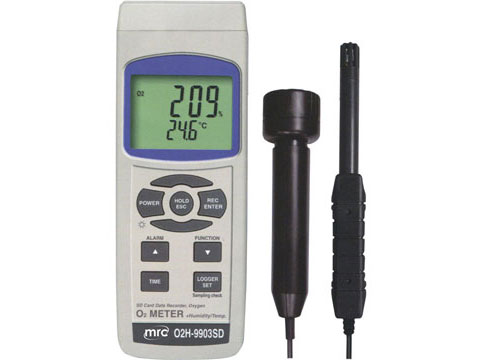
MRC has a variety of measuring instruments and data registers suitable for agricultural applications:Climatic measurements of the plant environment: temperature, relative humidity, dew point, barometric pressure, solar radiation, precipitation, wind speed, wind direction.Soil measurements: Moisture, acidity.
Agriculture is an essential sector for the economy and the society. The measurement of various parameters in agriculture is crucial for efficient crop management, precision agriculture, and effective resource utilization. With the technological advancements, measuring instruments for agriculture have evolved, providing accurate and timely information on various parameters such as soil moisture, temperature, light intensity, and more. In this article, we will explore the different types of measuring instruments used in agriculture and their importance in crop management.
Measuring Instruments For Agriculture
Agriculture is a science that involves the cultivation of crops, raising animals for food and other products, and other related activities. It is a vital sector for the economy and the society, providing food, fiber, and fuel. However, the efficient management of crops and resources is crucial for sustainable agriculture. Measuring instruments play a critical role in providing accurate information on various parameters that affect crop growth and development.
Types of Measuring Instruments for Agriculture
1. Soil Moisture Sensors
Soil moisture sensors are used to measure the amount of water in the soil. They help in determining the optimum amount of water required for crop growth and development. There are different types of soil moisture sensors such as tensiometers, capacitance sensors, and neutron probes.
2. Thermometers
Thermometers are used to measure the temperature of the soil and the air. They help in determining the optimum temperature range for crop growth and development. There are different types of thermometers such as mercury thermometers, alcohol thermometers, and digital thermometers.
3. Light Meters
Light meters are used to measure the amount of light that reaches the crops. They help in determining the optimum light intensity required for crop growth and development. There are different types of light meters such as silicon photocells, selenium photocells, and photodiodes.
4. pH Meters
pH meters are used to measure the acidity or alkalinity of the soil. They help in determining the optimum pH range required for crop growth and development. There are different types of pH meters such as digital pH meters, litmus paper, and pH indicator solutions.
5.Stomatal conductance
Stomatal conductance refers to the measurement of how much a plant's stomata, small pores on the surface of leaves, allow gases like carbon dioxide (CO2) to enter and oxygen (O2) to exit. It's a crucial factor in the process of photosynthesis. When stomata are open, allowing more CO2 in, the plant can photosynthesize more, leading to greater growth potential. However, this also means higher water loss through transpiration. Stomatal conductance is influenced by various factors including light, humidity, temperature, and the plant's internal conditions.
6.Chlorophyll fluorescence
Chlorophyll fluorescence, on the other hand, is a technique used to measure the efficiency of photosynthesis in plants. Chlorophyll, the pigment responsible for capturing light energy, emits fluorescence when excited by light. By measuring the intensity and duration of this fluorescence, scientists can assess the health and performance of plants. It provides insights into the photosynthetic activity, stress responses, and overall vitality of plants. Lower fluorescence levels can indicate stress or damage, while higher levels can suggest optimal photosynthetic activity.
7.Daily Light Integral (DLI) and Photosynthetically Active Radiation (PAR)
Daily Light Integral (DLI) and Photosynthetically Active Radiation (PAR) are crucial parameters in light measurement for agriculture, especially in understanding and optimizing plant growth conditions.
8.Daily Light Integral (DLI)
Daily Light Integral (DLI): DLI measures the total amount of photosynthetically active radiation (PAR) received by plants over the course of a day, usually expressed in moles of photons per square meter per day (mol/m²/day). It's a cumulative measurement that takes into account both the intensity and duration of light exposure plants receive during the day. DLI is significant because different plants have varying requirements for light, and knowing the DLI helps in optimizing growth conditions, especially in controlled environments like greenhouses or indoor farming setups.
9.Photosynthetically Active Radiation (PAR)
Photosynthetically Active Radiation (PAR): PAR refers to the portion of the electromagnetic spectrum (wavelengths between 400 and 700 nanometers) that plants use for photosynthesis. PAR meters measure the intensity of light within this range, quantifying the amount of light available for plants to perform photosynthesis. It's crucial because it directly influences plant growth, development, and the efficiency of photosynthesis. PAR meters help in assessing whether plants are receiving adequate light for optimal growth and if adjustments need to be made to their light exposure.
Both DLI and PAR measurements are essential in determining the light requirements of specific crops, adjusting light levels in controlled environments, and optimizing the light conditions to maximize plant growth and yield.
Photosynthetically Active Radiation (PAR): PAR meters measure the intensity of light within the spectral range that plants use for photosynthesis (usually 400-700 nm). This helps in understanding light availability for plant growth.
10.Leaf Area Index (LAI)
Leaf Area Index (LAI): LAI meters measure the amount of leaf material in a given area. This helps in assessing the vigor and health of crops.
Importance of Measuring Instruments in Agriculture
Measuring instruments play a critical role in agriculture by providing accurate and timely information on various parameters. They help in determining the optimum conditions required for crop growth and development, thus ensuring efficient crop management. Measuring instruments also help in effective resource utilization, such as water, fertilizers, and pesticides, reducing the cost of production and minimizing the environmental impact.