A pipette is a type of laboratory equipment. It allows users to measure and dispense liquid materials in their desired quantities.
Pipettes are often used in laboratory settings when conducting experiments. Different science disciplines such as Chemistry, Biotechnology, Medicine, and natural science use pipettes when performing lab works. These lab works and experiments usually involve using varying amounts of liquids that have to be accurately measured. And that's where pipettes come in handy.
Types of Pipettes and Their Uses
A pipette is either made of plastic or high-grade glass with special properties. And throughout the years, more manufacturers modified pipettes for various specific uses.
Manual Single Channel Pipettes
A manual single-channel pipette is also known as a micropipette. It is designed to be ergonomic, so it's easier on the hands. Single channel pipettes are used for simple yet repetitive liquid dispensing tasks of up to 5 mL.
Because of ease of use, micropipettes are considered perfect in day-to-day use in a laboratory setting. Especially when dealing with smaller sets of samples.
Multichannel Pipettes
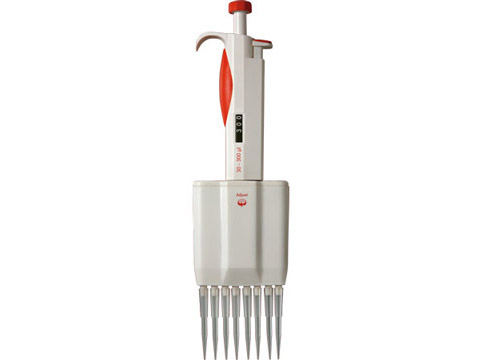
The multichannel pipettes are typically used to extract and dispense multiple liquid materials. And because multichannel pipettes have 8 - 12 pipettes heads, it makes microplating tasks such as PCR and ELISA more convenient.
An 8 - 12 channel can take care of a 96 well microplate. This allows users to take care of multiple and repetitive pipetting. Also, most multichannel pipettes are electronic.
Electronic multichannel pipettes can cut down several minutes of work when it comes to dealing with liquids because of their automated multi-dispensing capabilities. Electronic pipettes are highly adjustable so you can enter the correct measurement of liquid reagents. After that, you can sit back and allow the machine to work on its own.
Graduated Pipettes
Graduated Pipettes are types of macro pipettes. They can accurately measure volumes of liquids larger than micropipettes can handle.
Just like any other pipettes, graduated pipettes are made either with plastic or borosilicate glass. It has a tapered tip and a cylinder tube bearing the volume markings for measurement.
As per the usual recommendation, use a pipette that is closest to the volume of liquid you want to collect. this is to avoid any inaccuracy as much as possible, and always consider the final measurement to the total capacity of the tube.
When using a graduated pipette, one should hold the tip 6mm away from the bottom of the container or beaker. This way, the user can collect the amount of liquid need properly. Also, make sure to understand the specification of every graduated pipette you are going to use. Proper calibration means it delivers it extract or deliver the proper amount.
If you see "AS" markings somewhere in the tube or cylinder, A stands for high-level precision of measurement. While S means fast delivery or release of the liquid contained.
Serological Pipettes
Serological pipettes or terminal pipettes fall under graduated pipettes. This type of pipette is ideal for gently mixing cell suspensions and is typically identified by marks closer to the tip.
Serological pipettes are convenient when experimenting with cell culture. You can use serological pipettes to extract and transfer groups of cells for further research and empirical measurement. Serological pipettes also aid in mixing and/or layering reagents. A good example is the ficolin gradients to purify plasma cells from the blood.
Calibrated serological pipettes can hold and deliver liquid volumes from 0.1 ml to 25 ml. They are typically used in laboratory activities such as Blood Banking, Urinalysis, Hematology, and Immunology.
Pasteur Pipettes
Pasteur pipettes are also known as eyedropper pipettes. They are single-use pipettes used to transfer small amounts of liquids. Aptly named after its first creator, Loius Pasteur, these small pipettes aided the father of microbiology in understanding how microbial growth in food, milk, and wine can become deadly.
Volumetric Pipettes
A Volumetric pipette is designed for precision and accuracy when handling liquids. It is long with a narrow body bearing graduation marks for precise measurement, and a bulb-shaped reservoir. This type of pipette is designated only to deliver the precise amount of liquid.
The typical volume that a volumetric pipette can hold ranges from is 1, 2, 5, 10, 20, 25, 50, and 100 mL. Most, if not all, volumetric pipettes are made of borosilicate glass or pyrex. This glass can withstand pressure, sudden changes in temperature, and the corrosive properties of some chemicals. This is also the reason why volumetric pipettes are a favorite of chemists when making laboratory solutions involving strong chemicals.
Pipettes Tips for Better Usage
1. Before you even buy your set of pipettes, ask yourself first. What kinds of liquids are you going to use the pipettes for. This way, you know what to go for and avoid using the wrong pipette when handling any of your liquid materials.
2. Take the time to properly calibrate your shiny new tool. When dealing with liquids for any of your experiments, the accurate amount of your liquid ingredient can make or break the output of your task. According to the Clinical and Laboratory Standards Institute (CSLI), it is considered good practice to perform calibration maintenance every 3 to 6 months. This includes all your manual and electronic pipettes.
3. Always follow the process of handling and maintaining your pipettes. This includes the before and after use cleaning, storage, and how to use pipettes correctly.
Common Pipetting Errors and How to Avoid Them
Incorrect Tip Fit: Always use manufacturer-recommended tips for a snug fit.
Inconsistent Technique: Maintain a consistent pipetting rhythm and avoid rushing.
Poor Pipette Positioning: Keep the pipette vertical when aspirating and dispensing to prevent inaccuracies.
Air Bubbles: Ensure proper technique to avoid introducing air bubbles into the pipette tip.
MRC-Laboratory Equipment provides a wide range of pipettors.