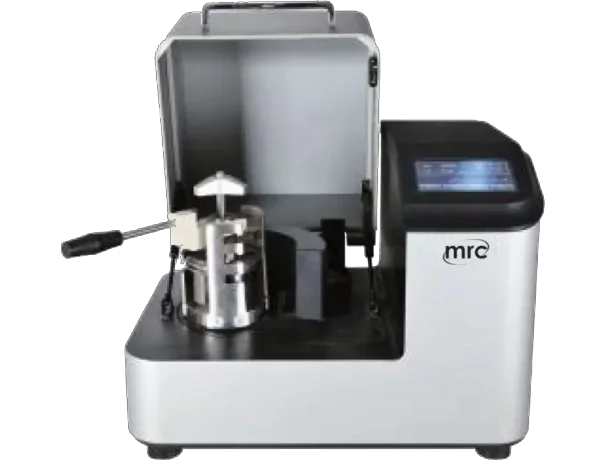
planetary ball mill is one of the most powerful laboratory grinding systems available today. Designed for ultrafine particle size reduction, mechanical alloying, and advanced powder processing, it plays a central role in research laboratories and high value industrial development projects worldwide.
Unlike conventional mills, planetary systems generate extremely high centrifugal forces by rotating grinding jars around their own axes while simultaneously revolving them around a central sun wheel. This dual motion produces intense impact and friction forces that rapidly break down materials into micron or even nanometer scale powders.
What Is a Planetary Ball Mill
A planetary ball mill is a high energy milling device used to grind, mix, homogenize, and mechanically alloy solid materials.
Typical features include:
- Multiple grinding jars mounted on a rotating disc
- Counter rotating jar motion
- Variable speed control
- Dry and wet milling capability
- Interchangeable jar materials such as stainless steel, zirconia, tungsten carbide, or agate
- Optional inert gas operation for oxygen sensitive materials
These systems are widely used when precision, reproducibility, and very fine particle sizes are required.
How Planetary Ball Milling Works
Inside each sealed jar, grinding balls collide with the sample at high speed. The planetary movement multiplies the kinetic energy, producing:
- Impact fracture of brittle particles
- Shear forces for ductile materials
- Cold welding and fracturing for alloy formation
- Uniform blending of multi component powders
Process parameters such as rotation speed, milling time, ball size, jar material, and atmosphere allow fine tuning of particle size distribution and material structure.
Why Planetary Ball Mills Matter in Modern Industry
Planetary ball mills support innovation across multiple sectors because they:
- Enable nanoscale material synthesis
- Improve chemical reactivity through mechanochemistry
- Produce homogeneous powder blends
- Accelerate research and product development
- Reduce the need for solvents in some chemical reactions
These advantages explain why planetary milling systems appear in nearly every advanced materials laboratory.
Key Industrial and Research Niches for Planetary Ball Mills
Advanced Materials and Nanotechnology
Materials science researchers use planetary mills to create novel structures with tailored physical properties.
Typical applications
- Graphene exfoliation
- Carbon nanotube dispersion
- High entropy alloys
- Ceramic matrix composites
- Functional nanoparticles
This niche often demands temperature monitoring, wear resistant jars, and inert atmospheres.
Metallurgy and Powder Metallurgy
Planetary ball mills are central to mechanical alloying, where repeated fracturing and cold welding produce new metal compositions.
Applications include
- Aluminum based composites
- Oxide dispersion strengthened steels
- Titanium alloys
- Reactive milling processes
- Grain refinement
These projects often require hardened steel or carbide jars for long duration milling.
Battery and Energy Storage Research
Energy materials represent one of the fastest growing markets for planetary milling technology.
Used for
- Cathode and anode powder preparation
- Solid state electrolytes
- Sodium ion battery research
- Silicon carbon composites
- Fuel cell ceramics
Uniform particle size and intimate mixing directly influence electrochemical performance.
Chemical Processing and Catalysis
Planetary mills enable mechanochemical reactions, where chemical transformations occur through mechanical energy rather than heat or solvents.
Key uses
- Catalyst activation
- Solid state synthesis
- Pigment dispersion
- Polymer additive blending
- Green chemistry research
This niche values precise control over milling energy and contamination levels.
Pharmaceutical and Biotechnology Development
In pharmaceutical laboratories, planetary mills assist with early stage formulation work.
Applications
- API micronization
- Solid dispersions
- Co crystal production
- Drug carrier particles
- Controlled release matrices
Low contamination jar materials and reproducible milling protocols are critical here.
Ceramics and Glass Engineering
Fine ceramic powders require careful preparation before sintering or tape casting.
Typical materials
- Zirconia
- Alumina
- Silicon nitride
- Electroceramics
- Optical glass precursors
Planetary milling improves densification and microstructural uniformity.
Mining, Geology, and Mineral Analysis
Geological laboratories rely on planetary mills for rapid and reproducible sample preparation.
Used for
- Ore pulverization
- XRF and ICP sample prep
- Rare earth element studies
- Precious metal liberation
- Environmental mineral testing
Durable jars and high throughput capability are essential in this segment.
Environmental and Recycling Research
Planetary mills help develop solutions for waste processing and circular economy initiatives.
Applications include
- Fly ash activation
- Slag reprocessing
- Soil homogenization
- Battery recycling research
- Catalyst regeneration
Mechanical activation often improves leaching efficiency and chemical reactivity.
Electronics and Semiconductor Materials
Electronic ceramics and functional powders require tight control over composition and particle size.
Typical uses
- Dielectric ceramics
- Magnetic ferrites
- Conductive pastes
- Sensor materials
- LTCC powders
Planetary milling ensures homogeneous microstructures for reliable electronic performance.
Additive Manufacturing and 3D Printing Powders
Powder quality determines printing success, making planetary mills vital in additive manufacturing development.
Applications
- Composite powder blending
- Particle size conditioning
- Reactive feedstocks
- Ceramic slurries
- Research scale powder production
This niche is expanding rapidly as metal and ceramic printing technologies mature.
Food and Agricultural Research
In food technology labs, planetary mills are used at development scale rather than production.
Examples
- Plant tissue homogenization
- Spice micronization
- Encapsulation studies
- Feed additives
- Starch modification
Here, easy cleaning and contamination control are critical.
Cosmetics and Pigment Formulation
Cosmetic R and D groups use planetary mills for precise color and texture control.
Typical projects
- Mineral pigments
- Sunscreen additives
- Polymer fillers
- Cosmetic powders
- Color matching development
Uniform dispersion improves visual quality and product stability.
Selecting the Right Planetary Ball Mill for Each Niche
When choosing a system, buyers typically evaluate:
- Maximum rotational speed and energy input
- Jar volume and number of stations
- Available jar materials
- Atmosphere control options
- Cooling or temperature monitoring
- Safety enclosures for reactive materials
Battery and nanomaterials researchers prioritize inert gas operation, while metallurgy labs focus on wear resistance and long run durability.