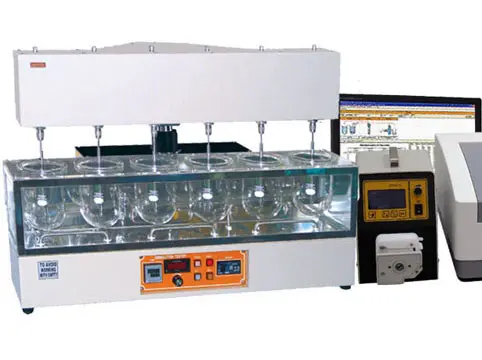
Tablet Testers – Essential Equipment for Quality Assurance in the Pharmaceutical Industry
Quality control in the pharmaceutical industry is a critical process that demands precision, reliability, and compliance with stringent standards. One of the key aspects of this control is tablet testing – an integral stage in the production and inspection of solid dosage forms. For this purpose, specialized measurement instruments are used: Tablet Testers, which ensure that each tablet complies with legal and regulatory requirements.
The category of tablet testers includes devices that measure important physical parameters such as mass, hardness, thickness, diameter, disintegration, and dissolution time. In this article, we’ll focus on two of the most widely used and essential instruments: the Tablet Mass Tester and the Tablet Hardness Tester.
What is a Tablet Tester?
A tablet tester is a device designed to measure and analyze the physical characteristics of tablets during pharmaceutical production. These instruments are used in:
- Quality control (QC)
- Compliance testing
- Research & development (R&D)
1. Tablet Mass Tester
What is Mass Testing?
Tablet mass testing checks the weight of each tablet – either individually or as part of a batch – to ensure that all tablets remain within the acceptable range defined by regulatory standards.
Why is Tablet Mass Testing Important?
- Dosage Accuracy: An unusual weight may indicate an issue with the active ingredient dosage.
- Production Monitoring: Weight variation could signal a problem in the filling or compression process.
- GMP & Pharmacopoeia Compliance: Regulations require strict adherence to weight tolerance limits.
Key Features of Tablet Mass Testers
- High resolution (often 0.1 mg or better)
- Suitable for various tablet shapes and sizes
- Automatic data logging and CSV export capabilities
- Fully compliant with USP, EP, and JP standards
2. Tablet Hardness Tester
What is Hardness Testing?
This test measures the force required to break a tablet. Tablet hardness plays a crucial role in stability, active ingredient release, and tablet handling.
Why is Hardness Testing Essential?
- Product Stability: Tablets that are too soft may crumble during packaging or shipping.
- Controlled Drug Release: Hardness directly affects the disintegration rate inside the body.
- Minimizing Breakage: Overly hard tablets may break unintentionally during transport or use.
Key Features of Tablet Hardness Testers
- Automated force application for consistent results
- Force display in KP, N, or Sc
- Optional measurement of tablet thickness and diameter
- Digital interface with PC connectivity and software support
Advantages of Using Tablet Testers
✔ High-precision physical measurements
✔ Improved quality control processes
✔ Full compliance with international standards
✔ Digital documentation and reporting
✔ Minimized human error in testing
Who Uses Tablet Testers?
- Pharmaceutical manufacturers
- Quality control laboratories
- Pharmaceutical R&D centers
- Contract manufacturing organizations (CMOs)
Regulatory Compliance
Tablet testing equipment must meet the requirements of:
- USP (United States Pharmacopeia)
- EP (European Pharmacopeia)
- GMP (Good Manufacturing Practices)
- 21 CFR Part 11 – for systems with digital interfaces and data tracking
Choosing the Right Equipment
When selecting a tablet tester, consider the following:
- Required mass or hardness range
- Types of tablets (round, oval, coated, etc.)
- Manual vs. automated operation
- Data management and export features