A peristaltic pump is a type of positive displacement pump used for pumping a variety of fluids. The fluid is contained within a flexible tube fitted inside a circular pump casing. As the rotor turns, the part of the tube under compression is pinched closed thus forcing the fluid to be pumped to move through the tube.
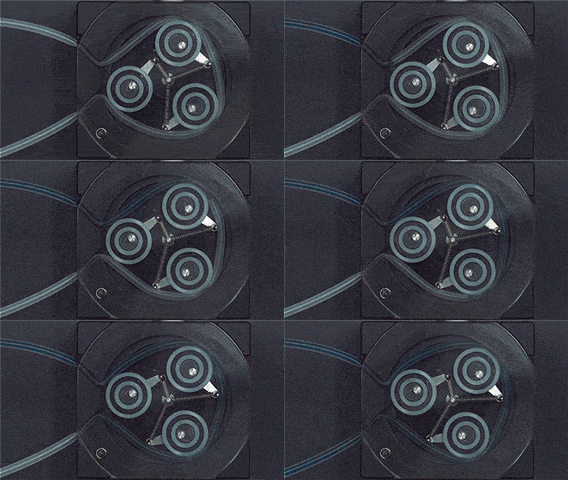
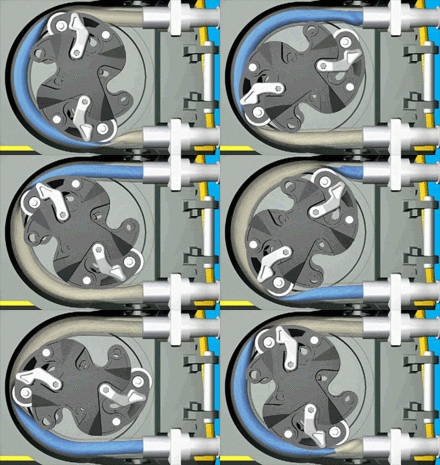
A peristaltic pump is a positive displacement pump that uses a rotating roller to compress and move a flexible tube. This action creates a vacuum that draws the fluid from the reservoir and into the pump. Peristaltic pumps are often used in applications where other types of pumps would be unable to operate, such as those involving viscous or shear-sensitive fluids.
Peristaltic pumps are commonly used in various industries and applications, such as food and beverage processing, pharmaceutical manufacturing, water and wastewater treatment, and chemical processing. They are also frequently used in pumping applications where other types of pumps would be unable to operate, such as those involving viscous or shear-sensitive fluids.
How to work correctly with a peristaltic pump?
Peristaltic pumps are easy to use. They are designed with particular hose materials to meet certain pumping and fluid needs. You should inspect the model number and piping material to ensure that it is suitable for your application when you get your pump. The hose's color indicators may be seen at connection points, allowing you to verify whether they are good quality.
Because peristaltic pumps can be quite large, it is important to use a support stand to hold the pump and ensure it is level. The prime mover, usually an electric motor, should also be properly mounted. Once everything is in place, you can connect the power supply and start the pump. Allow plenty of room between the pump inlet/outlet and any fixed structures to easily replace hoses.
Remember, flexible connections are preferable, not rigid piping. The inlet/outlet pipe should be at least the same diameter as the pump hose to ensure proper flow. It is important to note that you must fill the peristaltic pump with liquid before it can start pumping. The best way to do this is to slowly pour the liquid into the pump while running. Once the pump has been filled, it will continue to operate until all of the liquid has been pumped out.
You can control a peristaltic pump in several ways. The most common method is to use a variable frequency drive (VFD) to control the speed of the pump. This type of control allows you to adjust the pump's flow rate and is very effective for most applications. Another popular method is to use a pressure switch to control the pump. This type of control is often used in applications where constant pressure is required, such as in a water system.
There are also several other methods that you can use to control a peristaltic pump, such as using a timer or using a flowmeter. A line starts on/off switch, a simple approach to regulating your peristaltic pump. You may operate the peristaltic pump with a PLC if you want more control. You can also get creative and develop your method of control.
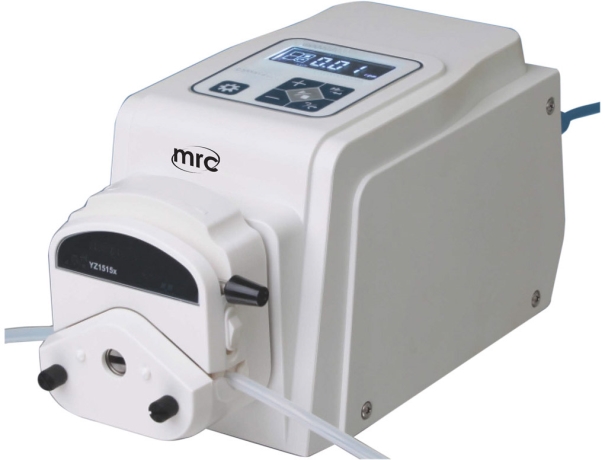
Peristaltic pumps may run continuously, or they may be indexed through partial revolutions to deliver smaller amounts of fluid.
Peristaltic pumps are used in a wide variety of industrial applications. They are especially important to pumping abrasives and viscous fluids.
The pumped fluid contacts only the inside surface of the tubing thereby negating concern for other valves, O-rings or seals that might be incompatible with fluid being pumped. Therefore, only the composition of the tubing that the pumped medium travels through is considered for chemical compatibility.
The tubing needs to beelastomeric to maintain the circular cross section after millions of cycles of squeezing in the pump. This requirement eliminates a variety of non-elastomeric polymers that have compatibility with a wide range of chemicals. Popular elastomer for pump tubing issilicone which is common with water-based fluids, such as in bio-pharmaindustry.
benefits of using a peristaltic pump:
The peristaltic pump has many Benefits. One of the biggest advantages is that they can handle fluids that other types of pumps cannot. This includes viscous liquids and liquids that contain solids. Another advantage is that peristaltic pumps are self-priming, meaning they can start and stop without losing their prime. This makes them ideal for applications where a constant flow rate is not required. The fluid comes into contact with the pump's inner surface, the hose or tube, and connectors.
No degassing valves are required because the rollers move fluid through the hose or tube. The rollers press on the tube, preventing backflow and saving you money on mechanical seals.
Peristaltic pumps have a high suction lift and are intended to operate dry, self-prime, and pump fluid. Sometimes they can develop fluid leaks, which is very rare.
With a simple control panel, these pumps are simple to operate. They're also quiet and have a small footprint, which is perfect for space-saving applications. Additionally, peristaltic pumps are versatile and can be used in various industries and applications.
Peristaltic pumps are also very easy to use and require minimal maintenance. They are very versatile and can be used in a variety of applications. A peristaltic pump is a good option if you are looking for a pump that can handle your tough fluid requirements.
• The tubing is simple to clean and disinfect after each usage. This ensures sanitary conditions.
• It helps in transferring delicate liquids without degrading the samples. It has a mechanism of gentle rolling that reduces any damage to blood cells.
• Chemically strong liquids may also be conveyed without endangering pump components.
• It reduces the contamination of the product/ equipment.
• They need far fewer replacement parts, and maintenance is simpler and less costly as they do not have any seals or valves that may be harmed or polluted by the fluids being processed.
• It keeps the fluid contained inside the tube enclosed.
What is an Industrial Peristaltic Pump?
An industrial peristaltic pump is a specialized pump designed to move fluids through a flexible tube using the principle of peristalsis. This technology mimics the motion found in biological systems, like swallowing or digestion, where muscle contractions push material through an enclosed pathway.
Key Components of a Peristaltic Pump
The main components include:
Flexible Tube: The tube carries the fluid and withstands repeated compression.
Rollers or Shoes: These compress the tube, creating movement.
Motor: Drives the rollers and powers the pump.
How Industrial Peristaltic Pumps Work
The pump operates by compressing a flexible tube against a housing. This action creates a squeezing effect that moves the fluid through the tube, effectively pushing it along in a continuous flow.
Flow Mechanism and Tube Operation
As the rollers or shoes rotate, they apply pressure to sections of the tube. This action forces the fluid to move forward in discrete volumes, offering a consistent, pulse-free flow suitable for precise fluid handling applications.
Key Benefits of Using Industrial Peristaltic Pumps
- Low Maintenance: Minimal internal parts make them easy to maintain.
- Durability: Designed to withstand challenging industrial environments.
- Efficient Fluid Handling: Excellent for sensitive, viscous, or corrosive fluids.
Applications of Industrial Peristaltic Pumps
- Water Treatment: Handles chemicals for pH adjustment and dosing.
- Food and Beverage Industry: Ensures sanitary fluid movement in compliance with hygiene standards.
- Chemical Processing: Manages abrasive or corrosive chemicals without contamination risk.
Choosing the Right Peristaltic Pump for Your Needs
Flow Rate Requirements
Assess the required flow rate to choose a pump that aligns with your process needs. Pumps vary in flow capabilities, so understanding your fluid handling needs is essential.
Fluid Compatibility and Chemical Resistance
Choose a tube material compatible with the fluid you’re handling to prevent degradation and ensure smooth, safe operations.
What are applications of Peristaltic Pumps
Medical and Healthcare Applications
Dialysis Machines: Used in hemodialysis for circulating blood through the dialyzer.
Infusion Pumps: Deliver precise volumes of medication or nutrients.
Laboratory Equipment: Used for dispensing and sampling liquids in diagnostics and research.
Pharmaceutical Manufacturing: For transferring sterile fluids and filling vials or syringes.
Food and Beverage Industry
Hygienic Transfer: Ideal for pumping viscous, shear-sensitive, or particulate-containing fluids like yogurt, sauces, or juices.
Dosing and Metering: Used to add precise amounts of flavorings, colorants, or preservatives.
Breweries: For transferring yeast slurries or wort.
Water Treatment
Chemical Dosing: Adding chlorine, flocculants, or other treatment chemicals.
Sludge Handling: Transporting thick sludges in wastewater treatment plants.
Sampling: Used for environmental monitoring and water quality sampling.
Industrial Applications
Aggressive or Abrasive Fluids: Can handle highly corrosive or abrasive fluids, like slurries or acids, used in mining or chemical processing.
Ink and Paint Dispensing: For transferring inks, paints, or coatings in printing and manufacturing.
Adhesive and Sealant Handling: Pumping viscous adhesives or sealants in assembly lines.
Biotechnology and Pharmaceutical Industry
Sterile and Aseptic Processing: For transferring sterile fluids in biologics manufacturing.
Bioreactor Feeding: Adding nutrients, buffers, or other components to bioreactors.
Agriculture
Fertilizer and Pesticide Dosing: Precise application in irrigation systems.
Animal Feed Systems: Pumping nutrient-rich slurries or supplements.
Laboratory and Research
Precise Fluid Handling: Used in experimental setups for controlled flow rates.
Microfluidics: For handling small volumes in specialized research.
Oil and Gas Industry
Drilling Fluids: Transporting viscous drilling muds or slurries.
Sampling and Monitoring: Pumping crude oil or other hydrocarbons for analysis.
Environmental Monitoring
Groundwater Sampling: Ideal for collecting water samples from wells or aquifers.
Leachate Removal: Handling contaminated liquids from landfill sites.