The field of science education relies on visualization, hands-on experience, and a clear understanding of complex processes. Microscopes are a central tool in knowledge transfer across biology, chemistry, medicine, and life sciences, enabling pupils and students to directly observe what is otherwise taught theoretically. Integrating microscopes into the educational environment significantly improves comprehension, encourages curiosity, and develops scientific thinking.
Compound Microscopes (High Magnification)
Compound microscopes are designed for very high magnifications, typically ranging from ×40 to ×1000 and beyond. They allow observation of microscopic details such as cells, bacteria, tissues, and single-celled organisms. In an educational setting, the use of these microscopes is essential for understanding cell structure, fundamental biological processes, and differences between tissue types. Students can directly study microscopic anatomy, conduct experiments, and examine real samples. The ability to observe live or stained cells provides a much deeper level of understanding compared to theoretical learning alone. In addition, compound microscopes serve as a foundation for training students and preparing them for work in research laboratories, medicine, and industry.
Stereo Microscopes (Low Magnification)
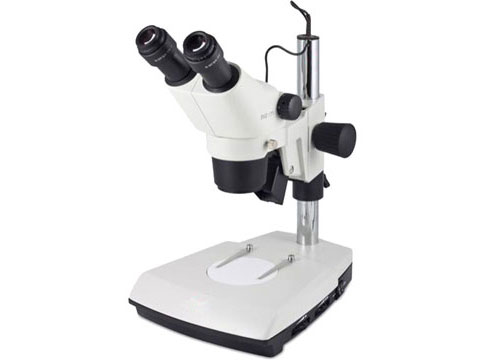
Stereo microscopes provide lower magnification, typically up to ×40, but offer a key advantage: a three-dimensional view of the specimen. They are particularly suitable for observing relatively large objects such as insects, plants, minerals, and whole tissues. In education, these microscopes enable students to perform tasks such as dissection, external structure analysis, and morphological studies in an intuitive way. They are ideal for introductory learning of biological structures and environmental exploration. Their use is especially important in the early stages of scientific training, where a connection is needed between the visible world and more detailed observation.
Multi-Head Microscope Systems
Multi-head microscope systems allow multiple users to observe the same sample simultaneously. These are typically compound or stereo microscopes adapted for group instruction. In an educational environment, such systems are a vital tool for frontal teaching. An instructor or lecturer can demonstrate processes, explain structures, and ensure that all participants are viewing exactly the same image. This enhances learning efficiency, reduces errors, and enables immediate interaction between the instructor and students. These systems are widely used in universities, medical schools, and professional training centers.
Microscopes for Children and Basic Education
Microscopes designed for children and beginners are characterized by ease of use, high durability, and safety. They typically include basic magnification levels, built-in illumination, and user-friendly design. In early education stages, the goal of the microscope is not only to present scientific details but also to create a discovery experience. Young learners are introduced to the microscopic world in an engaging way, developing curiosity and learning fundamental principles of science and observation. The use of these microscopes is especially important for encouraging interest in science from a young age and serves as a foundation for more advanced scientific studies.
MRC - A Leading Supplier of Microscopes for Education
MRC is recognized as one of the leading suppliers of microscopes for educational institutions, including schools, colleges, and universities. The company offers a wide range of solutions tailored to all levels of education, from basic microscopes for children to advanced systems for professional training. The combination of high-quality equipment, reliability, and professional support enables educational institutions to implement an advanced, efficient, and precise scientific learning environment.