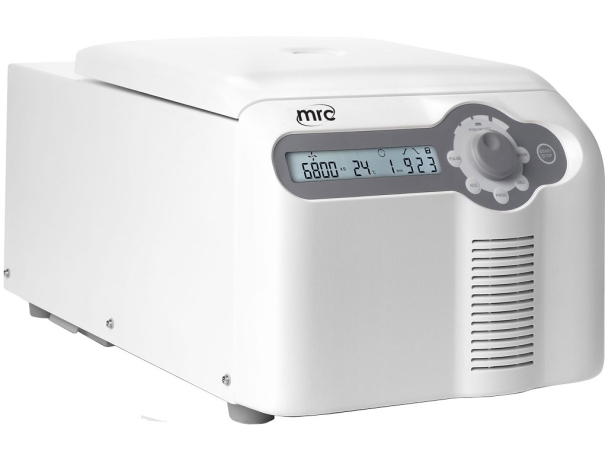
A microcentrifuge is a compact laboratory centrifuge designed to spin very small volumes of liquid, typically in microcentrifuge tubes (usually 0.2 ml to 2.0 ml). It is one of the most commonly used instruments in biological, chemical, and clinical laboratories for rapid sample processing.
A microcentrifuge is a high-speed device that uses centrifugal force to separate components of a liquid sample based on their density, size, and shape.
How Does a Microcentrifuge Work?
Centrifugal Force Explained
When a microcentrifuge spins, it generates centrifugal force. This force pushes particles outward from the center of rotation.
The faster it spins, the stronger the force. Some microcentrifuges can reach speeds of over 15,000 revolutions per minute. That creates a force thousands of times stronger than gravity.
Separation Principles
The separation process depends on density, size, and shape of particles. Heavier or denser particles sediment faster than lighter ones.
For example:
- DNA pellets settle at the bottom
- Proteins may remain in solution
- Cell debris separates from supernatant
This makes microcentrifuges essential for precise sample preparation.
Key Components of a Microcentrifuge
Rotor
The rotor is the heart of the microcentrifuge. It holds the tubes and spins them at high speed. Rotors can be fixed-angle or swinging-bucket, depending on the application.
Motor
The motor drives the rotor. High-quality motors ensure stable speeds and minimal vibration, which is critical for accurate results.
Control Panel
Modern microcentrifuges include digital controls for setting speed, time, and temperature. Some models offer programmable protocols.
Lid and Safety System
Safety is crucial. Most units have lid locks that prevent opening while spinning. This protects both the user and the sample.
Types of Microcentrifuges
Standard Microcentrifuge
This is the most common type. It is used for routine laboratory tasks such as DNA extraction or protein separation.
Refrigerated Microcentrifuge
Some samples are temperature-sensitive. Refrigerated models keep samples cool during spinning, preventing degradation.
High-Speed Microcentrifuge
These models provide higher centrifugal forces, making them suitable for advanced molecular biology applications.
Mini Microcentrifuge
Small, portable, and easy to use. Ideal for quick spins or classroom environments.
Common Applications in Laboratories
Molecular Biology
Microcentrifuges are heavily used in DNA and RNA extraction. They help separate nucleic acids from other cellular components.
Clinical Diagnostics
In clinical labs, they are used for blood sample preparation, plasma separation, and diagnostic testing.
Biochemistry
They assist in protein isolation and enzyme studies.
Pharmaceutical Research
Drug development often requires precise separation of compounds, making microcentrifuges indispensable.
Microcentrifuge Tubes and Capacity
Microcentrifuges typically use tubes ranging from 0.2 ml to 2.0 ml. The most common size is 1.5 ml.
Capacity varies depending on the model. Some hold 6 tubes, others can hold 24 or more.
Choosing the right capacity depends on your workflow.
Speed and RCF: What You Need to Know
RPM vs RCF
RPM stands for revolutions per minute. RCF stands for relative centrifugal force.
RCF is more important because it reflects the actual force applied to the sample.
Conversion Factors
RCF depends on both speed and rotor radius. Many modern microcentrifuges automatically convert RPM to RCF.
Choosing the Right Microcentrifuge
Speed Requirements
High-speed applications need higher RCF. Routine work may not require extreme speeds.
Capacity Needs
Consider how many samples you process daily. Larger capacity saves time.
Temperature Control
If you work with sensitive samples, refrigerated models are essential.
Noise and Footprint
Compact and quiet designs improve lab efficiency and comfort.
Safety Considerations
Balancing Samples
Always balance tubes. An unbalanced rotor can cause vibration and damage.
Lid Lock Systems
Never bypass safety locks. They prevent accidents during operation.
Maintenance and Inspection
Regular checks ensure safe and reliable performance.
Maintenance and Calibration
Routine maintenance includes cleaning the rotor and checking for corrosion.
Calibration ensures accurate speed and timing. Without it, your results may become unreliable.