MRC provides a variety of Room Thermometers / Laboratory Thermometer
In laboratories, workrooms, warehouses and factories, the temperature is monitored.
The laboratories usually indicate in each report of an experiment the temperature and humidity conditions at which the experiment was performed.
In warehouses and cold stores dataloggers monitor the temperature at several points in the warehouse to make sure that the temperature has not exceeded the allowable and no damage has been done to the stored products.
In workrooms and factories, the temperature is monitored to make sure that the heating and cooling systems work well for the benefit of the employee's quality of life.
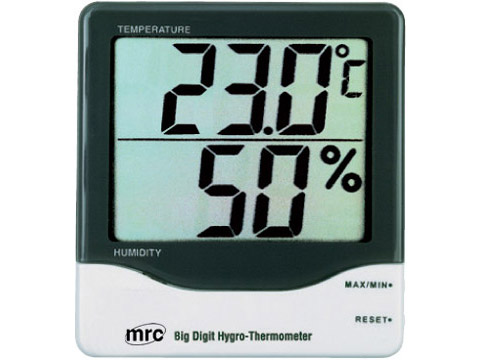
What is Laboratory Thermometer
A laboratory thermometer is a tool used in laboratories to measure temperature with high accuracy. It can be partially or fully immersed in the substance being measured. Laboratory thermometers are progressively providing digital reading displays and are input-capable to computer and software programs for logging purposes.
Applications of Laboratory Thermometer /Room Thermometers
A laboratory thermometer can be used for a number of scientific applications and can be found across nearly all laboratories especially in pharmaceutical, environmental, food, and petroleum testing.
Chemical Reactions: In chemical laboratories, many reactions are temperature-dependent. They are used to monitor and control the temperature during experiments, ensuring that reactions occur under specific conditions.
Distillation and Fractionation: In processes like distillation and fractionation, where substances are separated based on their boiling points, precise temperature monitoring is crucial. they can help in maintaining the desired temperature for these processes.
Microbiology and Cell Culture: In biological research, maintaining a specific temperature is critical for cell culture and microbial growth. Incubators and water baths equipped with laboratory thermometers provide a controlled environment for these applications.
Calibration of Other Instruments: Used as reference instruments for calibrating other temperature-measuring devices. This ensures the accuracy of various instruments used in the laboratory.
Material Testing: Some materials exhibit temperature-dependent properties, and their behavior is studied under different temperature conditions. They are used to control and measure temperatures during material testing experiments.
PCR (Polymerase Chain Reaction): In molecular biology, particularly in DNA amplification processes like PCR, maintaining precise temperatures is crucial. Laboratory thermocyclers are used to control the temperature cycles required for DNA amplification.
Food and Beverage Industry: In food and beverage laboratories, thermometers are employed to monitor temperatures during processes like cooking, fermentation, and storage. Ensuring proper temperatures is vital for quality control and safety.
Environmental Studies: Used in environmental research to measure temperatures in air, water, and soil samples. This data is valuable for studying climate patterns and environmental changes.
Quality Control in Pharmaceuticals: Pharmaceutical laboratories use thermometers to monitor and control temperatures during the production of drugs. Certain medications require specific temperature conditions to maintain their efficacy.
Physics Experiments: In physics laboratories, They are used in various experiments to study heat transfer, thermal expansion, and other thermodynamic properties. They are essential tools for investigating the fundamental principles of thermodynamics.
Weather Stations: Laboratory-grade thermometers are often used in weather stations for accurate temperature measurements. They help in monitoring and recording temperature variations in the atmosphere.
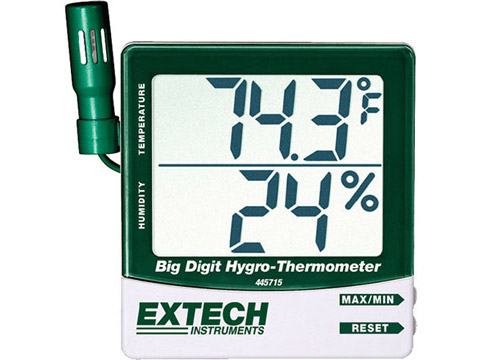
Here is a selection of Thermometers for temperature testing at work, temperature testing throughout the laboratory or factory, thermometer for monitoring the external or internal temperature.
Guide-How to use Laboratory Thermometers
Laboratory thermometers are indispensable tools in various scientific settings, offering precise temperature measurements critical for experiments and analyses. Whether you're working in a medical, chemical, or environmental laboratory, understanding how to use these instruments effectively is paramount. In this comprehensive guide, we'll walk through the types of laboratory thermometers, how to choose the right one, calibration procedures, and much more.
Why are laboratory thermometers used?
Laboratory thermometers are important in ensuring accurate temperature readings, a fundamental aspect of many scientific processes. From measuring chemical reactions to monitoring environmental conditions, these instruments are versatile and indispensable.
Types of Laboratory Thermometers
Mercury Thermometers
Mercury thermometers have been a traditional choice, known for their accuracy. However, they come with safety concerns due to the toxicity of mercury.
Digital Thermometers
Digital thermometers offer quick and precise readings, making them popular in modern laboratories. They are user-friendly and eliminate the risk associated with mercury.
Infrared Thermometers
Ideal for non-contact measurements, infrared thermometers are valuable in scenarios where direct contact is impractical or unsafe.
Choosing the Right Thermometer
Selecting the appropriate thermometer involves considering the specific needs of your laboratory, ensuring accuracy, and addressing safety concerns. Each type has its advantages and drawbacks, so making an informed decision is crucial.
Consideration of Laboratory Requirements
Identify the temperature range and precision required for your experiments or processes.
Accuracy and Precision
Different thermometers offer varying levels of accuracy and precision. Choose one that aligns with your laboratory's demands.
Safety Concerns
Evaluate the safety implications of each type of thermometer, especially when working with hazardous substances.
Calibration of Laboratory Thermometers
Calibrating laboratory thermometers is a vital step in ensuring their accuracy over time. Regular calibration prevents erroneous readings that could compromise the integrity of your experiments.
Importance of Calibration
Explain why calibration is essential for maintaining the reliability of temperature measurements.
Methods for Calibration
Discuss common calibration methods, including ice-point calibration and comparison with a reference thermometer.
Applications in Different Laboratories
Explore how laboratory thermometers are utilized in various scientific settings, including medical, chemistry, and environmental laboratories.
Medical Laboratories
Discuss the critical role of thermometers in healthcare settings, from patient care to laboratory testing.
Chemistry Laboratories
Examine the specific requirements of temperature measurement in chemical experiments.
Environmental Laboratories
Highlight the applications of thermometers in monitoring and studying environmental conditions.
Advancements in Laboratory Thermometers
Explore the latest innovations in laboratory thermometers, including smart technologies and integration with other laboratory equipment.
Smart Thermometers
Discuss how smart features enhance the functionality of modern thermometers.
Integration with Laboratory Equipment
Examine how thermometers are integrated into larger laboratory systems for seamless data collection.
How to use Laboratory Thermometers
Using laboratory thermometers requires careful handling to ensure accurate temperature measurements. Here are general steps to use effectively:
- Select the Right Thermometer:
- Choose a thermometer suitable for the temperature range you want to measure. Different thermometers are designed for specific temperature ranges.
- Inspect the Thermometer:
- Before use, check the thermometer for any damage or defects. Ensure that the scale and markings are clear and easy to read.
- Calibrate if Necessary:
- Some thermometers may need calibration before use. Follow the manufacturer's instructions or laboratory protocols for calibration procedures.
- Handling Precautions:
- Hold the thermometer near the top, away from the bulb, to prevent body heat from affecting the reading. Avoid touching the bulb directly.
- Allow for Equilibration:
- If the thermometer has been stored in a different environment, allow it to equilibrate to the temperature of the substance you are measuring before taking a reading.
- Insertion Technique:
- Depending on the type of thermometer, insert it into the substance you are measuring with care. Be gentle to avoid breakage.
- Wait for Stable Reading:
- Allow sufficient time for the thermometer to reach thermal equilibrium with the substance being measured. Wait until the temperature reading stabilizes before recording the value.
- Read the Thermometer:
- Read the temperature at eye level to avoid parallax errors. For liquid-in-glass thermometers, read the meniscus (the curved surface of the liquid) at the point where it intersects the scale.
- Record the Reading:
- Record the temperature with the appropriate units (e.g., Celsius or Fahrenheit) and any relevant decimal places.
- Clean and Store Properly:
- After use, clean the thermometer according to the manufacturer's guidelines. Store it in a protective case or holder to prevent damage.
- Special Considerations:
- Some thermometers are designed for specific applications, such as mercury-free alternatives for environmental safety. Be aware of any special handling or disposal instructions.
- Follow Laboratory Protocols:
- Adhere to any specific laboratory protocols or procedures for thermometer use. Some experiments may have unique requirements.