17834
  • LOGIN
  • Hebrew 
MRCLAB-Laboratory Instrumentsעברית
    • laboratory equipment
    • Laboratory Balances
    • Measuring Instruments
    • material testing
    1. home page
    2. laboratory equipment
    3. Centrifuges for blood and urine

    Centrifuges for blood and urine

    In recent years, there has been a significant increase in the demand for medical centrifuges due to the growing number of laboratory tests, the development of personalized medicine, and the expansion of rapid diagnostic services. The global laboratory centrifuge market continues to grow and is valued in billions of dollars, with medical diagnostics considered one of the key growth drivers in the industry.

    The importance of centrifuges in blood and urine clinics is not limited only to liquid separation. In practice, the quality of separation directly affects the quality of the medical result, the speed of receiving test answers, and the physician’s ability to make accurate treatment decisions. Just as a professional chef cannot work without a high-quality knife, a medical laboratory cannot provide reliable results without a suitable centrifuge.

    What Is a Medical Centrifuge and How Does It Work?

    The Principle of Centrifugal Force

    A centrifuge is a mechanical system that uses high-speed rotation to separate substances with different densities. When a blood or urine tube rotates at high speed, the heavier particles move toward the bottom of the tube, while the lighter components remain in the upper section. This process makes it possible to separate the different components of a sample quickly and efficiently.

    This physical principle exists in nature and in everyday life. Anyone who has ever spun a bucket of water quickly or used the spin cycle of a washing machine has already encountered the same force. In a medical laboratory, this force is used in a much more controlled and precise way. Modern centrifuges can operate at particularly high speeds while maintaining maximum stability and safety.

    Advanced technology now allows full control over speed, operating time, and additional parameters that affect separation quality. This makes it possible to adapt the centrifugation process to the type of test, the type of sample, and the specific laboratory requirements.

    Why Sample Separation Is Essential for Diagnosis

    When a blood sample is taken, it contains a wide range of components: red blood cells, white blood cells, platelets, plasma, proteins, and many biochemical substances. Without effective separation, it is very difficult to perform accurate testing of each of these components.

    Similarly, urine samples also contain cells, crystals, bacteria, proteins, and other substances that may need to be isolated for diagnostic purposes. The centrifugation process concentrates the relevant materials for testing and provides a clearer picture of the patient’s condition.

    Medical laboratories around the world use centrifuges as an integral part of routine tests, emergency tests, hormonal tests, infectious disease tests, and genetic tests. In fact, it is difficult to find an area of laboratory medicine that does not rely to some extent on centrifuge technology.

    The Role of Centrifuges in Blood Clinics

    Plasma and Serum Separation

    One of the most common uses of medical centrifuges is the separation of plasma and serum from blood samples. After the blood is collected, the tube is placed in the centrifuge, where the separation process begins. Within a few minutes, a clear division between the different layers is obtained.

    Serum and plasma are used for many tests, including glucose levels, liver function, kidney function, hormones, inflammatory markers, and additional medical tests. The higher the quality of the separation, the more accurate the results.

    In busy clinics where hundreds of tests are performed each day, the ability to process a large number of samples quickly becomes critical. This is where advanced clinical centrifuges come into play, as they are capable of operating continuously for many hours while maintaining consistent performance.

    Hematology and Biochemistry Tests

    Hematology and biochemistry laboratories rely on centrifuges at almost every stage of their work. Many samples require preliminary preparation before being inserted into analytical instruments. Without proper centrifugation, there is a risk of receiving inaccurate or unstable results.

    Hospitals and diagnostic laboratories use clinical centrifuges that are specifically designed for blood and urine samples. These systems are characterized by simple operation, quiet performance, and the ability to handle high workloads.

    The centrifuge can be compared to a gatekeeper. Before each sample enters the analysis stage, it must pass through it. If this stage is not performed accurately, the entire testing chain may be affected.

    The Importance of Centrifuges in Urine Laboratories

    Identification of Sediment and Cells

    Urine tests are among the most common tests in modern medicine. They are used to identify urinary tract infections, kidney diseases, metabolic problems, and additional medical conditions. To detect cells, bacteria, or crystals in the sample, urine is commonly centrifuged.

    The centrifugation process concentrates the sediment at the bottom of the tube and allows laboratory staff to examine it more accurately. Instead of searching for tiny particles within a large volume of liquid, a concentrated layer is obtained that is easier to analyze.

    Professional studies and reports indicate that effective separation of urine samples significantly improves the ability to detect abnormalities and pathological sediments.

    Improving the Accuracy of Laboratory Results

    When a laboratory handles dozens or hundreds of urine samples each day, consistency is key. A high-quality centrifuge makes it possible to obtain uniform results in every operating cycle. This means fewer errors, fewer repeated tests, and greater confidence among medical staff.

    Many laboratories define precise centrifugation protocols for each type of test. The combination of quality equipment and organized work procedures makes it possible to achieve a particularly high level of accuracy.

    As the medical world moves toward early and preventive diagnosis, the importance of every stage in the testing process increases. A centrifuge is not merely an auxiliary device. It is an integral part of the laboratory’s quality system.

    Types of Centrifuges for Clinics and Medical Laboratories

    Clinical Centrifuges

    Clinical centrifuges are considered the most common choice in blood and urine clinics. They are specifically designed for handling routine medical samples and offer a balance between performance, speed, and ease of use.

    These devices usually include predefined work programs, advanced safety mechanisms, and clear digital displays. They are especially suitable for environments where several staff members with different levels of experience operate the equipment.

    The major advantage of clinical centrifuges is simplicity. They do not require complex training and allow fast processing of daily tests.

    Benchtop Centrifuges

    Benchtop centrifuges have become especially popular because of their compact structure. They do not take up much space and can be placed in almost any laboratory room.

    According to current market data, benchtop centrifuges represent one of the largest segments in the laboratory centrifuge field due to their affordable cost, ease of operation, and flexibility.

    For community clinics, private testing centers, and medium-sized laboratories, they are often the ideal solution.

    Refrigerated Centrifuges

    Some tests require maintaining a low temperature throughout the centrifugation process. In these cases, refrigerated centrifuges are used.

    These systems include a built-in cooling unit that prevents the samples from heating up. This is especially important in sensitive biological tests, medical research, and work with materials that may degrade under heat.

    Although they are more expensive, refrigerated centrifuges provide a significant advantage in advanced laboratories and large hospitals.

    Important Parameters When Choosing a Centrifuge

    Rotation Speed and RPM

    One of the first parameters to examine is rotation speed. Not every test requires the same level of power. Some tests only require relatively low speeds, while others require thousands of revolutions per minute.

    The right choice depends on the type of samples, the workload, and the laboratory’s requirements. It is important to understand that the fastest device is not always the most suitable one.

    Sample Capacity and Throughput

    A laboratory that performs dozens of tests per day has completely different needs than a laboratory that performs hundreds or thousands of tests. Therefore, it is important to consider the number of tubes the centrifuge can hold in each operating cycle.

    A common mistake is purchasing a device that is too small. In the short term, this may save money, but in the long term, it creates a bottleneck that reduces work efficiency.

    Safety and Compliance with Standards

    A centrifuge operates at very high speeds, which makes safety critical. Modern systems include lid-locking mechanisms, imbalance sensors, overheating protection, and smart control systems.

    Current laboratory studies emphasize the importance of staff training and compliance with proper centrifugation protocols in order to maintain safety and ensure accurate results.
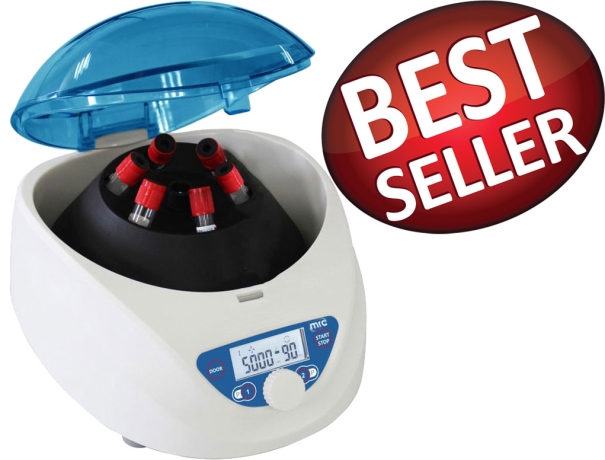
    In recent years, there has been a significant increase in the demand for medical centrifuges due to the growing number of laboratory tests, the development of personalized medicine, and the expansion of rapid diagnostic services. The global laboratory centrifuge market continues to grow and is valued in billions of dollars, with medical diagnostics considered one of the key growth drivers in the industry.  The importance of centrifuges in blood and urine clinics is not limited only to liquid separation. In practice, the quality of separation directly affects the quality of the medical result, the speed of receiving test answers, and the physician’s ability to make accurate treatment decisions. Just as a professional chef cannot work without a high-quality knife, a medical laboratory cannot provide reliable results without a suitable centrifuge.  What Is a Medical Centrifuge and How Does It Work? The Principle of Centrifugal Force  A centrifuge is a mechanical system that uses high-speed rotation to separate substances with different densities. When a blood or urine tube rotates at high speed, the heavier particles move toward the bottom of the tube, while the lighter components remain in the upper section. This process makes it possible to separate the different components of a sample quickly and efficiently.  This physical principle exists in nature and in everyday life. Anyone who has ever spun a bucket of water quickly or used the spin cycle of a washing machine has already encountered the same force. In a medical laboratory, this force is used in a much more controlled and precise way. Modern centrifuges can operate at particularly high speeds while maintaining maximum stability and safety.  Advanced technology now allows full control over speed, operating time, and additional parameters that affect separation quality. This makes it possible to adapt the centrifugation process to the type of test, the type of sample, and the specific laboratory requirements.  Why Sample Separation Is Essential for Diagnosis  When a blood sample is taken, it contains a wide range of components: red blood cells, white blood cells, platelets, plasma, proteins, and many biochemical substances. Without effective separation, it is very difficult to perform accurate testing of each of these components.  Similarly, urine samples also contain cells, crystals, bacteria, proteins, and other substances that may need to be isolated for diagnostic purposes. The centrifugation process concentrates the relevant materials for testing and provides a clearer picture of the patient’s condition.  Medical laboratories around the world use centrifuges as an integral part of routine tests, emergency tests, hormonal tests, infectious disease tests, and genetic tests. In fact, it is difficult to find an area of laboratory medicine that does not rely to some extent on centrifuge technology.  The Role of Centrifuges in Blood Clinics Plasma and Serum Separation  One of the most common uses of medical centrifuges is the separation of plasma and serum from blood samples. After the blood is collected, the tube is placed in the centrifuge, where the separation process begins. Within a few minutes, a clear division between the different layers is obtained.  Serum and plasma are used for many tests, including glucose levels, liver function, kidney function, hormones, inflammatory markers, and additional medical tests. The higher the quality of the separation, the more accurate the results.  In busy clinics where hundreds of tests are performed each day, the ability to process a large number of samples quickly becomes critical. This is where advanced clinical centrifuges come into play, as they are capable of operating continuously for many hours while maintaining consistent performance.  Hematology and Biochemistry Tests  Hematology and biochemistry laboratories rely on centrifuges at almost every stage of their work. Many samples require preliminary preparation before being inserted into analytical instruments. Without proper centrifugation, there is a risk of receiving inaccurate or unstable results.  Hospitals and diagnostic laboratories use clinical centrifuges that are specifically designed for blood and urine samples. These systems are characterized by simple operation, quiet performance, and the ability to handle high workloads.  The centrifuge can be compared to a gatekeeper. Before each sample enters the analysis stage, it must pass through it. If this stage is not performed accurately, the entire testing chain may be affected.  The Importance of Centrifuges in Urine Laboratories Identification of Sediment and Cells  Urine tests are among the most common tests in modern medicine. They are used to identify urinary tract infections, kidney diseases, metabolic problems, and additional medical conditions. To detect cells, bacteria, or crystals in the sample, urine is commonly centrifuged.  The centrifugation process concentrates the sediment at the bottom of the tube and allows laboratory staff to examine it more accurately. Instead of searching for tiny particles within a large volume of liquid, a concentrated layer is obtained that is easier to analyze.  Professional studies and reports indicate that effective separation of urine samples significantly improves the ability to detect abnormalities and pathological sediments.  Improving the Accuracy of Laboratory Results  When a laboratory handles dozens or hundreds of urine samples each day, consistency is key. A high-quality centrifuge makes it possible to obtain uniform results in every operating cycle. This means fewer errors, fewer repeated tests, and greater confidence among medical staff.  Many laboratories define precise centrifugation protocols for each type of test. The combination of quality equipment and organized work procedures makes it possible to achieve a particularly high level of accuracy.  As the medical world moves toward early and preventive diagnosis, the importance of every stage in the testing process increases. A centrifuge is not merely an auxiliary device. It is an integral part of the laboratory’s quality system.  Types of Centrifuges for Clinics and Medical Laboratories Clinical Centrifuges  Clinical centrifuges are considered the most common choice in blood and urine clinics. They are specifically designed for handling routine medical samples and offer a balance between performance, speed, and ease of use.  These devices usually include predefined work programs, advanced safety mechanisms, and clear digital displays. They are especially suitable for environments where several staff members with different levels of experience operate the equipment.  The major advantage of clinical centrifuges is simplicity. They do not require complex training and allow fast processing of daily tests.  Benchtop Centrifuges  Benchtop centrifuges have become especially popular because of their compact structure. They do not take up much space and can be placed in almost any laboratory room.  According to current market data, benchtop centrifuges represent one of the largest segments in the laboratory centrifuge field due to their affordable cost, ease of operation, and flexibility.  For community clinics, private testing centers, and medium-sized laboratories, they are often the ideal solution.  Refrigerated Centrifuges  Some tests require maintaining a low temperature throughout the centrifugation process. In these cases, refrigerated centrifuges are used.  These systems include a built-in cooling unit that prevents the samples from heating up. This is especially important in sensitive biological tests, medical research, and work with materials that may degrade under heat.  Although they are more expensive, refrigerated centrifuges provide a significant advantage in advanced laboratories and large hospitals.  Important Parameters When Choosing a Centrifuge Rotation Speed and RPM  One of the first parameters to examine is rotation speed. Not every test requires the same level of power. Some tests only require relatively low speeds, while others require thousands of revolutions per minute.  The right choice depends on the type of samples, the workload, and the laboratory’s requirements. It is important to understand that the fastest device is not always the most suitable one.  Sample Capacity and Throughput  A laboratory that performs dozens of tests per day has completely different needs than a laboratory that performs hundreds or thousands of tests. Therefore, it is important to consider the number of tubes the centrifuge can hold in each operating cycle.  A common mistake is purchasing a device that is too small. In the short term, this may save money, but in the long term, it creates a bottleneck that reduces work efficiency.  Safety and Compliance with Standards  A centrifuge operates at very high speeds, which makes safety critical. Modern systems include lid-locking mechanisms, imbalance sensors, overheating protection, and smart control systems.  Current laboratory studies emphasize the importance of staff training and compliance with proper centrifugation protocols in order to maintain safety and ensure accurate results.

    MORE ABOUT Centrifuges for blood and urineCLOSE
    148268
    • Your Choice:
    products
    filter:
      LCEN-400

      Laboratory PRP & PRF Clinical Serum Centrifuge, 6 tubes 15ml,5000 rpm

      1
      LABORATORY CLINICAL CENTRIFUGE, 8 TUBES 15ML,4500 RPM
      LCEN-404

      Laboratory Clinical Centrifuge, separation of serum,plasma and blood cells

      1
      LCEN-408

      Laboratory Digital Table centrifuge

      1
      HCEN-24

      Digital Hematocrite Centrifuge

      1
      Centrifuge 2500rpm include rotor 8 places 15ml 3
      LCEN-100

      Laboratory Centrifuge 2500rpm include rotor 8 places 15ml

      1
      LCEN-102D

      Laboratory Centrifuge 6000rpm with rotor 8 places 15ml+tachometer

      1
      blogs

      BLOGS

      ABOUT US

      ABOUT US

      CONTACT US

      CONTACT US

      SERVICE CENTER

      SERVICE CENTER

      • ABOUT
      • |
      • PRODUCTS
      • |
      • CATALOGS
      • |
      • SUPPORT
      • |
      • SERVICE CENTER
      • |
      • CUSTOMERS
      • |
      • TERMS
      • |
      • Privacy Policy
      • |
      • FAQ
      • |
      • BLOGS

      [email protected], + 972-3-5595252
      ISRAEL: Hagavish 3 Holon
      UK: Cavendish House Parkway, Harlow Business Park, Harlow, CM19 5QF

      • Bsmart בניית אתרים
      • SAP
      altImg

      • Fully Supported on Chromee*
      • Color Blind Adjusted
      • Heavy Vision Adjusted
      • Regular Display
      • Access Keys MenuAlt + 0
      • Stop Motion
      • Remove Underline Links
      • Press Keys For View Resize
      • Ctrl + Larger
      • Ctrl - Smaller
      • Ctrl 0 Reset Size
      • Enable Disable Keyboard Focusing
      • Reset All To Defualt

      Access Keys

      • Enable/Disable This MenuAlt + 0
      • Skip To Main MenuAlt + 1
      • Skip To Main ContentAlt + 2
      • דלג למפת אתר מונגשת Alt + Shift + 3
      • SearchAlt + 4
      • Contact PageAlt + 7
      • דלג למפת העמוד Alt+5
      • Skip To HomepageAlt + h
      • Skip To Accessibilty MenuAlt + m

      *Firefox users: Use Alt + Shiftnumber

      In order to move between elements, Press - Tabkey, To backtrack press, - Shift + Tab

    • Skip To Main Menu
    • Skip To Main Content
    • Skip To Accessbilty Menu
    • This website uses cookies for the purpose of ongoing and proper operation in accordance with the privacy policy