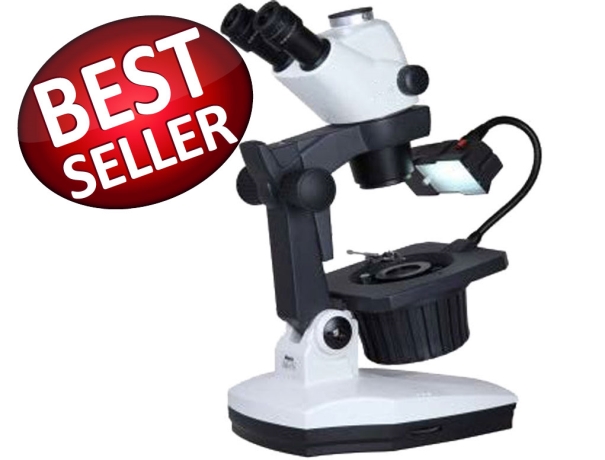
Jewelry and gemology microscopes are essential tools for jewelers, gemologists, appraisers, stone setters, engravers, watch repair technicians, quality control teams, and laboratories involved in the inspection, identification, repair, documentation, and valuation of gemstones, diamonds, jewelry, and precision components. In a field where tiny details can significantly affect the value, authenticity, durability, and final appearance of an item, a professional microscope allows users to identify inclusions, cracks, scratches, wear marks, setting quality, engraving accuracy, soldering defects, and finishing details that cannot be seen clearly with the naked eye.
Jewelry and gemology microscopes are used in jewelry stores, gemological laboratories, diamond grading centers, jewelry workshops, watch repair studios, educational institutions, manufacturing facilities, and professional appraisal services. Choosing the right microscope can directly improve inspection accuracy, working comfort, documentation quality, customer trust, and the overall professional standard of the work.
What Is a Jewelry and Gemology Microscope?
A jewelry and gemology microscope is an optical instrument designed to magnify diamonds, gemstones, precious metals, jewelry settings, engraved surfaces, watch mechanisms, and small precision parts. Unlike a simple magnifying glass or jeweler’s loupe, a professional microscope provides stable magnification, improved depth of field, controlled illumination, ergonomic viewing, and in many cases, the option to connect a camera or display the image on a digital screen.
The microscope allows the professional user to examine a gemstone or jewelry item from different angles, identify fine details, and perform delicate work under magnification. In gemology, it is used to detect internal inclusions, cracks, growth lines, polishing marks, treatment indications, and differences between natural, synthetic, imitation, or treated stones. In jewelry making and repair, it helps inspect soldering points, prongs, stone settings, surface defects, engraving quality, and signs of wear.
The Importance of Microscopes in Gemology
Gemology is the professional field of identifying, classifying, examining, and evaluating gemstones. Because many gemstones can appear very similar to the naked eye, high-quality magnification is required to distinguish between natural stones, synthetic stones, imitations, and treated gemstones. A gemological microscope enables detailed examination of the stone’s internal structure, clarity characteristics, inclusions, cut quality, polishing quality, and surface condition.
When examining diamonds, for example, the microscope can help identify internal inclusions, dark crystals, clouds, feathers, growth lines, chips, scratches, and external blemishes. In colored gemstones, it can reveal bubbles, needles, internal crystals, color zoning, fractures, heat treatment signs, filling materials, and other features that may affect identification and value.
A quality microscope for gemology should provide sharp optics, reliable magnification, stable construction, and suitable illumination. In professional gemological laboratories, stereo microscopes are commonly used because they provide a three-dimensional image and allow the stone to be examined with a clear sense of depth.
Microscopes for Jewelry and Gemstone Appraisal
Jewelry appraisal is not based only on weight, metal type, or general appearance. In many cases, the real value of a piece depends on very small details: gemstone quality, clarity, cut, setting condition, wear level, originality, previous repairs, metal condition, and finishing quality. A microscope for jewelry appraisal allows the appraiser to inspect these details accurately and professionally.
A jewelry appraiser can use a microscope to examine whether a diamond is securely set, whether a gemstone has cracks or chips, whether previous repairs were performed, whether the metal has worn down around the setting, and whether the piece has been altered. In the appraisal of luxury watches, a microscope can help identify original engravings, counterfeit marks, worn screws, movement condition, and other tiny details that may affect value.
Using a microscope in appraisal improves the reliability of the inspection, reduces the risk of error, and helps create a more detailed and professional report. When dealing with valuable jewelry, diamonds, rare gemstones, or luxury watches, even a small detail can significantly affect the final valuation.
Microscopes for Jewelry Engraving
Jewelry engraving requires precision, control, and the ability to clearly see the working surface. Whether engraving rings, pendants, bracelets, metal plates, watch parts, or decorative elements, the available working area is often extremely small. Any inaccurate movement can affect the final appearance of the piece. A microscope for engraving enables the user to work under magnification and clearly see engraving depth, line width, letter shape, spacing, and surface finish.
In hand engraving, the microscope helps the professional control every movement and create detailed patterns, symbols, initials, inscriptions, and decorative designs. In mechanical or laser engraving, a microscope is useful for inspecting the final result, checking engraving depth, identifying defects, and verifying quality after the process.
A microscope suitable for engraving should offer a comfortable working distance, allowing the user to place engraving tools beneath the objective lens. Strong and even illumination is also important, especially when working with reflective metals such as gold, silver, platinum, stainless steel, and polished alloys. Poor lighting can create glare and make fine details difficult to see.
Microscopes for Stone Setting
Stone setting is one of the areas where microscopic accuracy is especially important. A stone setter must ensure that each stone is positioned correctly, held securely, aligned properly, and free from damage during the setting process. A microscope for stone setting allows precise and delicate work, especially when dealing with small diamonds, side stones, pavé settings, micro-setting, and high-end jewelry.
During diamond and gemstone setting, the microscope helps the user see the stone’s position in relation to the seat, inspect the spacing between stones, control pressure on the metal, and detect problems before they cause damage. Poor setting can cause stones to become loose, fall out, chip, or appear uneven. A professional microscope improves the quality of the setting and reduces the risk of repeat repairs.
In luxury jewelry work, where a piece may include dozens or hundreds of small stones, a high-quality stereo microscope allows the stone setter to work comfortably for long periods while maintaining excellent depth perception and control over the smallest details.
Microscopes for Jewelry Repair
Jewelry repair includes a wide range of tasks: repairing broken parts, soldering, replacing stones, tightening settings, cleaning, filing, polishing, repairing clasps, resizing rings, fixing chains, and inspecting damage after impact or long-term wear. In many cases, the problem is not immediately visible to the naked eye, but it can be clearly identified under a microscope.
A microscope for jewelry repair helps detect tiny cracks, worn connection points, soldering defects, distorted metal, broken prongs, loose stones, surface scratches, and other structural problems. Before beginning the repair, the microscope helps the jeweler understand the source of the issue. After the repair, it is used for quality control to verify that the work was completed cleanly, securely, and accurately.
In professional workshops, microscopes are also used to photograph jewelry before and after repair. This type of documentation is useful for customer service, insurance claims, damage evaluation, professional reports, and warranty records. When customers bring valuable jewelry for repair, showing magnified images of the defect and the finished repair can increase transparency and trust.
Microscopes for Watch Repair
Watch repair requires work on extremely small components, including tiny screws, gears, springs, jewels, hands, dials, engravings, and delicate movement parts. A microscope for watch repair allows the technician to examine the mechanism clearly and identify wear, dust, corrosion, broken parts, misalignment, assembly issues, or signs of previous non-professional repairs.
In the field of watches, especially luxury watches and mechanical watches, precision is critical. A tiny component that is not correctly positioned can affect the entire movement. A suitable microscope allows the technician to clean, assemble, inspect, replace, and document small components with a high level of accuracy.
A microscope can also help identify counterfeit watches, replaced parts, incorrect engravings, low-quality finishing, and components that do not match the original design. For watch repair technicians, a microscope with suitable magnification, comfortable working distance, stable construction, and non-glare lighting is highly recommended.
Types of Microscopes Suitable for Jewelry and Gemology
Stereo Microscopes
A stereo microscope is one of the most common choices for jewelry, gemology, stone setting, engraving, and watch repair. It provides a three-dimensional image, allowing the user to perceive depth and work more naturally under magnification. This is especially important when inspecting gemstone height, engraving depth, setting alignment, prong structure, and small mechanical parts.
Digital Microscopes
A digital microscope is useful for documentation, photography, training, customer presentations, and quality control. It allows the magnified image to be displayed on a screen, saved as a file, compared with previous images, or included in reports. Digital microscopes are commonly used in jewelry stores, appraisal services, training environments, and inspection departments.
Gemological Microscopes
A gemological microscope is designed specifically for gemstone and diamond examination. It may include special lighting options, overhead and transmitted light, darkfield illumination, stone holders, and optical features suitable for identifying inclusions, treatments, fractures, and clarity characteristics. This type of microscope is commonly used by gemologists, diamond graders, gemstone dealers, and professional laboratories.
Microscopes with Camera Systems
A microscope with a camera enables users to capture images and videos of gemstones, jewelry defects, settings, engravings, watch parts, and repair results. This is useful for professional reports, customer communication, insurance documentation, internal records, quality control, and training.
Important Factors When Choosing a Jewelry Microscope
Magnification Range
Jewelry and gemology applications usually require a flexible magnification range. Lower magnification is useful for general inspection of jewelry, while higher magnification is needed for inclusions, cracks, tiny settings, engraving details, and watch components. A microscope with adjustable magnification allows the user to move easily between overview inspection and detailed analysis.
Optical Quality
The quality of the lenses directly affects image sharpness, color accuracy, depth of field, contrast, and edge clarity. In jewelry and gemology, where color, clarity, surface condition, and fine defects are important, high optical quality is a major advantage.
Working Distance
Working distance is the space between the lens and the object being examined. In applications such as stone setting, engraving, jewelry repair, and watch repair, the user needs enough space to work with tools under the microscope. Therefore, a microscope with comfortable working distance is essential for practical work, not only for observation.
Illumination
Correct lighting is one of the most important elements in jewelry and gemstone inspection. Jewelry and gemstones reflect, refract, sparkle, and create glare. Overhead lighting, transmitted lighting, LED ring lights, darkfield illumination, and adjustable angle lighting can significantly improve inspection quality.
Stability and Ergonomics
A stable microscope reduces vibration and improves precision. In delicate work such as stone setting, engraving, and watch repair, even a small movement can affect the result. Ergonomic design is also important for long working sessions. Adjustable height, comfortable viewing angle, and easy focusing help reduce fatigue and improve work quality.
Camera and Documentation Options
For many professional users, camera compatibility is highly valuable. Digital documentation makes it possible to save images of stones, defects, repairs, settings, engravings, and watch components. This is especially important for appraisal reports, customer communication, training, quality control, and insurance-related documentation.
Common Uses of Jewelry and Gemology Microscopes
Jewelry and gemology microscopes are used for a wide range of professional applications, including diamond inspection, gemstone identification, inclusion analysis, cut and polish evaluation, color and clarity examination, crack detection, stone setting inspection, prong repair, soldering inspection, fine engraving, watch repair, movement inspection, counterfeit detection, wear analysis, and before-and-after repair documentation.
Their use is not limited to laboratories. Jewelry stores, independent jewelers, repair workshops, watchmakers, jewelry schools, appraisal centers, and manufacturing facilities can all benefit from a high-quality microscope. The more precise the work, the more important the microscope becomes.
Advantages of Using a Professional Jewelry Microscope
A professional microscope for jewelry and gemology provides several important benefits. It improves accuracy, allows the user to identify details that are invisible to the naked eye, increases work efficiency, reduces mistakes, and supports better communication with customers.
It also improves decision-making. Before repairing, setting, engraving, purchasing, or appraising an item, the professional can examine it carefully and decide on the correct course of action. When working with valuable jewelry, diamonds, gemstones, and watches, accurate inspection can prevent costly damage or incorrect valuation.
Microscopes for Jewelry Stores
In a jewelry store, a microscope serves both as a professional inspection tool and as a sales support tool. When a customer is interested in buying a diamond or gemstone, the microscope can be used to show the stone under magnification and explain its clarity, cut, finish, and visible characteristics. When a customer brings jewelry for repair, the microscope can show the exact source of the problem.
Using a microscope in a jewelry store increases transparency and trust. A customer who can clearly see a loose prong, a crack, a worn area, or setting damage is more likely to understand the need for repair. A digital microscope connected to a screen can also improve the customer experience by making the inspection process clearer and more professional.
Microscopes for Gemological Laboratories
In a gemological laboratory, the microscope is an integral part of the inspection process. It is used for gemstone identification, inclusion analysis, treatment detection, authenticity verification, quality grading, and report preparation. Professional laboratories need microscopes that are accurate, stable, and equipped with advanced lighting options because the inspection must be reliable, repeatable, and well documented.
In professional gemology, magnification alone is not enough. The stone must often be examined under different lighting conditions and from different angles in order to distinguish between natural features and characteristics created by treatment, manufacturing, or imitation. Therefore, the choice of a gemological microscope should be based on the types of stones examined, the required level of accuracy, and the working environment.
Microscopes for Jewelers and Stone Setters
Jewelers and stone setters need a microscope that allows both inspection and practical work beneath the lens. Unlike laboratory inspection, workshop work requires active tool use. Therefore, working distance, stability, lighting quality, and comfortable posture are extremely important.
For micro-setting, prong repair, fine engraving, soldering inspection, or work on delicate jewelry, the microscope becomes a daily working tool. It enables higher finishing quality, reduces errors, and improves the final result. For professional jewelers, a high-quality microscope is not only an inspection instrument but part of the production workflow.
Microscopes for Detecting Counterfeits and Authenticity Issues
The jewelry and watch industries also require tools for identifying counterfeits, imitations, and non-original repairs. A microscope can help detect small signs such as inaccurate engraving, poor casting marks, irregular logos, inconsistent finishing, replaced stones, non-original parts, or low-quality assembly.
In diamond and gemstone inspection, the microscope can help distinguish natural inclusions from bubbles, artificial features, or characteristics associated with synthetic stones and imitations. In watch inspection, it can be used to examine dial printing, caseback engravings, movement markings, screws, and internal components.
Microscopes for Quality Control in Jewelry Manufacturing
Jewelry manufacturers, production workshops, and factories use microscopes for quality control throughout the production process. After casting, soldering, setting, polishing, plating, or finishing, the item can be examined under magnification to ensure that it meets the required quality standard.
Microscope-based quality control is especially important in serial production, where a small recurring defect can lead to significant commercial damage. Random or full inspection under magnification can improve production quality, reduce returns, and strengthen brand reliability.
How to Choose the Right Microscope
Choosing a microscope for jewelry and gemology should begin with the main application. A user who mainly examines gemstones may need a gemological microscope with suitable lighting. A user who works in stone setting or engraving should choose a model with a comfortable working distance and stable viewing. A business that wants to present findings to customers or produce reports should consider a digital microscope or a microscope with camera compatibility.
It is also important to consider optical quality, magnification range, lighting type, stand stability, focusing mechanism, ergonomics, and documentation options. In many cases, a high-quality stereo microscope is the most practical choice because it can support a wide range of jewelry, gemology, repair, engraving, and watchmaking applications.