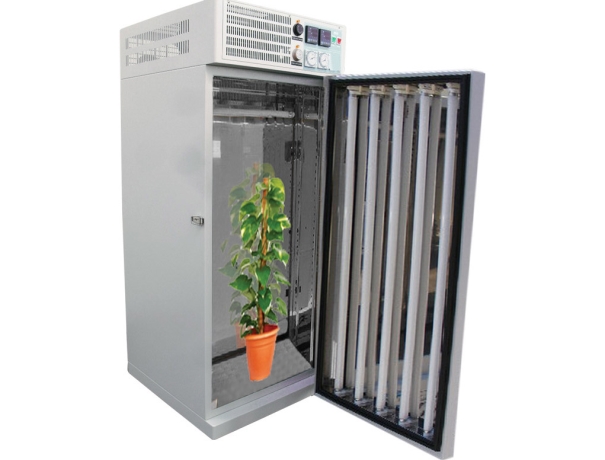
To understand how to use growth chambers, start with the parameters they control:
- Temperature with tight uniformity
- Relative humidity across the usable volume
- Light intensity, spectrum, and photoperiod
- Air circulation and exchange rates
- Optional CO₂ or O₂ concentration control
Each parameter interacts with the others. For example, light intensity increases internal heat load, which influences humidity. Effective use requires balancing all variables, not adjusting them in isolation.
Static vs Programmable Growth Chamber Operation
Some applications require static conditions, meaning fixed temperature and humidity for extended periods. Others need dynamic profiles that change over time.
Modern growth chambers allow programmable sequences. These sequences can simulate day and night cycles, seasonal shifts, or stress conditions. Learning how to use growth chambers includes mastering these profiles and understanding how transitions affect samples.
Selecting the Right Growth Chamber for Your Application
Chamber Size, Volume, and Load Capacity
Choosing the correct chamber size is critical. A chamber that is too small will suffer from poor airflow and uneven conditions. A chamber that is too large wastes energy and space.
Consider:
- Sample quantity and physical size
- Future expansion needs
- Heat and moisture load introduced by samples
Proper sizing simplifies how to use growth chambers efficiently and improves long-term stability.
Light Sources, Spectral Control, and Intensity
Light is often the most misunderstood variable. Different experiments require different spectra and intensities.
LED vs Fluorescent vs HID Lighting
- LED systems offer precise spectral tuning and low heat output
- Fluorescent lighting provides broad spectrum at lower cost
- HID lamps deliver high intensity but generate significant heat
When learning how to use growth chambers, matching the lighting system to biological requirements prevents stress artifacts and inconsistent results.
Preparing a Growth Chamber Before First Use
Installation Location and Environmental Stability
Growth chambers should be installed in rooms with stable ambient conditions. Avoid locations near doors, HVAC vents, or direct sunlight.
Stable surroundings reduce system workload and help the chamber maintain tight tolerances. This step is often overlooked, yet it defines how easy it will be to use growth chambers accurately over time.
Initial Calibration and Validation
Before running experiments, calibrate all sensors. This includes temperature, humidity, and light intensity.
Validation should be documented. This documentation supports compliance with ISO, GLP, and internal quality standards. Proper setup ensures confidence in every result generated.
How to Use Growth Chambers for Plant Growth Studies
Photoperiod Programming and Plant Cycles
Plants respond strongly to light duration. Growth chambers allow precise photoperiod control, such as 16 hours light and 8 hours dark.
When learning how to use growth chambers for plants, align light cycles with species-specific requirements. Incorrect photoperiods can delay flowering or distort growth patterns.
Temperature and Humidity Optimization
Plant metabolism depends on stable temperature and appropriate humidity. Excess humidity encourages fungal growth, while low humidity increases transpiration stress.
Growth chambers make it possible to fine-tune these conditions. Gradual changes are preferable to abrupt shifts, especially during sensitive growth stages.
Using Growth Chambers for Microbiology and Cell Studies
Sterility, Airflow, and Contamination Control
Microbiological applications require strict contamination control. Chambers used for these studies should be cleaned regularly and dedicated to specific workflows.
Understanding how to use growth chambers in microbiology includes managing airflow patterns. Uniform airflow prevents hot spots and microbial accumulation zones.
CO₂ Control and Gas Management
Some chambers offer active CO₂ control. This is essential for cell culture and certain plant studies.
Users should monitor gas calibration and verify uniform distribution. Poor gas control leads to inconsistent growth and unreliable conclusions.
Advanced Programming and Automation in Growth Chambers
Multi-Step Environmental Profiles
Advanced users rely on multi-step programs. These programs simulate real-world conditions like seasonal transitions or stress exposure.
Learning how to use growth chambers at this level allows experiments that would be impossible in uncontrolled environments.
Data Logging, Alarms, and Remote Monitoring
Modern chambers include data logging and alarm systems. These features track deviations and alert users before conditions drift too far.
Remote monitoring improves reliability and saves time. It also supports audit readiness by providing traceable environmental records.
How to Use Growth Chambers for Various Uses
Using Growth Chambers for Plant Research
Growth chambers are essential for plant science because they remove environmental variability.
Typical uses
- Seed germination testing
- Photosynthesis and respiration studies
- Stress testing (heat, cold, drought simulation)
- Crop breeding and phenotyping
Best practice
- Set photoperiod and light spectrum first.
- Allow plants to acclimate for 24–48 hours.
- Rotate trays weekly to minimize microclimate effects.
Using Growth Chambers for Microbiology
Growth chambers support controlled microbial growth beyond standard incubators.
Applications
- Fungal and mold cultivation
- Long-term bacterial growth studies
- Environmental tolerance testing
Key points
- Maintain strict humidity control to prevent condensation.
- Clean chambers regularly to avoid cross contamination.
- Use sealed culture vessels when possible.
Using Growth Chambers for Tissue Culture
Growth chambers provide stable conditions for sensitive in vitro work.
Common uses
- Plant tissue culture
- Callus formation studies
- Regeneration experiments
Recommendations
- Use low light intensity and stable temperature.
- Avoid frequent door opening.
- Monitor contamination daily.
Using Growth Chambers for Environmental Simulation
Growth chambers can replicate real or extreme climates.
Examples
- Day and night temperature cycling
- Seasonal light simulation
- Heat and cold stress testing
This is widely used in ecology, climate research, and material durability testing.
Using Growth Chambers for Industrial and Material Testing
Beyond biology, growth chambers support non biological applications.
Applications
- Stability testing of materials
- Packaging performance under humidity
- Accelerated aging studies
Set ramp and dwell programs carefully and log all parameters continuously.
Programming and Monitoring
Modern growth chambers include programmable controllers.
Best practices
- Use step or ramp profiles for gradual changes.
- Enable data logging for audits and publications.
- Validate sensors annually.
Common Mistakes to Avoid
- Overloading shelves, which blocks airflow
- Ignoring calibration intervals
- Mixing incompatible experiments in one chamber
- Frequent door opening during critical phases
Maintenance and Validation
- Clean internal surfaces weekly
- Replace filters according to manufacturer guidance
- Perform temperature and humidity mapping at least once per year