8262
  • LOGIN
  • Hebrew 
MRCLAB-Laboratory Instrumentsעברית
    • laboratory equipment
    • Laboratory Balances
    • Measuring Instruments
    • material testing
    1. home page
    2. laboratory equipment
    3. Microscopes
    4. Fluorescence Microscopes

    Fluorescence Microscopes

    A fluorescent microscope is a type of microscope that uses fluorescence and phosphorescence to create an image. It uses a beam of light, usually ultraviolet, to excite fluorescent molecules in the sample, causing them to emit light at a different wavelength (usually visible light). This emitted light is then captured by the microscope's optics and used to create an image of the sample. Fluorescent microscopy is commonly used in biological research, as it allows for the visualization of specific molecules or structures within cells.

    Application of fluorescent microscope

    Fluorescent microscopy has a wide range of applications in biology and medicine, including:

    Cell biology: Fluorescent dyes can be used to label specific cellular structures, such as the nuclei, cytoskeleton, or mitochondria, allowing for detailed analysis of cell structure and function.

    Immunofluorescence: Antibodies that have been conjugated to fluorescent dyes can be used to specifically bind to and label proteins of interest in cells or tissues.

    Microscopy of live cells: Fluorescent dyes that do not damage cells can be used to label live cells, allowing for the study of cellular processes in real-time.

    Genetics and molecular biology: Fluorescent dyes can be used to label DNA and RNA, allowing for the study of gene expression and regulation.

    Pathology: Fluorescence-based techniques are used to detect cancer cells or bacteria in tissue samples,

    Drug discovery: Fluorescence-based assays can be used to measure the activity of drugs and drug candidates on specific cellular targets.

    Material Science: Fluorescence microscopy is also used to study the properties of materials and particles, such as the size, shape and composition of nanoparticles.

    Environmental Science: Fluorescence microscopy can be used to detect and quantify microorganisms in water and soil samples.
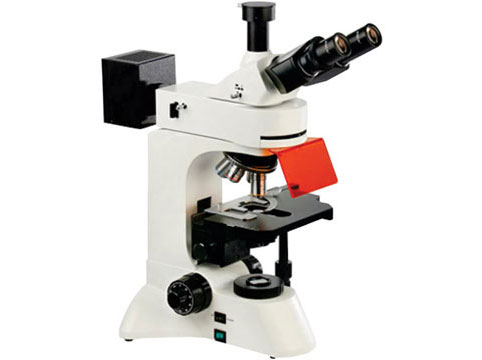
    FLUORESCENCE MICROSCOPES

    MORE ABOUT Fluorescence MicroscopesCLOSE
    60652
    • Your Choice:
    products
    filter:
      LED Epi-fluorescent microscope
      L3201LED

      LED Epi-fluorescent microscope

      1
      blogs

      BLOGS

      ABOUT US

      ABOUT US

      CONTACT US

      CONTACT US

      SERVICE CENTER

      SERVICE CENTER

      • ABOUT
      • |
      • PRODUCTS
      • |
      • CATALOGS
      • |
      • SUPPORT
      • |
      • SERVICE CENTER
      • |
      • CUSTOMERS
      • |
      • TERMS
      • |
      • Privacy Policy
      • |
      • FAQ
      • |
      • BLOGS

      [email protected], + 972-3-5595252
      ISRAEL: Hagavish 3 Holon
      UK: Cavendish House Parkway, Harlow Business Park, Harlow, CM19 5QF

      • Bsmart בניית אתרים
      • SAP
      altImg

      • Fully Supported on Chromee*
      • Color Blind Adjusted
      • Heavy Vision Adjusted
      • Regular Display
      • Access Keys MenuAlt + 0
      • Stop Motion
      • Remove Underline Links
      • Press Keys For View Resize
      • Ctrl + Larger
      • Ctrl - Smaller
      • Ctrl 0 Reset Size
      • Enable Disable Keyboard Focusing
      • Reset All To Defualt

      Access Keys

      • Enable/Disable This MenuAlt + 0
      • Skip To Main MenuAlt + 1
      • Skip To Main ContentAlt + 2
      • דלג למפת אתר מונגשת Alt + Shift + 3
      • SearchAlt + 4
      • Contact PageAlt + 7
      • דלג למפת העמוד Alt+5
      • Skip To HomepageAlt + h
      • Skip To Accessibilty MenuAlt + m

      *Firefox users: Use Alt + Shiftnumber

      In order to move between elements, Press - Tabkey, To backtrack press, - Shift + Tab

    • Skip To Main Menu
    • Skip To Main Content
    • Skip To Accessbilty Menu
    • This website uses cookies for the purpose of ongoing and proper operation in accordance with the privacy policy