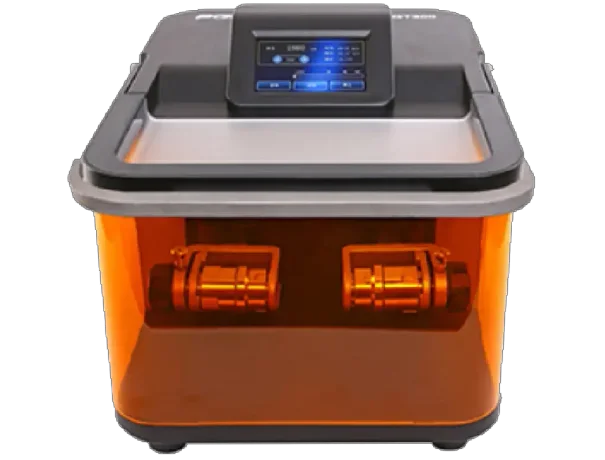
A lab ball mill is a type of grinder used to grind, blend, and homogenize small sample volumes. It uses steel, ceramic, or tungsten carbide balls that are placed inside a rotating container. As the container spins, the balls collide with the material, breaking it into finer and finer particles.
From pharmaceuticals to nanotechnology, ball mills are essential for preparing samples with consistent particle sizes. Uniformity is the name of the game in scientific studies—and ball mills deliver that with precision.
Types of Laboratory Ball Mills
Planetary Ball Mills
These mills spin jars in planetary motion, resulting in ultra-fine grinding. Perfect for nanomaterials.
Vibratory Ball Mills
They shake rapidly, applying high-frequency energy to the grinding media and sample.
Mixer Mill / Shaker Mill
Compact, often used in analytical labs for small volume milling.
Attritor Mills
High-energy mills suitable for aggressive grinding and mechanical alloying.
Cryogenic Ball Mills
Work at extremely low temperatures using liquid nitrogen—ideal for heat-sensitive materials.
Core Components of a Ball Mill
Grinding Jars
Made from stainless steel, zirconia, or Teflon, these hold your sample and grinding media.
Milling Media
The balls—available in different sizes and materials—that actually perform the grinding.
Control System and Settings
Digital timers, speed controls, and safety shutoffs give users full control over the process.
Key Applications of Laboratory Ball Mills
- Material Synthesis: Creating novel compounds and alloys.
- Nanoparticle Production: Grinding materials down to 1–100 nm.
- Sample Homogenization: Preparing samples for spectroscopy or chromatography.
- Mechanical Alloying: Combining metals without melting them.
Factors to Consider Before Buying a Ball Mill
Sample Volume
Do you need 5g or 500g? Choose based on your throughput.
Milling Speed and Time
Higher speeds and programmable timers allow finer grinding.
Type of Material Being Processed
Abrasive? Hard? Sticky? Your material determines jar/media type.
Budget and Lab Space
Larger, more powerful mills cost more and take up space.
Safety Tips for Operating Ball Mills
Proper PPE and Shielding
Always wear goggles, gloves, and use enclosed systems if available.
Dealing with Heat Generation
If your sample heats up, use interval grinding or cryo-milling.
Noise Reduction Methods
Use vibration-absorbing pads or place mills in insulated cabinets.
How to Choose the Right Grinding Media
Types of Media
- Zirconia: Chemically inert, perfect for sensitive materials
- Steel: Hard, affordable, good for general-purpose grinding
- Tungsten Carbide: Extremely hard, used for tough materials
Size, Density, and Hardness
Bigger isn’t always better. Finer media is good for high precision, but takes longer.
How to Use Ball Mills – Step-by-Step Guide
Ball mills are mechanical devices used for grinding, mixing, or blending materials into fine powder. They are widely used in industries such as chemicals, ceramics, metallurgy, mining, pharmaceuticals, and materials science laboratories.
1. Understand the Purpose
Before using a ball mill, define your goal:
- Grinding to reduce particle size
- Homogenizing materials
- Mixing powders for compound creation
2. Choose the Right Ball Mill
- Bench-top / Laboratory Ball Mill – Ideal for small-scale use or R&D.
- Industrial Ball Mill – Used for large volumes and high-capacity grinding.
3. Prepare the Materials
- Ensure the materials are dry (unless using a wet mill).
- Break large chunks manually to prevent overloading.
- Remove impurities that may damage the lining or contaminate the mix.
4. Select the Right Grinding Media
- Ceramic balls – For non-metallic and contamination-sensitive materials.
- Steel balls – For harder, tougher materials.
- Choose the correct ball size (typically 1–30 mm) depending on desired final fineness.
5. Fill the Mill
- Load the material and grinding media (typically 30–50% of the drum volume).
- Do not overfill – this reduces grinding efficiency and may damage the motor.
6. Set the Parameters
- Rotation speed – Affects the grinding action. Use 65–75% of the critical speed.
- Time – Longer grinding gives finer particles but may cause contamination or wear.
- Direction – Some mills allow forward/reverse rotation for better mixing.
7. Start the Ball Mill
- Close the lid tightly.
- Start the motor.
- Monitor for unusual vibrations or sounds.
8. Monitor and Adjust
- Periodically check the mill to ensure it’s running smoothly.
- Check the temperature – overheating may indicate overloading.
- For wet milling, ensure water or solvent levels are appropriate.
9. Stop and Unload
- Turn off the machine.
- Let it cool if necessary.
- Carefully open the lid and remove the ground material.
10. Clean the Ball Mill
- Clean after every use to avoid cross-contamination.
- Use a brush or vacuum for dry materials.
- For wet processes, rinse with appropriate solvents and dry completely.
11. Safety Tips
- Wear safety goggles and gloves.
- Ensure the lid is tightly secured before operation.
- Do not open the mill while it’s running.
- Keep flammable or reactive materials away unless you're trained in inert processing.
12. Maintenance Tips
- Lubricate bearings and rotating parts regularly.
- Inspect the liner and grinding media for wear.
- Replace damaged or worn components immediately.